How to Choose Skylight Lighting: Skylight Light vs LED Skylight Light
When looking for natural light effects for windowless rooms, dark halls or basements, “skylight light” is a common search term. It may refer to natural daylighting through architectural skylight openings, or artificial skylight lamps.
This article clarifies the differences between skylight light, skylight lighting and LED skylight light from the perspective of artificial skylight product selection. EASY artificial skylight draws inspiration from Rayleigh scattering technology to simulate the scattering effect of blue sky and sunlight indoors.
What is skylight light?
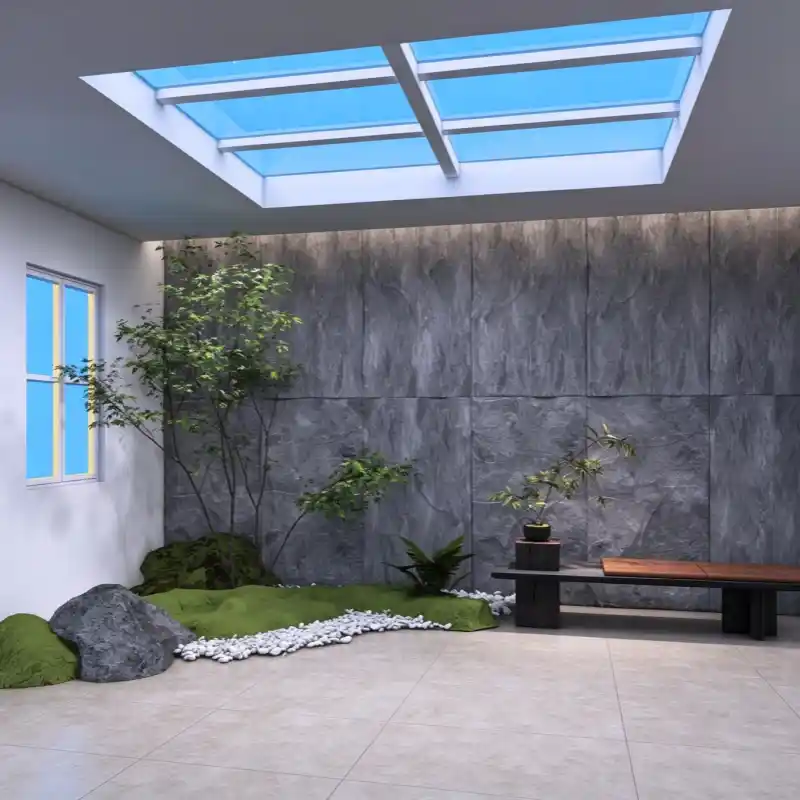
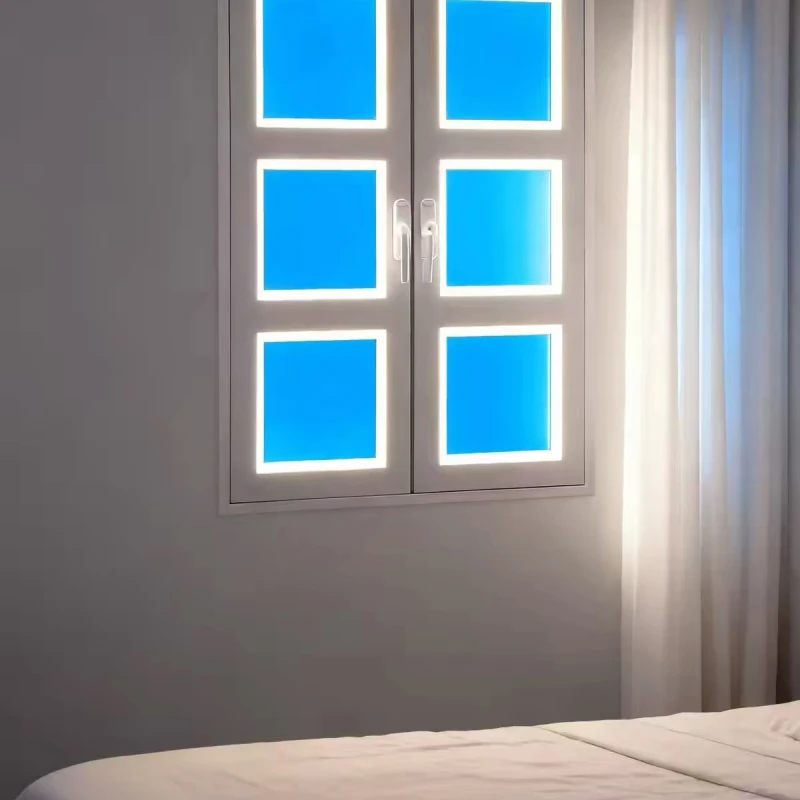
Literally, skylight light can be understood as “light from skylights” or “skylight illumination”. In the artificial skylight product category, it generally does not refer to physical architectural openings. Instead, it uses LEDs, optical diffusion layers and sky simulation structures to present skylight-like light indoors.
A good skylight light is more than just bright. It needs sky depth, soft scattering and natural color rendering. Compared with ordinary panel lights, it creates the feeling of “a patch of sky overhead”.
Differences between artificial skylight lamps and real skylight daylighting (from the perspective of led artificial skylight)
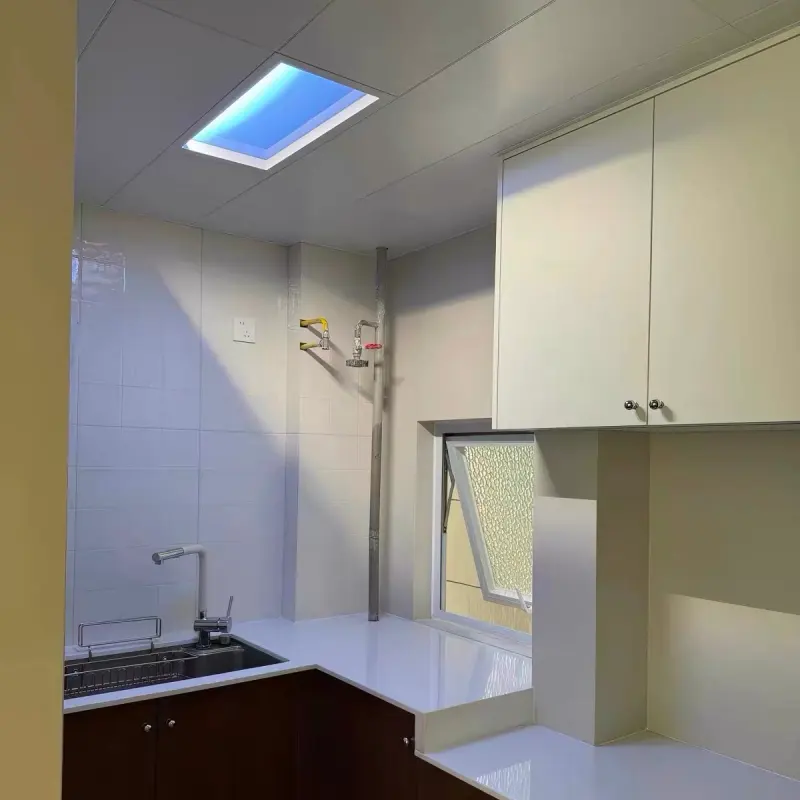
Real skylights rely on architectural openings, orientation, weather and seasons, and also bring insulation, waterproofing and structural costs. The led artificial skylight is free from these limitations and can be installed in basements, corridors and interior offices.
However, real skylights have authentic daylight variations. The advantages of artificial skylight lamps are stable and controllable light, adjustable color temperature, which can simulate morning, noon and blue sky modes.
Common applications of skylight lighting: from artificial skylight ceiling to commercial spaces
Skylight lighting is widely used in basements, dark halls, gyms, offices, clinics, hotels and retail spaces. The artificial skylight ceiling can act as primary lighting or ambient lighting.
In commercial spaces, consistent color temperature and color rendering index matter more than simply boosting brightness.
Problems users usually want to solve: beyond daylight simulation lamp
Users typically aim to resolve issues including no windows, insufficient daylight, cramped space, dull skin tone and poor color rendering of equipment. daylight simulation lamp is only one product expression.
The real demand is to make indoor spaces appear to have natural daylight, with comfortable, glare-free and controllable lighting.
skylight light fixture mounting positions
Mounting position determines the lighting effect. The same skylight light fixture delivers different perceptions when placed in the center versus at the edge.
Ceiling center
Suitable for small rooms and single basement zones. It serves as the main visual focal point to simulate a skylight opening. It is recommended to avoid direct line-of-sight exposure and adopt anti-glare design.
Ceiling perimeter: wall washing effect of artificial sunlight skylight
artificial sunlight skylight can be arranged along the ceiling edge to create wall washing and extended sky visual effect. Ideal for narrow spaces, corridors and office peripherals.
For edge installation, brightness must be controlled to prevent overexposure on walls.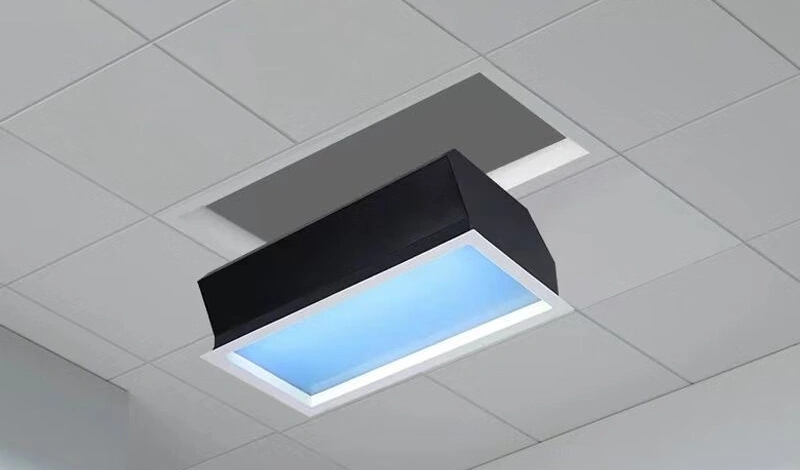
Combination of light trough and wall surface
Light trough conceals light source and walls realize indirect reflection. When matched with skylight light fixture, the main lamp creates sky texture while the light trough builds light hierarchy.
This combination fits living rooms, exhibition halls and high-end offices.
Optical parameters of skylight led light
When selecting skylight led light, do not only check wattage. Focus on color temperature, brightness, color rendering, dimming capability and control system.
Color temperature: warm white, natural white and blue sky mode
Warm white: around 2700-3000K for relaxation. Natural white: around 4000-5000K for office work and fitness scenarios. Blue sky mode can reach above 6000K with visual blue sky effect.
Artificial skylight lamps present blue sky through optical structure, instead of simply turning LED beads blue.
Brightness and color rendering index
Brightness is evaluated by lumens and illuminance rather than wattage. Color rendering index Ra>90 is recommended. R9 is also critical, as it affects skin tones, wood textures and metallic surfaces of equipment.
High color rendering eliminates dull complexion and distorted product colors.
Dimmability and smart control support
Dimming function brings scene flexibility. Support for 0-10V, DALI, wireless or smart systems enables timing, zoning and scene preset.
Zoned control is recommended for gyms and offices. Basements can have constant-on and energy-saving modes.
How to create natural daylight atmosphere with skylight lamps
Atmosphere comes from brightness, color temperature, installation and material reflection. Higher brightness does not equal more natural light.
Combination solutions of skylight ceiling panels for small rooms, dark halls, basements and offices
- Small rooms: one central skylight light, 4000-5000K, medium brightness
- Dark halls: multiple skylight ceiling panels or skylight led lights in combination to avoid over-bright single points
- Basements: moisture-resistant, high color rendering, flicker-free models. Blue sky mode is optional to ease cramped feeling
- Offices: around 5000K, low glare, smart dimming to boost concentration
- Gyms: high color rendering and uniform illuminance to restore authentic skin tone and equipment texture
Application Case: FitBase Gym in North Rhine-Westphalia, Germany
The strength training area of FitBase is located in a windowless basement. The original lighting above dumbbell, barbell and free weight zones was yellowish with poor color rendering, resulting in dull skin tone of members, indistinct details on black weight plates and cramped space.
skylight light was installed above the free weight zone, featuring high color rendering, flicker-free light, natural white and blue sky modes. The lamps adopt zoned control: full brightness during peak training hours and energy-saving mode in off-peak time.
Current effect: natural skin tone, clear texture of metal and rubber on equipment, and the basement no longer feels enclosed. Members stay longer and enjoy better training experience, and they are more willing to share photos taken here.
This case proves that skylight lighting works not only as decoration but also solves functional lighting requirements.
FAQ
Q1: Can skylight light fully replace real skylights?
A1: It cannot fully replace natural daylighting and ventilation, but it delivers near-natural daylight experience in windowless spaces.
Q2: Will skylight led light cause strong glare?
A2: It depends on anti-glare performance and installation. Choose products with deep anti-glare and soft diffusion to avoid direct visual exposure.
Q3: Is it suitable for basements?
A3: Yes. Select moisture-resistant, flicker-free, high color rendering models with proper zoning design.
Q4: Can it simulate blue sky?
A4: Yes. Artificial skylight lamps adopt Rayleigh scattering principle and optical layers to achieve natural blue light scattering, rather than using simple blue LED beads.
Q5: Is installation complicated?
A5: Common mounting types include surface-mounted, recessed and suspended. It works for new construction or renovation projects, but power supply and maintenance access need to be reserved.
Closing
When choosing skylight light, identify space problems first, then check optical parameters and installation schemes. Where real skylights are not feasible, skylight lighting and LED artificial skylight lamps serve as practical alternatives. EASY artificial skylight recommends high color rendering, dimmable and anti-glare products to bring natural daylight indoors.