Skylight Ceiling Light Installation Guide: How to Choose a Skylight Ceiling Light
If you are renovating a living room, basement or hallway with insufficient natural light, or want to achieve a “skylight effect” without modifying the roof structure, a skylight ceiling light is a lighting solution worth considering in recent years.
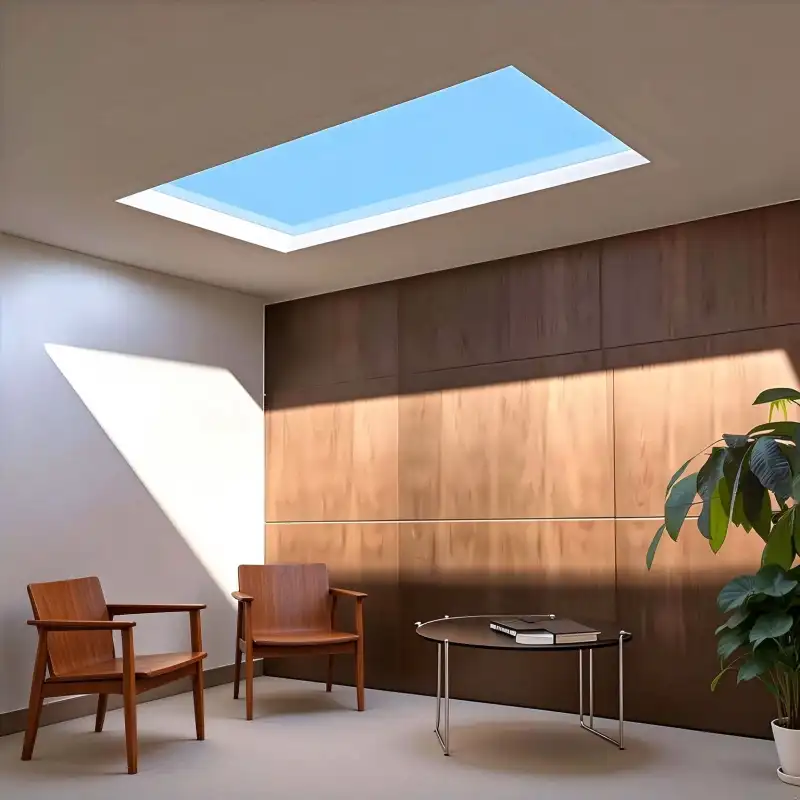
It simulates blue sky, sunlight and spatial depth through optical structures. EASY artificial skylights belong to the Rayleigh scattering skylight category, designed to make the indoor ceiling look as if a real skylight has been installed.
Below is a breakdown covering installation, brightness, color temperature, and the differences between artificial skylights, real skylights and ordinary ceiling lights to help you make your selection.
What is a skylight ceiling light? Relationship with fake skylight ceiling light
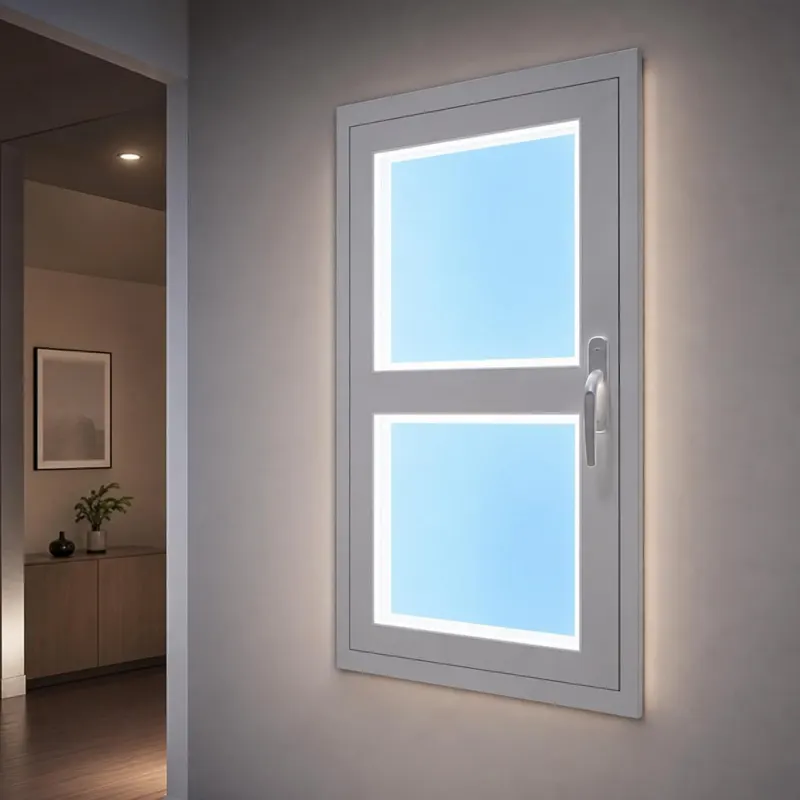
A skylight ceiling light is a lighting product mounted on the ceiling to simulate a skylight effect. It can also be wall-mounted to mimic a real window.
Its core function is not simply to produce strong brightness, but to make light appear as if it comes from the sky.
Traditional lights pursue uniform illuminance, while artificial skylights focus on sky layering: brighter at the center with gradual fading at the edges and a natural transition of blue-white tones. Overseas users also frequently search for it as fake skylight ceiling light because it delivers a visual experience similar to a real skylight without cutting an opening in the roof.
EASY artificial skylights adopt the Rayleigh scattering principle, enabling short-wave blue light to scatter within the optical layer, so as to simulate natural sky conditions such as clear sky, thin clouds, sunrise and sunset.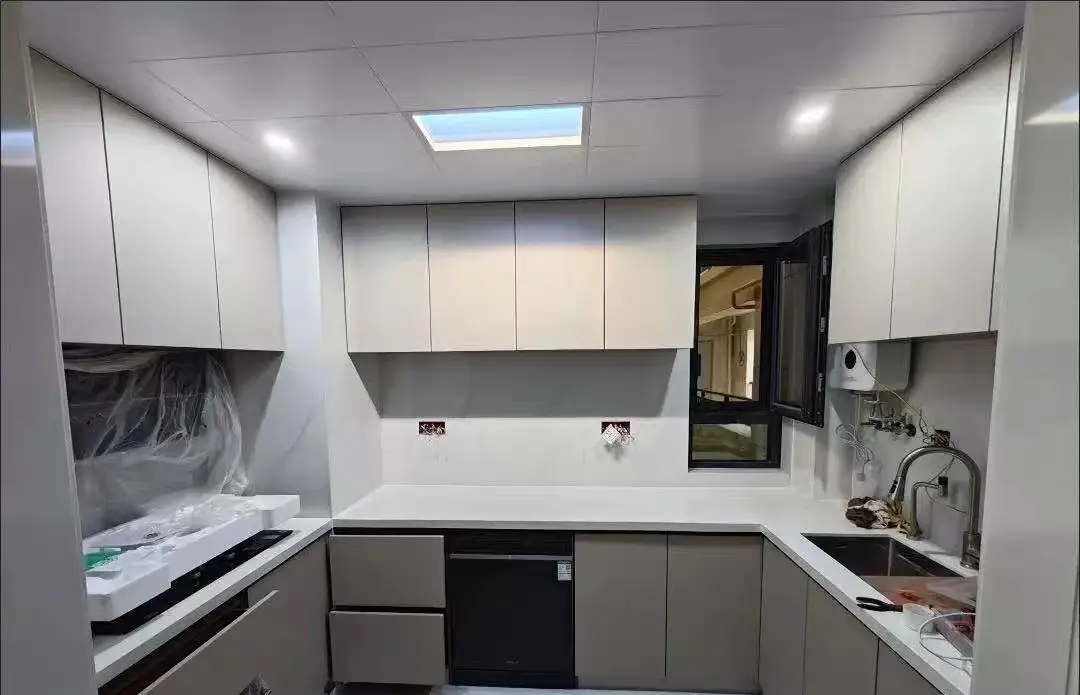
Differences from ordinary ceiling lights
Ordinary ceiling lights mainly solve the problem of “whether the space is bright enough”. They feature uniform illuminance, simple installation and affordable prices.
A skylight ceiling light addresses the need for “natural atmosphere in the space”.
An ordinary ceiling light looks like a flat luminous panel; an artificial skylight looks like an opening leading to the sky. The former focuses on lumens, while the latter prioritizes sky depth, blue gradient, glare control and color rendering index.
For spaces with no windows or only small windows, artificial skylights usually bring greater psychological comfort than simply boosting brightness.
Differences from real skylights
Real skylights require roof openings, waterproofing, structural treatment, and considerations of orientation and weather conditions. Their application is heavily restricted by floor levels, roof conditions and property management approval.
A skylight ceiling light requires no roof demolition, works regardless of cloudy, rainy weather or night time, and supports dimming, color temperature adjustment and scheduled switching between day and night modes.
It cannot fully replace real skylights in terms of natural daylight intake and ventilation. However, it serves as a more controllable and lower-risk alternative for dim living rooms, basements, windowless bathrooms and hallways.
Installation differences between skylight ceiling light and skylight ceiling lights
The singular and plural forms seem to differ only in quantity, yet they follow different installation logics.
A single skylight ceiling light acts as a visual focal point. Multiple skylight ceiling lights require planning for layout, synchronization, power grouping and overall ceiling proportion.
Single light installation
Single units are suitable for small bedrooms, bathrooms, hallways, entryways or compact offices.
The mounting position is generally recommended at the visual center of the ceiling, not too close to corner walls. Otherwise, the sky gradient will be cut off by the wall and look unnatural.
When wall-mounted to simulate a window, install it at a height similar to a real window, to avoid looking like a floating screen.
Multi-light combination: sky array with faux skylight panels
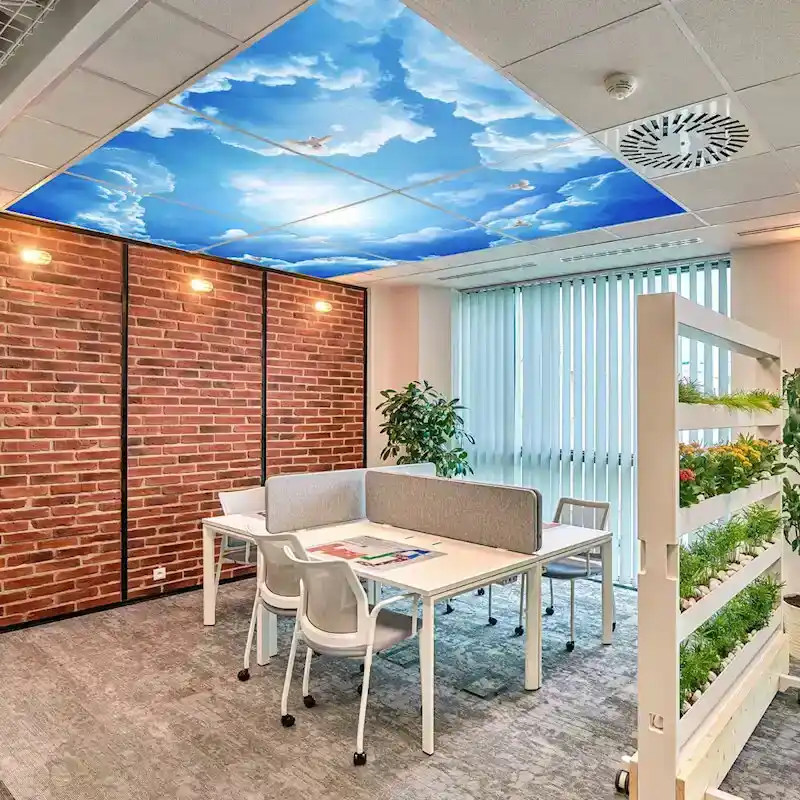
For multi-light setups, faux skylight panels can be assembled to create a large sky surface.
For example, in living rooms or basements, 2, 4 or more panels can be combined to form an array similar to a large-area skylight.
Three key points to note:
- Keep consistent spacing between panels;
- Ensure drivers and controllers support synchronized dimming;
- Group power circuits for independent control when needed.
Drop ceiling, gypsum ceiling and recessed installation: How to use artificial skylight for drop ceiling
For suspended ceilings using mineral wool panels or aluminum ceiling panels, artificial skylight for drop ceiling is a common solution.
During installation, verify keel load-bearing capacity, cut-out dimensions and driver placement. Do not seal drivers in areas without access panels, otherwise maintenance will be difficult later.
Gypsum board ceilings are ideal for recessed mounting. Pre-cut openings, reinforce borders, reserve heat dissipation space and complete edge finishing.
Recessed installation also requires attention to lamp body thickness. For rooms with low ceiling height, opt for ultra-thin models to avoid compressing space.
Brightness and color temperature selection for skylight led lighting
When selecting skylight led lighting, wattage alone is not sufficient. Lumens, color temperature, color rendering index and glare control matter more.
For sky simulation, a color rendering index CRI above 90 is recommended. This ensures natural color reproduction of indoor materials, wood veneers and fabrics. Glare values should also be controlled to prevent eye discomfort when looking upward.
Living room, bedroom, bathroom and hallway
For living rooms, prioritize ambient lighting with moderately high brightness. Set color temperature to 5000K–6500K in daytime mode to create a refreshing clear-sky effect.
Bedrooms suit low-brightness, warm, dimmable settings. The night mode is recommended at 2700K–3000K to reduce blue light stimulation before sleep.
Bathrooms require attention to moisture resistance. Choose models with appropriate IP ratings for steam-prone zones. Hallways can use 3000K–4000K, balancing guiding illumination and comfort.
Day mode and night mode
Day mode simulates clear sky, sunlight and thin clouds, suitable for reading, office work and daily activities.
Night mode lowers brightness and color temperature, transitioning the space from a “sky view” to a calm resting environment.
Five points to confirm before installation
Ceiling height, power supply, heat dissipation, dimensions and control method
- Check ceiling height. Low net height after ceiling installation will create a cramped feeling.
- Confirm reserved power supply. Separate live and neutral wires are preferred inside the ceiling; confirm driver location.
- Ensure proper heat dissipation. Although LED generates little heat, both drivers and lamp bodies still need ventilation space.
- Match dimensions. For single lights, check spatial proportion; for multiple lights, plan layout to avoid overcrowding or excessive gaps.
- Verify control requirements. Confirm whether dimming, color adjustment, scheduling, group control or smart linkage is needed.
Electrical installation work should be completed by a licensed electrician.
Applicable spaces and considerations: Is residential fake skylight a good fit?
residential fake skylight works well for residential spaces lacking natural light, such as basements, windowless bathrooms, hallways, walk-in closets, studies and living rooms without windows.
It is also widely used in commercial spaces including offices, meeting rooms and clinics to relieve enclosed feelings.
FAQ
Does a skylight ceiling light require roof cutting?
No roof cutting like real skylights is needed. It can be surface-mounted on ceilings, fitted inside suspended ceilings or installed in recessed ceiling cut-outs.
Can it fully replace a real skylight?
It cannot replace real skylights for natural daylight intake and ventilation. However, it delivers similar visual effects and psychological comfort, and can be adjusted and used at any time of day.
Is it suitable for basements and windowless bathrooms?
Yes. Dim indoor spaces are primary application scenarios for artificial skylights. For bathrooms, pay attention to moisture resistance and IP rating.
Is installation complicated?
Single light installation is relatively simple. Complexity increases for multi-light systems, recessed drop ceiling mounting, gypsum board cut-outs and smart switch control.
When you want your ceiling to be more than just a bright surface, but to appear to have an actual opening to the sky, a skylight ceiling light is a top option to consider. EASY artificial skylights recommend evaluating installation conditions, space functions and daily usage habits together to select the proper artificial skylight solution.