LED Skylight Panel Selection Guide: Full Analysis of led skylight panel
This article is written by the EASY Artificial Skylight Product Technical Team. Drawing on years of lighting project implementation experience, it helps home owners, interior designers and project purchasers select panel-type artificial skylights. It includes measured parameters, construction key points and scenario adaptation, to help you avoid common pitfalls during product selection.
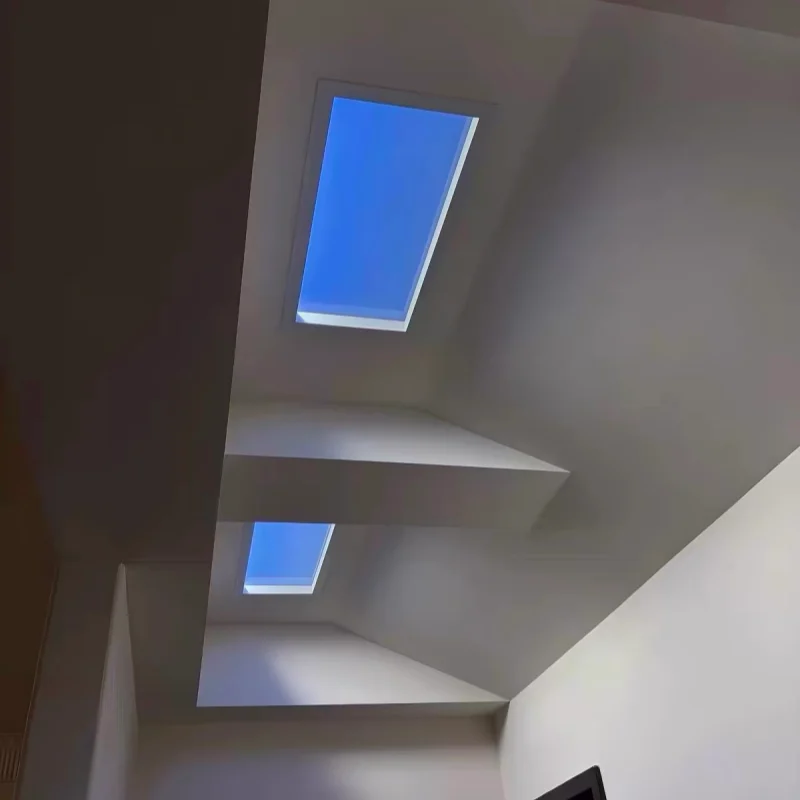
In windowless spaces such as basements and interior offices, the led skylight panel, as a panel-style artificial skylight, can be mounted on ceilings or walls to replicate the visual effect of natural blue sky and daylight.
This article breaks down product definition, hardware parameters, terminology clarification, installation solutions, applicable scenarios and purchasing FAQs layer by layer, to help you clarify your selection logic.
What is led skylight panel?
The led skylight panel falls into the category of artificial skylights. It is an LED luminaire equipped with a special optical diffusion structure. It is not equivalent to an ordinary flat LED panel light. It relies on proprietary internal optical design to restore the visual effect of natural blue sky. It can be embedded into ceilings to simulate a real skylight effect, or wall-mounted to create a fake window visual, bringing sky light and shadow into enclosed indoor spaces.
Differences from ordinary skylight panel
An ordinary skylight panel generally refers to a traditional architectural daylighting skylight panel, which relies on natural outdoor light penetrating glass for daylighting. It is subject to weather changes and day-night cycles. In addition, the building must reserve an opening position, leading to high renovation limitations.
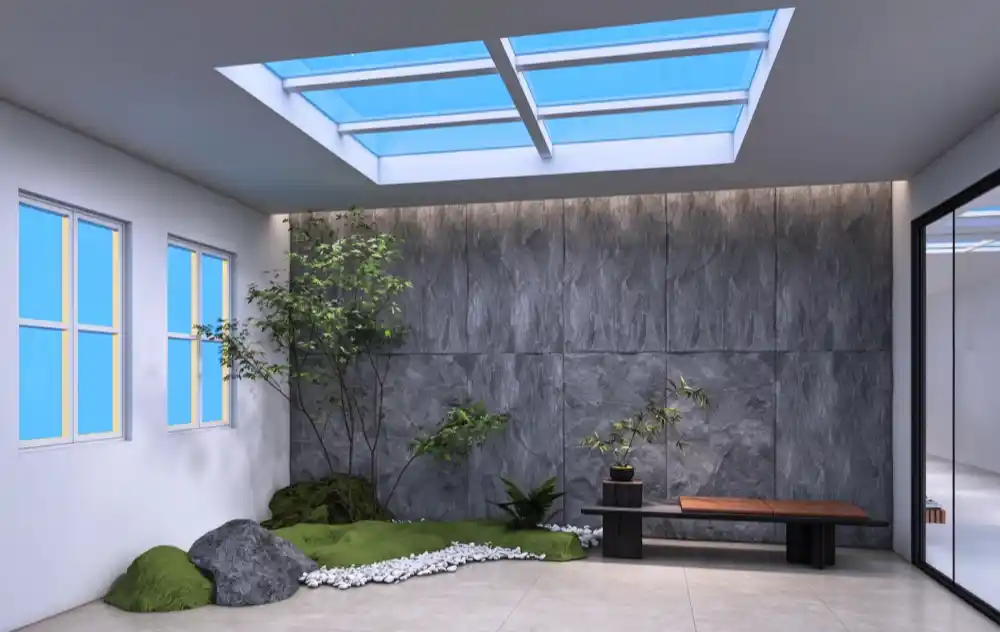
In contrast, the led skylight panel is an active light-emitting luminaire. It does not require physical openings in the building and is unaffected by external weather. Even in a completely sealed room, it can stably output light close to natural blue sky. Some interior renovation projects adopt fake window light panel for wall-mounted fake window layouts to enrich the space lighting design.
Why panel style is more suitable for artificial skylights
The current artificial skylight market includes downlight type, module type and panel type products. The panel style delivers more comprehensive adaptability, with the core advantages as follows:
- Sufficient luminous area for complete and coherent imaging, presenting a more realistic blue sky effect;
- Regular shape, compatible with various ceiling types and supporting wall-mounted renovation for fake windows;
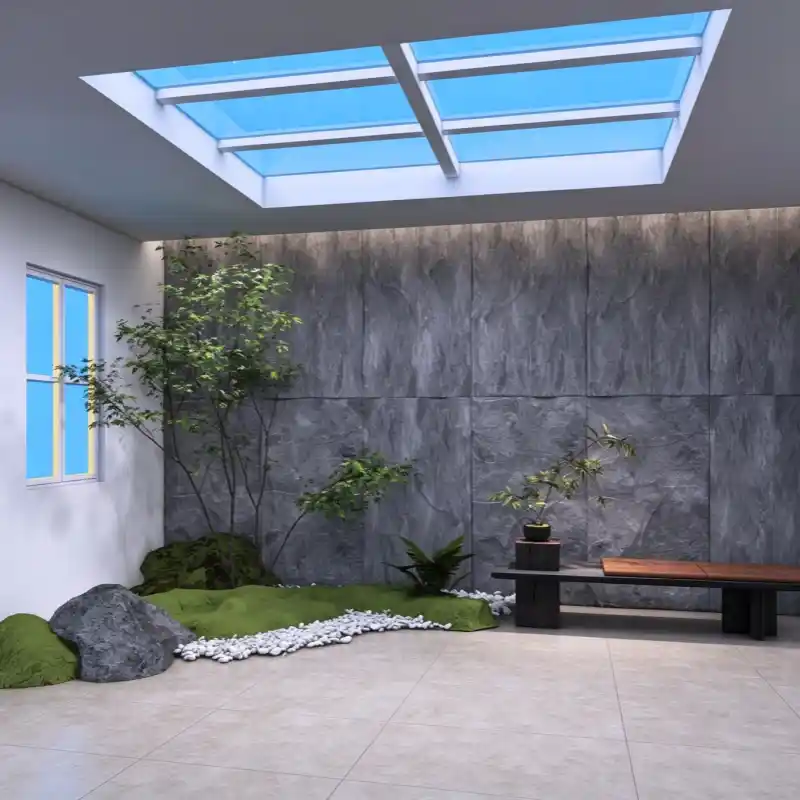
- Expandable by splicing multiple units. In large spaces, a combination of skylight ceiling panels can create the atmosphere of a full sky;
- Thin overall luminaire, low requirement for ceiling cavity depth, suitable for old building renovation projects.
Downlight models are more suitable for partial accent lighting, while module-type products have relatively large volume and many limitations for old house renovation. For this reason, the adoption rate of panel artificial skylights in home and commercial projects keeps rising.
Specifications and parameters of led skylight panels
When selecting led skylight panels, do not judge only by appearance. Hardware parameters directly determine the realism of sky simulation, eye comfort and service life of the luminaire, serving as core selection criteria.
Dimension, thickness and power
Mainstream shapes include square and rectangular, with common sizes: 300×300mm, 300×600mm, 600×600mm.
Thickness is a key indicator for renovation projects. Slim models require lower ceiling cavity depth; thicker versions offer better optical performance, but you need to confirm reserved ceiling space in advance.
Power is directly related to luminous area. Small-size products mostly range from 25–40W, and large-size models can reach 40–80W. Higher power does not always mean better performance. Match the power with the actual room area to avoid discomfort caused by excessive brightness.
Tip for project procurement: If multiple lights will be spliced, confirm whether the driving power supply supports dimming linkage. This is a detail easily overlooked in many overseas projects.
Brightness, color temperature and color rendering index
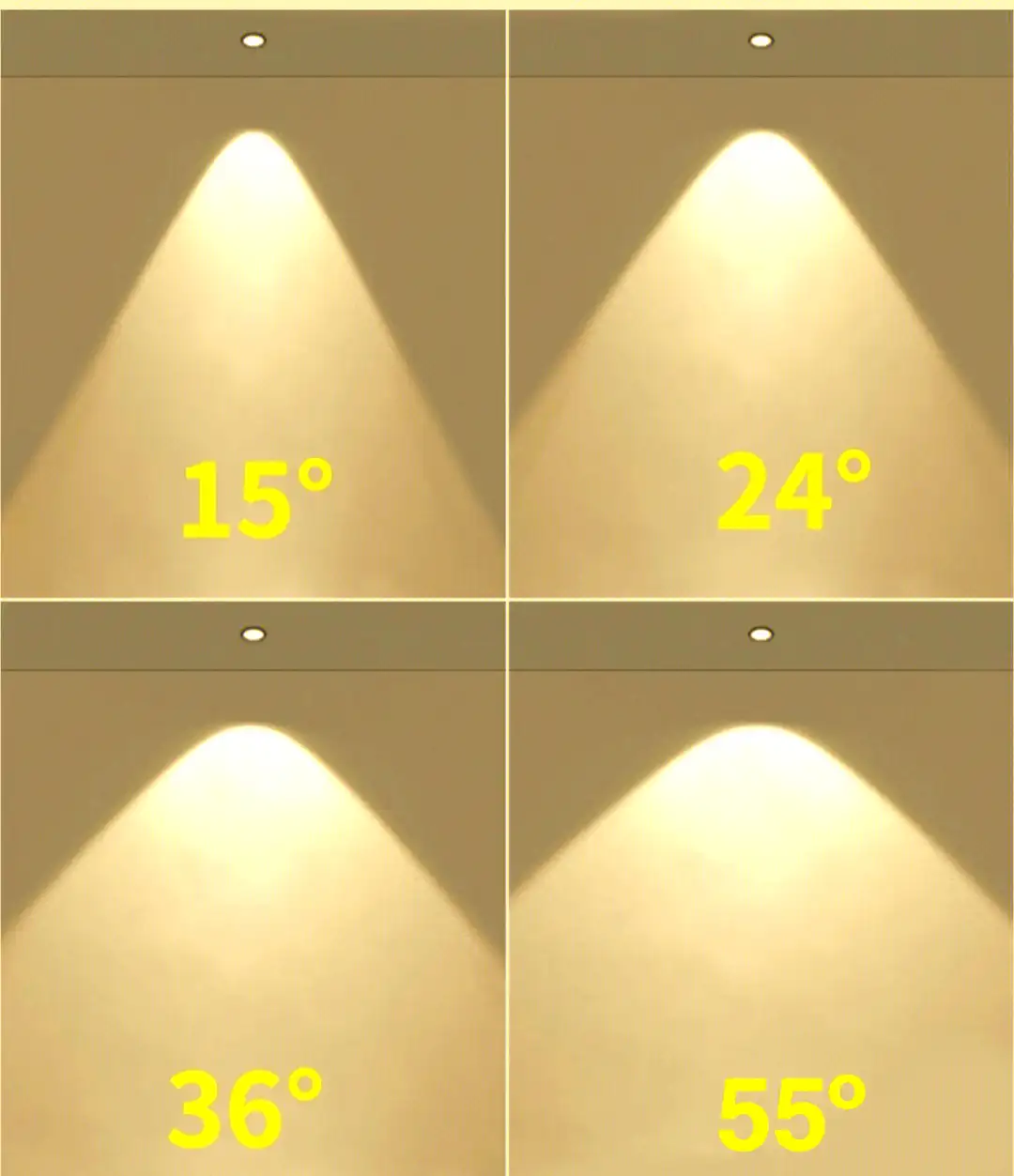
- Brightness: Higher brightness does not guarantee better simulation effect. Medium brightness delivers more comfortable experience for simulating real skylights. Products with dimming function can simulate light changes from early morning to noon for better user experience.
- Color temperature: High-quality artificial skylights can separate the blue sky base light and ambient auxiliary light. The auxiliary light color temperature is adjustable to restore daylight characteristics of different time periods.
- Color Rendering Index (CRI): CRI≥90 is recommended for residential and office scenarios; CRI≥95 for commercial display spaces. High color rendering restores the original colors of furniture and soft furnishings and prevents color distortion.
Luminance uniformity and glare control
Luminance uniformity and anti-glare performance are key differentiators between low-cost products and premium led skylight panel.
Poor-quality panels suffer from local bright spots and grid textures. LED beads can be seen directly at close range, resulting in cheap visual effects. This performance must be prioritized for spaces where people stay for long periods, such as bedrooms and offices.
Installation methods of skylight panel
The skylight panel can be installed on ceilings to replicate skylights, or wall-mounted to act as fake windows. Three mainstream installation solutions are available to fit different renovation conditions.
Recessed installation
After recessed installation, the luminaire panel is flush with the ceiling surface, delivering the visual effect closest to a real skylight. It fits gypsum board ceilings and integrated ceilings. During construction, cut the ceiling according to the product cutout size, and verify that the internal ceiling cavity depth can accommodate the luminaire body and driving power supply.
Renovation reminder: For old building construction, confirm keel positions in advance and avoid pipelines. Do not cut openings blindly.
Surface-mounted installation
Surface mounting requires no cutting of the original ceiling; the whole unit can be fixed directly. Its biggest advantage is simple construction, suitable for renovated old houses without damaging the original ceiling. The downside is that the luminaire protrudes outwards with a visible outer frame. This solution can also be applied on walls, paired with decorative window frames to realize fake window design.
Ceiling combined with light trough
This solution is mostly used in commercial spaces and large flat units. Multiple luminaires are arranged in combination via ceiling and light trough to create a large-area sky view. It is suitable for hotel lobbies, large office areas, exhibition halls and other venues. Planning must be completed in the early design stage, imposing certain requirements on preliminary construction.
Applicable spaces
For indoor environments lacking natural daylight, many residential and commercial projects use such luminaires to solve daylighting pain points, namely the application scenario of fake windows for windowless rooms.
Living rooms, bedrooms, offices, basements and commercial spaces
- Living rooms & bedrooms: Enhance home atmosphere. You can enjoy blue sky atmosphere even on cloudy days or at night. Dimmable and tunable models are preferred for home scenarios.
- Basements: Basements generally lack natural daylight. artificial skylight for basement is a very popular renovation solution overseas. It delivers great results for renovating basement studies and leisure zones.
- Commercial spaces: Hotel guest rooms, beauty salons and retail stores can replace traditional lighting with such luminaires to upgrade the overall space texture.
Note: For high-humidity environments such as bathrooms, select dedicated models with corresponding IP protection ratings. Standard indoor versions are not recommended for wet areas.
Purchasing checklist & FAQ
✅ Purchasing checklist (verify each item before procurement)
- Confirm installation type: recessed, surface-mounted or wall-mounted; check ceiling cavity depth and cutout size;
- Verify luminaire dimension and rated power; confirm multi-light linkage solution for spliced projects;
- Check hardware parameters: Color Rendering Index (CRI), dimming protocol (0–10V, DALI, APP smart dimming);
- Prioritize luminous uniformity and anti-glare performance; refer to actual luminous demo videos released by manufacturers;
- Operating environment: Check IP protection rating for basements and humid spaces;
- Confirm driving power supply and compatibility with the supply voltage of target sales regions.
FAQ
Q1: Can led skylight panel directly replace ordinary LED flat panel lights at home? A: Some products have matching external dimensions, yet their internal optical structures are completely different. Ordinary flat panel lights have no optical system for blue sky simulation and cannot be equated to artificial skylights. Check product positioning during selection.
Q3: Will color difference occur when multiple skylight led panels are spliced together? A: Reputable brands complete color calibration before delivery, and color difference can be controlled within a reasonable range. Low-cost no-name products tend to have inconsistent blue shades on panels. For bulk procurement, request relevant batch calibration documentation from suppliers.
Q4: Can led skylight panel be installed in bare houses without ceilings? A: Surface-mounted models are available and do not require ceiling cutouts; recessed solutions require reserved ceiling cavities.
Q5: For basement use, what other points should be noted for artificial skylight for basement? A: Basements have relatively high air humidity. Prioritize products with moisture-proof housing; maintain good space ventilation to avoid condensation inside the luminaire; place the driving power supply in dry areas as much as possible.
Q6: For fake windows for windowless rooms, can the luminaire fully replace the main lighting of the whole room? A: The core value of such products is to simulate sky atmosphere. Some high-power models can support basic lighting, but auxiliary light sources are recommended for large spaces. Do not rely entirely on artificial skylights to bear all indoor illuminance.