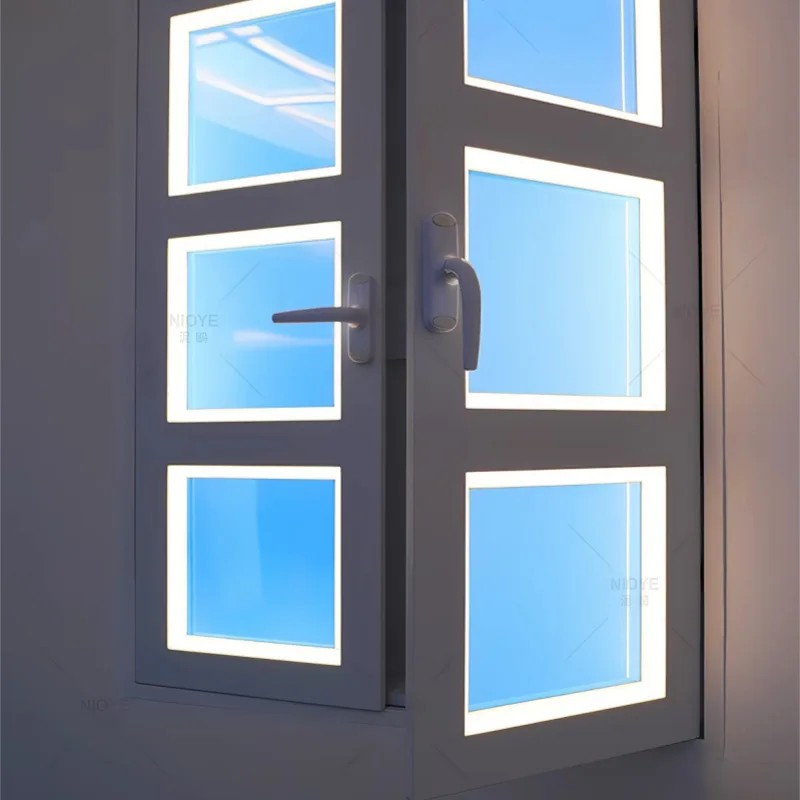
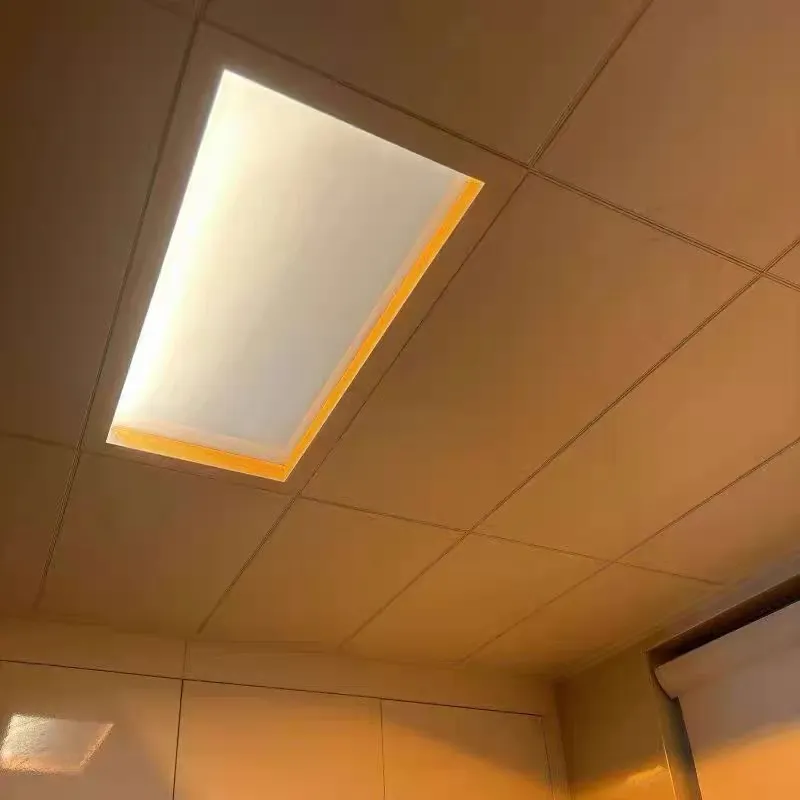
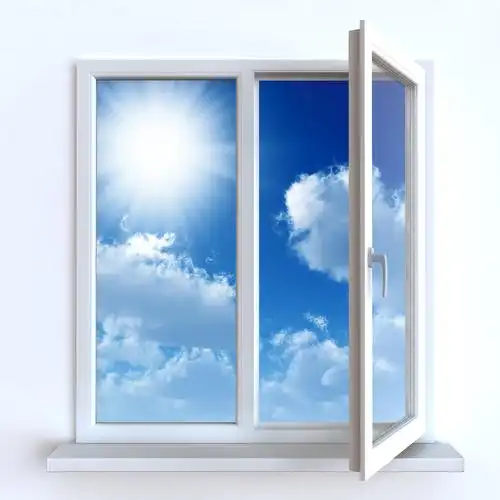
People who spend long periods indoors without windows are very concerned about lighting that mimics sunlight, hoping to obtain an outdoor-like light environment at home or in commercial spaces.
The market has a wide variety of products, and many light fixtures simply increase brightness without truly achieving light mimicking sunlight.
This article combines EASY Skylight’s years of experience in residential and commercial lighting implementation to break down the purchasing logic for lighting that mimics natural light, helping everyone distinguish which devices can truly mimic natural light and identify reliable lights that mimic natural light.
Why Ordinary Indoor Lighting Falls Short
The core goal of ordinary indoor LED light fixtures is only to complete basic space illumination; they do not pursue replicating the light-shadow and spectral characteristics of natural light.
Ordinary ceiling lights and downlights mostly have gaps in their spectra, imbalanced blue-light bands, flat light, and lack the soft shadow layers brought by slanted natural light projection. Even if brightness is increased, the space still feels dull and oppressive.
The shortcomings of ordinary lighting are further amplified in enclosed commercial places. We once completed a lighting renovation project for the Lijian Gym inside Wanda Mall in Baoshan District, Shanghai. This fitness area is inside the mall, has no external windows at all, and originally all used conventional flat LED lights.
Before the renovation, members generally reported that during long fitness training, their eyes easily became dry and tired, and the space atmosphere was oppressive. Later, the project introduced artificial skylight led ceiling panel for local environmental supplementation to improve the overall light environment experience.
Many people mistakenly believe that adjusting the color temperature of a light fixture to 5000K achieves mimic natural light. In fact, simply adjusting color temperature is far from enough; spectrum, glare control, and light-shadow layers are all indispensable. This is also the core difficulty of lighting that mimics sunlight.
Key Specs to Compare
To screen qualified lighting that mimics natural light, you cannot only look at the merchant’s promotional copy; you must check five hard indicators: color temperature, spectrum, color rendering index, illuminance, and glare.
Color temperature: It only represents the warmth or coolness of light, not that it equals sunlight. Noon daylight is about 5000-6500K, while morning and evening tend toward 3000-4000K. When purchasing, prioritize products that support adjustable color temperature; fixed color temperature fixtures can hardly fully light mimicking sunlight.
Spectrum: This is the most easily overlooked indicator. Poor-quality sunlight-simulating fixtures have sharp peaks or missing bands in their spectra. High-quality products have spectral curves close to natural daylight, rather than simply using color filters to create a light blue appearance.
Color rendering index CRI: The higher the CRI value, the more realistic the color restoration of objects. For home, office, and commercial spaces, CRI≥95 is recommended. Fixtures with CRI below 90 will still distort colors even if brightness is very high, and are not qualified lights that mimic natural light.
Illuminance: It represents the luminous flux actually received by the space. For home office desktops, 300-500lux is recommended; large spaces such as gyms and open offices need higher illuminance. If illuminance is insufficient, even the best spectrum cannot mimic natural light.
Glare: The UGR glare value is crucial. Fixtures with directly exposed light-emitting surfaces easily produce glare; after long periods under the light, eyes fatigue quickly. A true artificial skylight led ceiling panel uses a dedicated optical structure to suppress direct-view glare.
Supplementary note: For daylight simulation lamp-type products, all five indicators above need to be included in the evaluation; you cannot refer to only a single parameter.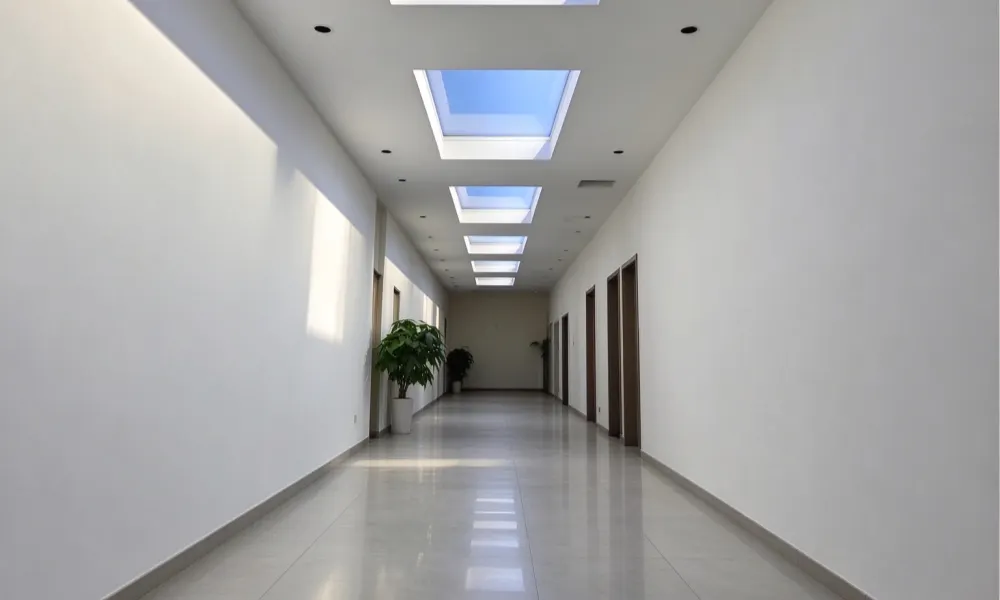
Types of Indoor Lighting That Mimic Sunlight
On the market, light fixtures that can achieve lighting that mimics sunlight are mainly divided into four major categories: ceiling lights, panel lights, floor lamps, and skylights. Each category has its own advantages and limitations.
-
Ceiling lights Full-spectrum ceiling lights can adjust color temperature and brightness, suitable for whole-home basic lighting. Their advantages are affordable price and simple installation; the shortcoming is that they can only output uniform flat light and cannot replicate the three-dimensional light-shadow effect of the sky, so they are suitable as auxiliary light sources.
-
Panel lights Ordinary LED panel lights are mostly used in offices and basements. Some high-specification panel lights can achieve high color rendering, but the light output is flat and rigid. Many commercial projects combine basement faux window for a combined solution to enhance the spatial atmosphere.
-
Floor lamps (daylight simulation lamp) Floor-standing daylight simulation lamps are flexible to move and suitable for local workstation supplementation and reading corners. The limitation is that the irradiation range is limited; they can only provide local lighting and are not suitable for large-area commercial space renovation.
-
Skylights (artificial skylight led ceiling panel) Skylights rely on special optical structures to simulate the light-shadow feeling of the sky. They not only output white light but also create a deep sky visual similar to a skylight. Suitable for windowless offices, gyms, and basements. The renovation of Wanda Lijian Gym in Baoshan District, Shanghai, chose skylights to dissolve the oppressive feeling inside the enclosed mall. Shortcoming: most styles have certain requirements for ceiling height, and recessed solutions require advance renovation planning.
Tip: faux window for office can be paired with skylights for partitioned offices, further strengthening the visual and psychological feeling of “having window daylight.”
RoombyRoom Recommendations
Different spaces have very different needs for lighting that mimics natural light. Below are selection recommendations by scenario.
Home bedroom: Prioritize low glare and adjustable color temperature. Excessively high illuminance is not recommended; at night, you can switch to warm light mode to protect melatonin secretion. Suitable for small skylights or full-spectrum ceiling lights.
Home basement: Most completely lack natural daylight. You can combine basement faux window with skylights. This balances basic lighting and atmosphere, alleviating the cold and oppressive feeling of the basement.
Office, partitioned workstations: Use skylights for ambient light in large spaces, and pair workstations locally with daylight simulation lamp for supplementation. faux window for office can be placed on interior walls to relieve the psychological fatigue caused by windowless workstations.
Commercial fitness space (refer to Wanda Lijian Gym in Baoshan District): For large spaces, prioritize multiple groups of artificial skylight led ceiling panel arranged in a distributed manner. While ensuring overall illuminance, control glare so members’ eyes do not easily become sore and swollen during long exercise.
Study/reading area: Do not rely solely on ceiling lights; combine ceiling lights + local floor-standing daylight simulation lamps to balance ambient light and desktop task lighting, achieving a better mimic natural light effect.
Budget, Energy Use, and Maintenance
Many users worry that lighting that mimics sunlight is expensive and consumes huge amounts of electricity. Based on a large number of implemented projects, we objectively break down budget, energy consumption, and maintenance points.
Budget range: Ordinary full-spectrum ceiling lights are an entry-level solution with the lowest cost; floor-standing daylight simulation lamp is mid-range; artificial skylight led ceiling panel skylights are mid-to-high-end, and recessed products cost more than surface-mounted versions. For commercial projects with bulk procurement, unit costs will drop significantly. Wanda Lijian Gym in Baoshan District is a commercial case of bulk implementation.
Energy consumption: High-quality skylight LED luminous efficacy performs well, but compared with ordinary flat LED, due to the complex optical system, power consumption at the same brightness is slightly higher. It is recommended to prioritize models that support dimming; they do not need to be always on at full power, thereby reducing long-term electricity costs.
Maintenance
-
For recessed skylights, pay attention to ceiling dust prevention and regularly clean dust from the panel surface. Dust accumulation will weaken the light-shadow effect of light mimicking sunlight.
-
For damp basements, choose styles with moisture-proof protection ratings. That is, when combining with basement faux window renovation, the fixture’s protection rating cannot be ignored.
-
The light source is LED, with a long normal service life, and there is almost no need to frequently replace lamp beads.
Buying Checklist
Before ordering and purchasing lighting that mimics sunlight, you can check this list item by item to avoid marketing traps.
-
✅Check the complete parameter table: adjustable color temperature range, spectrum description, CRI color rendering index, UGR glare value, and illuminance parameters. Do not only look at promotional images.
-
✅Distinguish product positioning: distinguish whether it is a basic full-spectrum light or a true artificial skylight led ceiling panel; the former can only improve light quality, while the latter can simultaneously replicate the sky visual.
-
✅Confirm installation conditions: For recessed skylights, verify ceiling thickness; if you plan to install faux window for office or basement faux window, confirm wall installation conditions.
-
✅Match usage scenario: For small home rooms, there is no need to blindly purchase high-power commercial skylights; gyms and large office spaces need to reserve sufficient illuminance.
-
✅Evaluate control functions: Prioritize dimming and color tuning, support time-period switching, to better achieve the day-night variation effect of lights that mimic natural light.
-
✅For commercial projects (gyms, offices), prioritize checking real implementation cases, such as similar projects at Wanda Mall Lijian Gym in Baoshan District, to reduce the risk of pitfalls.
-
✅If purchasing a floor-standing daylight simulation lamp, confirm the irradiation coverage range and judge whether it can meet your actual usage area.
Final note: lighting that mimics sunlight is not something that can be achieved simply by buying a “daylight bulb.”
You need to understand the five key parameters: color temperature, spectrum, color rendering index, illuminance, and glare. Choose ceiling lights, panel lights, floor lamps, or skylights according to the space, and comprehensively judge in combination with budget and installation conditions. Only then can you truly achieve light mimicking sunlight, stably mimic natural light indoors, and experience the comfortable light environment brought by lights that mimic natural light.