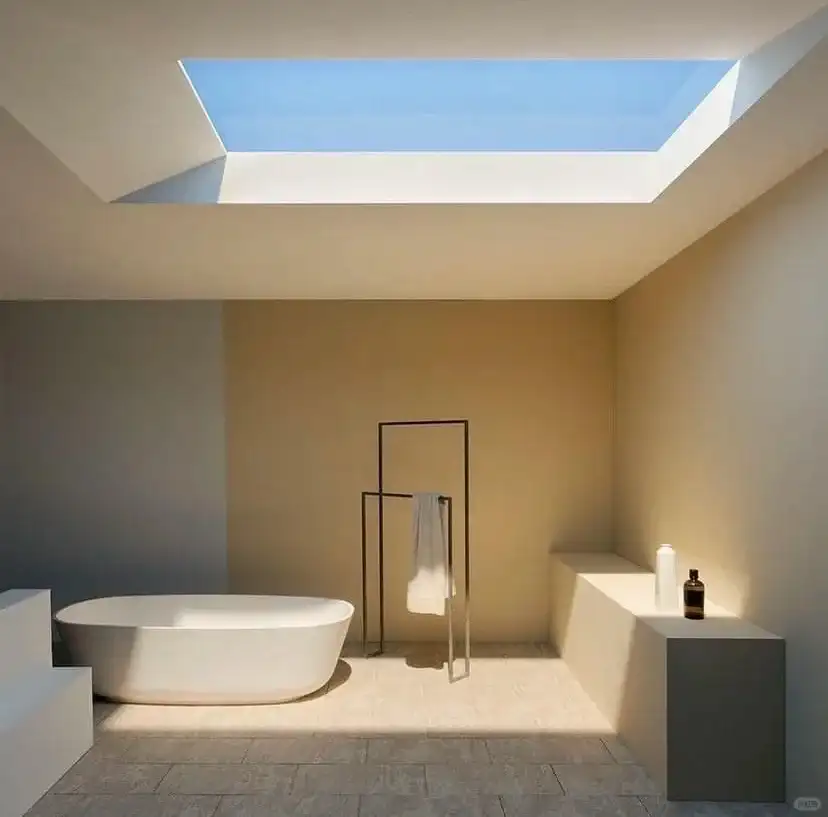
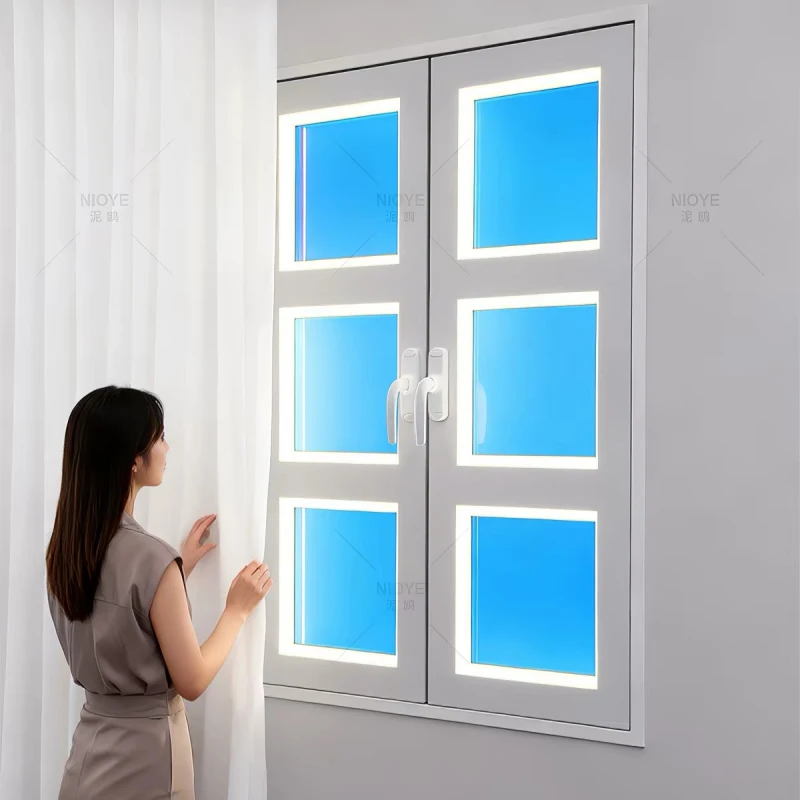
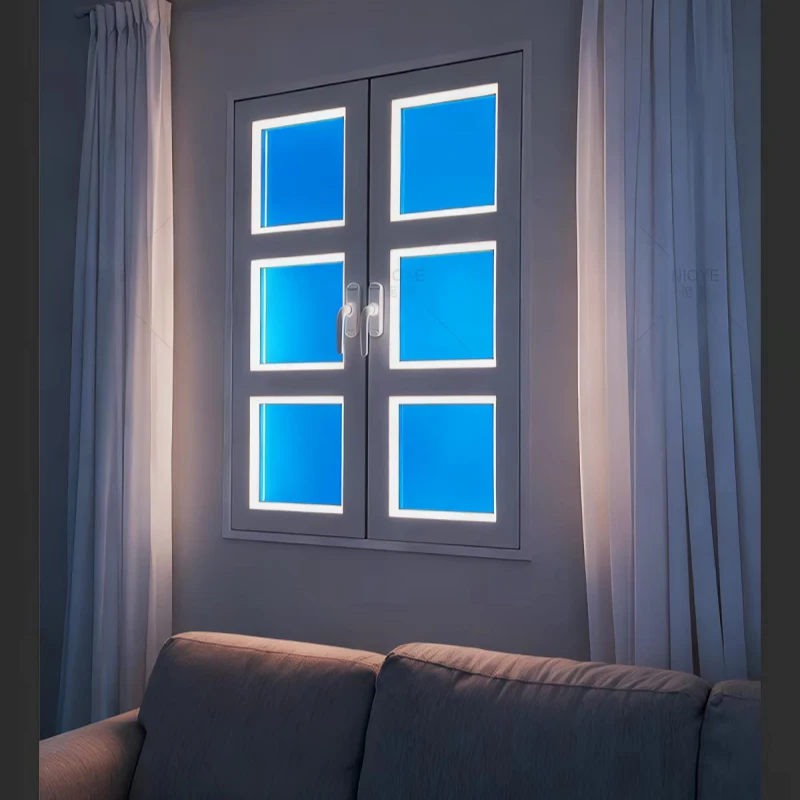
In windowless rooms, basements, or enclosed offices, ordinary lighting can only solve the problem of “being able to see,” but it is hard for it to solve the feeling of “being in sunlight.”
EASY Skylight does not focus on simply illuminating a space; instead, through the principle of Rayleigh scattering, it brings the blue of the sky, the brightness of the sun, and the layers of natural light indoors. For users pursuing realistic sunlight, this kind of light is closer to the experience of actually opening a window.
Why Realistic Sunlight Matters Indoors
The human eye is very sensitive to natural light. We not only use light to see objects clearly, but also use it to judge time, space, and direction. Living in windowless spaces for a long time can easily make people feel depressed, tired, and can even affect circadian rhythms.
The value of realistic sunlight is that it is not just bright; it lets a space regain the feeling of “sky” and “sun.”
For example, artificial skylight for basement is popular because basements usually lack natural daylight, and a simulated skylight can rebuild a bright sky on the ceiling.
For residential and commercial spaces, this kind of light can improve comfort and also make small or enclosed rooms appear more open and layered.
What Makes Light Look Like Real Sunlight?
Real sunlight is not a single color. On a clear day, the sky is bluish, the area near the sun is whitish and warm, the edges of object shadows are clear, and the space has a sense of direction. To make indoor light achieve the effect of light similar to sunlight, spectrum, color temperature, brightness, and glare must all be handled at the same time.
The core of a Rayleigh scattering skylight is the use of a nanoscale scattering layer to simulate the atmosphere’s scattering of short-wavelength blue light. The LED light source enters from the side, and blue light diffuses in the scattering panel, forming an even sky-like feel while retaining a brighter spot closer to the sun.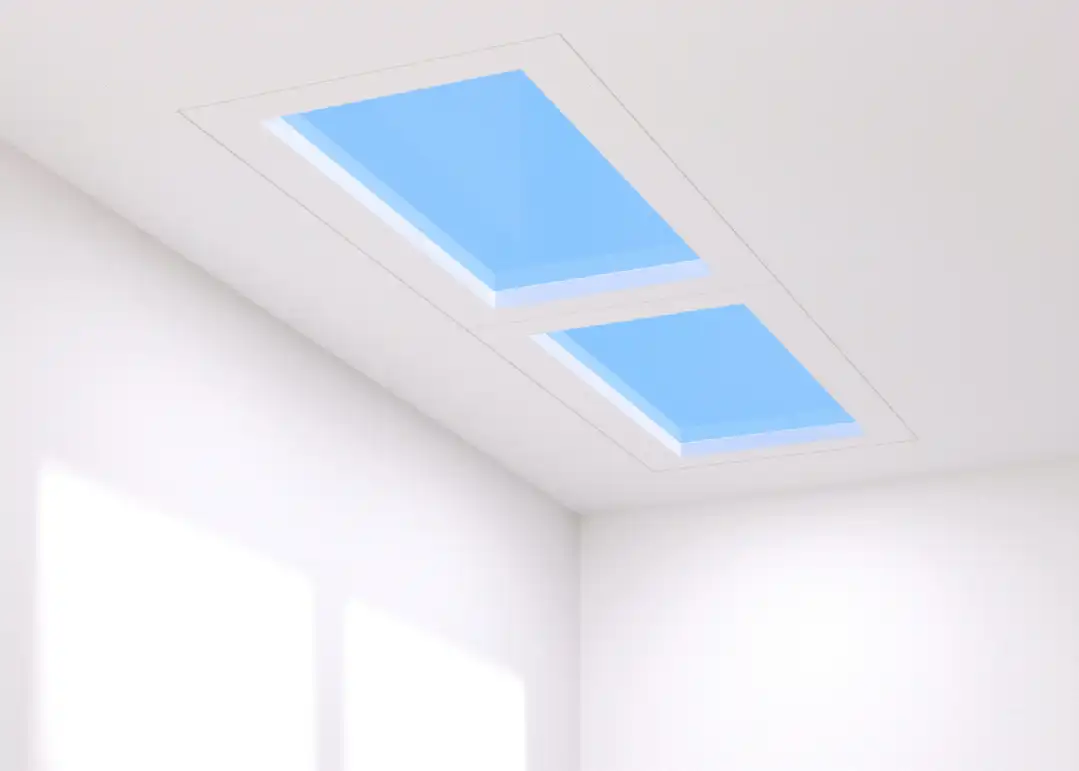
Color Temperature and Spectrum: From daylight simulation lamp to Rayleigh Scattering
Ordinary daylight simulation lamp often only emphasizes high color temperature or high brightness, but real sunlight is a combination of continuous spectrum and spatial distribution.
Skylights usually make the sky area cooler and bluer, and the sun area whiter and warmer, thus forming a natural transition.
If the spectrum is not continuous, skin tones, wood tones, fabrics, and food will look gray or fake. Therefore, professional products pay attention to blue-light peaks, red-light supplementation, and overall spectral continuity, rather than just labeling a color temperature number.
CRI and Glare Control
High CRI does not necessarily mean it looks like sunlight. In the industry, CRI≥90 is usually recommended, and attention is also paid to special color rendering indices such as R9. More advanced evaluations also refer to TM-30 to observe color fidelity and skin tone rendition.
Glare is equally critical. Although real sunlight is bright, it does not keep stinging the eyes. A skylight should control UGR within a comfortable range through diffuser panels, side-entry light sources, and indirect lighting, avoiding visible LED particles or hot spots.
Realistic Sunlight vs Ordinary Full-Spectrum Lamps
A full-spectrum lamp can approach the color rendering performance of sunlight like light, but it usually lacks the spatial relationship of “sky” and “sun.” The light spreads evenly, and the space still feels flat, lacking a sense of direction and depth.
The difference with a skylight is that it simulates a glowing sky, not a glowing panel. You will see a blue sky background, a bright solar spot, and the soft shadows produced by it. This layering makes the room feel more like it has a window, rather than just having one more lamp.
Therefore, when choosing the best lamp to simulate sunlight, you cannot just look at the spectrum chart. You also need to see whether it can produce natural light and shadow on walls, floors, and people’s faces.
How to Test If a Lamp Looks Like Real Sunlight
When testing, you can first turn on the lamp in a dark room and observe it for 10 minutes. True lights that are like sunlight should make the eyes comfortable, rather than being dazzling at first glance.
You can place a piece of white paper, a palm, and a blue object. See whether the white paper has a color cast, whether the hand shadow is natural, and whether the blue looks gray. Then take a photo with a mobile phone camera and observe whether the white balance shifts drastically.
You can also look at the lamp from the side. If you can see obvious LED beads, bright spots, or a grid, it means diffusion is insufficient. A good skylight should look like a piece of sky, not a backlight panel.
Best Rooms for Realistic Sunlight
Living Room
The living room needs a sense of openness and relaxation. sunlight mimicking light can make a windowless living room no longer feel like a closed box, and it is especially suitable for basements, home theaters, and interior areas of large flat-floor apartments.
Study
The study needs stable, comfortable light suitable for long periods of reading. sun mimicking light can help maintain alertness while reducing the tension brought by traditional cool white light.
Photography Area
The photography area values stable color temperature, accurate color rendering, and even light. A skylight can be used as background light or ambient light, but attention should be paid to white balance when mixed with other light sources.
Office Area
Enclosed offices, meeting rooms, and customer service centers often lack natural light. indoor lights that mimic sunlight help improve the atmosphere of the space and allow employees to maintain a better state during the day.
Buying Checklist
Before buying, first confirm the room area, ceiling height, and installation method. Then check color temperature, brightness, CRI, TM-30, UGR, dimming method, and whether timer control is supported.
When evaluating led ceiling panel artificial skylight, focus on whether the scattering is even, whether the solar spot is natural, and whether the edges transition softly. Also confirm the driver power supply, heat dissipation, certifications, and warranty.
If budget allows, give priority to products that can simulate sky blue, sun white, and natural shadows. EASY Skylight recommends doing a simple lighting simulation before installation, to avoid only looking at parameters while ignoring the real spatial experience.