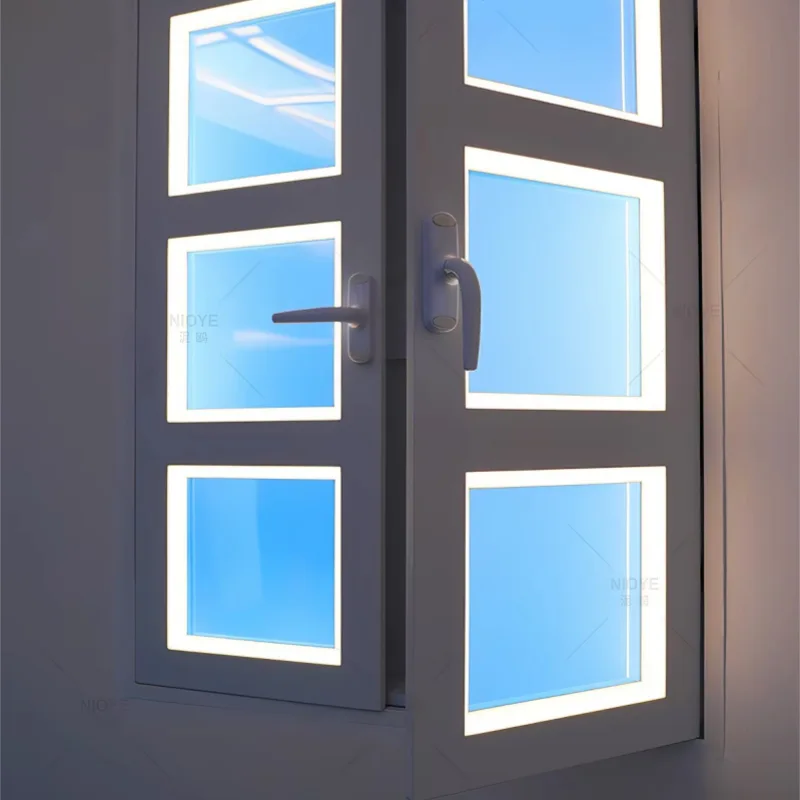
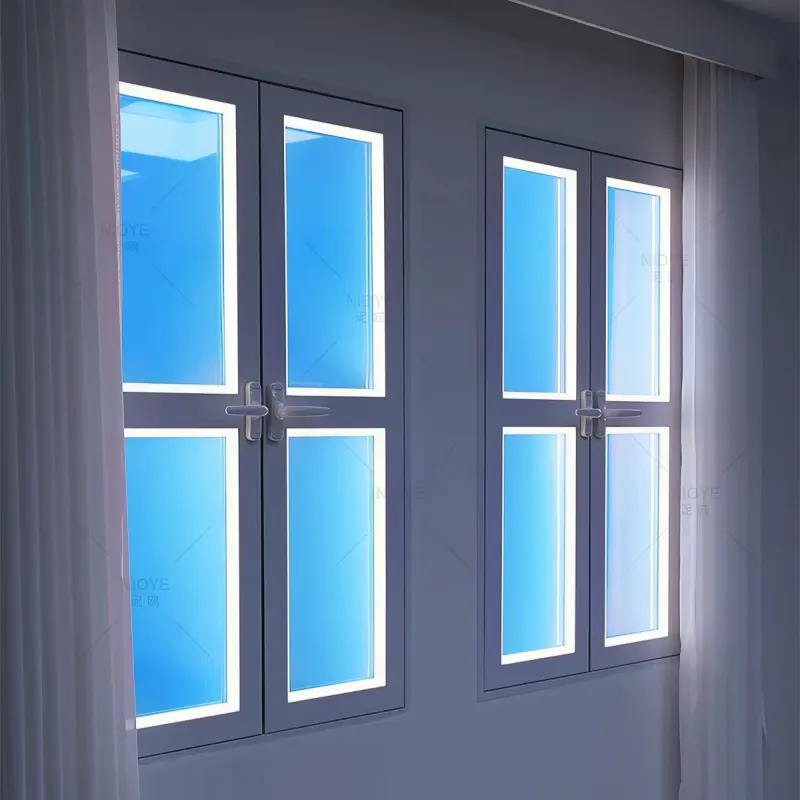
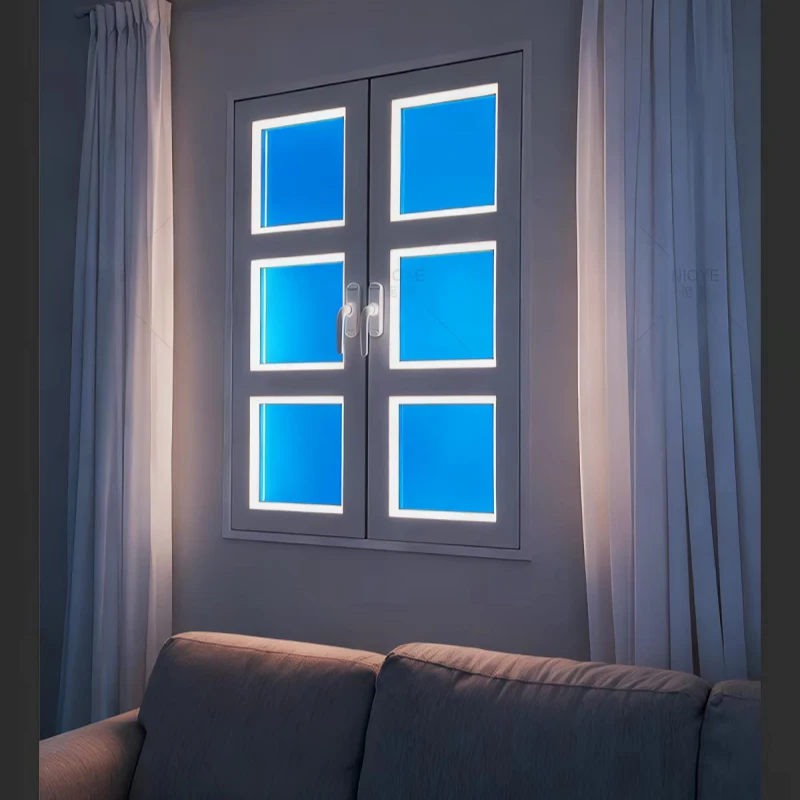
Many basements, internal offices, and windowless bedrooms lack natural light all year round. Staying in such spaces for a long time can easily lead to mental fatigue, poor indoor plant growth, and visual fatigue during reading and office work.
Many users search for how to mimic sunlight indoors, hoping to get an experience close to real daylight at home without opening windows.
This article combines our years of experience in Clear Sky Lamp product R&D and lighting project implementation to explain the practical methods of sunlight simulation step by step, helping everyone understand the core logic of simulating sunlight, learn how to fake natural light, and use lamps to achieve the effect of mimic sunlight.
Why Simulate Sunlight Indoors?
Natural light does more than provide illumination; it directly affects the human circadian rhythm, emotional state, visual comfort, and indoor plant growth.
Rooms without windows rely entirely on ordinary indoor LED, and the light is flat and monotonous, lacking the layering and light-shadow transitions unique to daylight.
Many residential basements and partitioned offices fall into this category, which is also why artificial skylight for basement is searched by a large number of users.
Reasonably simulating sunlight indoors can bring these benefits:
-
Stably maintain circadian rhythm and improve the oppressive feeling caused by enclosed spaces
-
Reduce visual fatigue from long-time reading and office work
-
Provide a qualified lighting environment for indoor greenery
-
Enhance the sense of openness in windowless spaces and weaken the closed, cramped spatial feeling
Step 1 — Assess Your Room’s Natural Light
Before starting to arrange light sources, first objectively assess the room’s existing natural light conditions. Do not blindly purchase lamps directly.
You can observe the room at three times of day: morning, noon, and evening:
-
Whether direct sunlight enters, and for how long;
-
Whether there is only weak diffused light, or no external daylight at all;
-
Room height and wall color. Light-colored walls are better for light diffusion, while dark walls absorb a large amount of light.
If the room has almost no natural light, it needs to rely entirely on artificial solutions; if there is only a small amount of daylight for a short time, use lamps as a supplement to daylight. For many users concerned about faux windows for windowless rooms, such solutions are preferentially suitable for spaces with no external daylight at all.
Step 2 — Define the Purpose
Clarifying your usage goal is the premise of the entire solution. Different uses have completely different parameter requirements for sunlight simulation, mainly divided into five scenarios: reading, office, mood improvement, plants, and photography.
Reading: Focus on glare control, soft and even light, avoid paper reflection; high color rendering index is key. Office: Need sufficient basic illuminance, with adjustable color temperature, adapting to daytime work and evening overtime, reducing drowsiness. Mood improvement: Prioritize replicating the daylight circadian changes, simulating the light rhythm from soft morning to bright afternoon, to regulate the human circadian rhythm. Plants: Ordinary lighting is not equal to plant lighting; pay attention to spectrum, and when necessary pair with supplementary light components; do not only look at visual brightness. Photography: Has the highest requirements for color rendering and light-shadow layering; need finely adjustable brightness and color temperature to restore true colors of objects.
Tip: The same room often serves multiple purposes. Products like Clear Sky Lamp are designed for multi-scenario use.
Step 3 — Choose Color Temperature and Brightness
Real sunlight changes color temperature dynamically over time: warm in the early morning, cool white at noon, and warm yellow again at dusk. For simulating sunlight, you cannot fix a single color temperature.
-
Simulate noon daylight during the day: 5000–6500K recommended, suitable for office and reading;
-
Early morning and evening atmosphere: 3000–4000K warm white light, used for relaxation and mood soothing;
-
Brightness should not be pursued as brighter is better. Too bright will produce harsh glare; insufficient brightness will fail to achieve the effect of mimic sunlight.
Most daylight simulation lamp on the market support dual adjustment of color temperature and brightness. This is also the core indicator when choosing simulated sunlight lamps. Fixed color temperature lamps can hardly restore the real daylight feeling.
Step 4 — Position the Light Correctly
No matter how good the lamp is, if the installation position is wrong, it cannot achieve how to fake natural light. Real sunlight comes from an oblique high altitude. Light shining vertically downward will look very much like an ordinary ceiling light, lacking the sunlight atmosphere.
Practical layout points:
-
Try to simulate the logic of natural light incidence; the light source should be biased toward one side of the room, rather than shining vertically downward from the exact center;
-
Leave an appropriate distance between the lamp and the wall, and use wall reflection to form a soft light-shadow gradient, restoring the layering of sunlight entering a room;
-
For reading and office scenarios, keep the light source out of direct sight to prevent glare;
-
When used for plants, control the distance between the lamp and the plants. Too close will burn the leaves; too far will result in insufficient light intensity.
If you choose fake window light panel type lamps that simulate windows, try to arrange them on a wall or ceiling position that visually resembles a window. The psychological perception will be closer to real daylight.
Step 5 — Use a Sunlight Simulation Lamp
To efficiently achieve how to mimic sunlight indoors, professional sunlight simulation lamps are the core carrier. Ordinary bulbs can hardly fully replicate the spectrum and light-shadow layering of natural light.
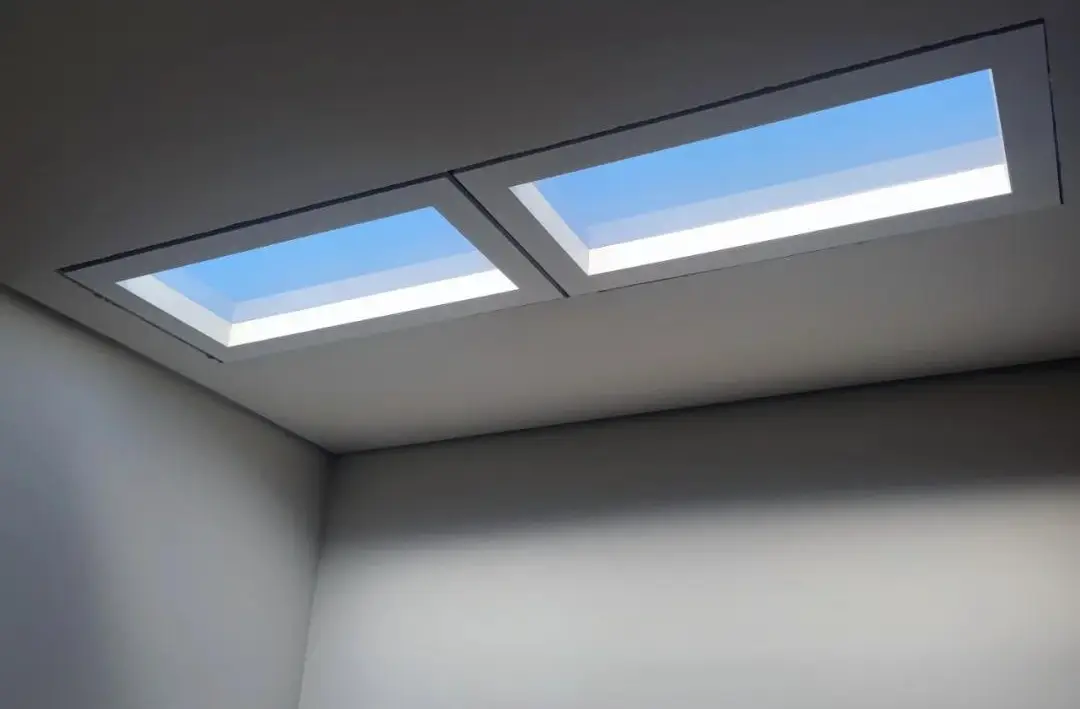
Clear Sky Lamps belong to the artificial skylight category. Through special optical structures, they restore a visual effect close to real sky daylight, suitable for basements, windowless offices, and dark bedrooms.
When purchasing, based on project experience, we recommend focusing on checking 4 indicators:
-
Color rendering index CRI: Prefer high color rendering; color restoration is closer to real sunlight;
-
Adjustable color temperature and brightness, supporting switching between different modes for daytime and dusk;
-
Anti-glare design; eyes are less likely to fatigue when working and reading under the lamp for a long time;
-
Installation adaptability: confirm whether ceiling and wall conditions support it, and distinguish between recessed and surface-mounted versions.
Note: Simulated sunlight lamps are not equal to plant grow lights. If you also want to care for indoor plants, some Clear Sky Lamps can be paired with additional supplementary light modules. Do not simply rely on Clear Sky Lamps as the only light source for plants.
Common Mistakes When Faking Natural Light
Many users easily fall into the following pitfalls when doing mimic sunlight, resulting in cost input but poor results.
-
Only pursuing brightness, ignoring color temperature and spectrum. The light is very bright, but the spectrum is missing; visually it looks white and harsh, and it is not simulating sunlight.
-
Placing the lamp in the exact center of the room and shining vertically downward; the light is flat and lacks the shadow layering brought by oblique natural light.
-
Not considering your own room size and wall color; using an overly high-power lamp in a small room causes glare.
-
Confusing ordinary lighting lamps with dedicated daylight simulation lamp. Ordinary LED bulbs can only make the color whitish and cannot replicate sky daylight light-shadow.
-
Expecting one lamp to perfectly satisfy all strict needs of photography, plants, sleep, and office at the same time. Multi-objective scenarios can use a combination of auxiliary light sources.
FAQ
Q1: Can artificial skylight completely replace real sunlight?
A: It can highly simulate daylight at the levels of visual lighting and mood lighting. But real sunlight contains ultraviolet rays. Some plant growth and human vitamin synthesis still require moderate real sun exposure. Lamps cannot 100% replace outdoor sunlight.
Q2: For faux windows for windowless rooms, is installation difficult?
A: It depends on the product. fake window light panel has surface-mounted and recessed types. Surface-mounted versions have a low renovation threshold and do not require large-scale ceiling renovation; recessed versions require reserved ceiling space in advance. For basement renovation, prioritize confirming ceiling conditions before selecting a model.
Q3: Is daylight simulation lamp suitable for being left on all night?
A: It is not recommended to run at high brightness all night. Simulate daylight during the day; at night, it is recommended to switch to a low-brightness warm light mode, to avoid high-brightness cool white light interfering with melatonin secretion and affecting sleep.
Q4: For artificial skylight for basement used in basements, do we need to consider moisture protection?
A: If it is a humid basement, prioritize lamps with moisture-proof protection ratings. Ordinary indoor lamps in long-term high-humidity environments easily have shortened service life.
Q5: How can I judge whether my home is suitable for sunlight simulation?
A: Whether it is completely windowless or has insufficient natural light, both can use it. First look at the space use: long-term office work, home reading, and oppressive enclosed rooms show the most obvious improvement effect.
how to simulate sunlight indoors is not simply buying a bulb. We assess the room space, clarify the usage goal, choose the right color temperature and brightness, and set the Clear Sky Lamp position, so as to truly achieve how to fake natural light, comfortably mimic sunlight indoors, and gain the comfortable spatial experience brought by simulating sunlight.