What Is a Fake Window with Scenery?
Many windowless basements, interior cubicles, and north-facing offices without light cannot enjoy outdoor views and soft natural light. fake window with scenery (landscape-simulating fake window) is an innovative solution under the artificial skylight category.
fake windows with scenery are not simple decorative paintings. They use backlight sources to simulate the effect of light coming through a real window, bringing outdoor scenery into spaces without physical windows. There are many names on the market; fake scenery window and fake window scenery both refer to this type of simulated daylight fake window that can display scenery images.
Unlike ordinary decorative wall art, its core value comes from artificially simulated natural light. Excellent products can achieve an atmosphere close to that of a real window, and it is also an important derivative form of the modern artificial skylight. Among them, faux window led panel is a very mainstream hardware carrier for achieving this kind of effect.
Popular Scenery Ideas
Choosing the right image directly determines the emotional feeling that a fake window scene brings to a space. Below are the six most widely accepted scenery themes in the market.
-
Forest scenery: dense trees and dappled light through the forest, suitable for studies and meditation rooms, helping relieve mental stress. With soft backlighting, it recreates the atmosphere of sunlight filtering through leaves.
-
Beach scenery: blue sea, white sand, and clear sky, used in basements and entertainment rooms to create a relaxed vacation atmosphere.
-
City scenery: urban skyline, suitable for modern offices and loft apartments, creating the look of floor-to-ceiling windows.
-
Snow mountain scenery: snowy mountains and clear sky images, suitable for minimalist, cool-toned homes, broadening the visual field and relieving the oppression of enclosed spaces.
-
Garden scenery: images of courtyards with flowers and greenery, suitable for bedrooms and leisure areas, making up for the lack of outdoor greenery views.
-
Sunset scenery: dusk glow images, very suitable for evening ambient lighting; some high-end solutions can also simulate color temperature gradients.
Users pursuing greater immersion can pay attention to fake skylight with moving clouds; the dynamic flowing cloud effect will take the realism of fake window scenes to a higher level.
Fake Scenery Window Materials
To build a qualified fake scenery window, there are four mainstream material approaches; different materials differ significantly in cost, realism, and maintenance difficulty.
-
Light box: Traditional backlit light box, mature structure, convenient image replacement, and high cost-effectiveness. The disadvantage is that it is relatively thick, more suitable for wall installation, and less used for ceiling artificial skylights.
-
Canvas: Translucent canvas paired with backlight, soft image texture and warm colors. It needs to be paired with an even light source; if the light source is unevenly arranged, local overly bright spots can easily appear. Many led backlit faux window solutions use translucent canvas as the imaging medium.
-
Screen: LCD and LED displays; the advantage is that they can switch among multiple sets of fake window scenery images and support dynamic video materials. The shortcoming is that screen graininess can easily appear, and some products have relatively high blue light, so parameters suitable for home use should be carefully selected.
-
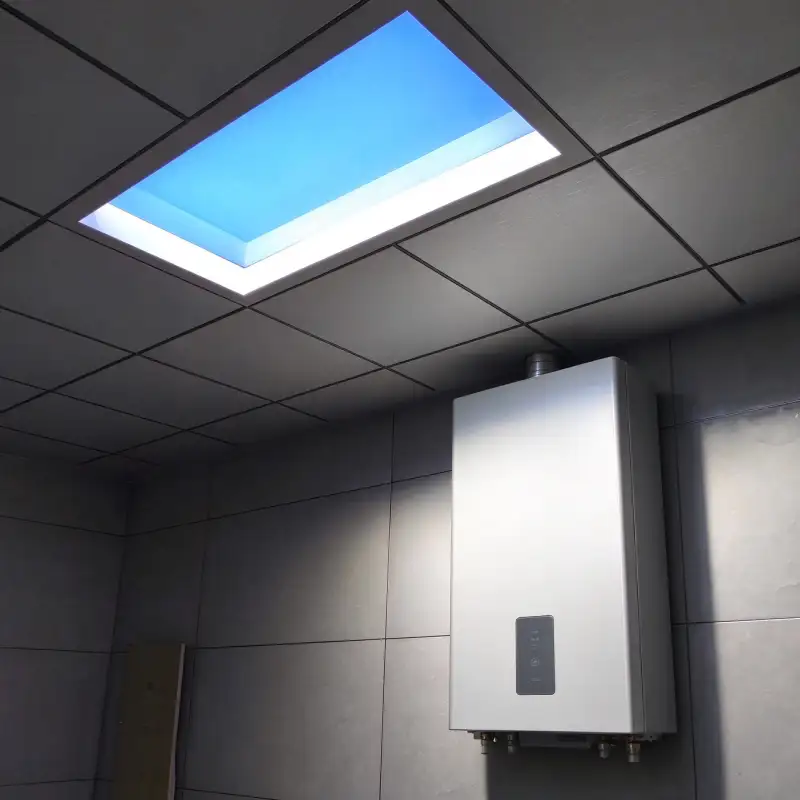
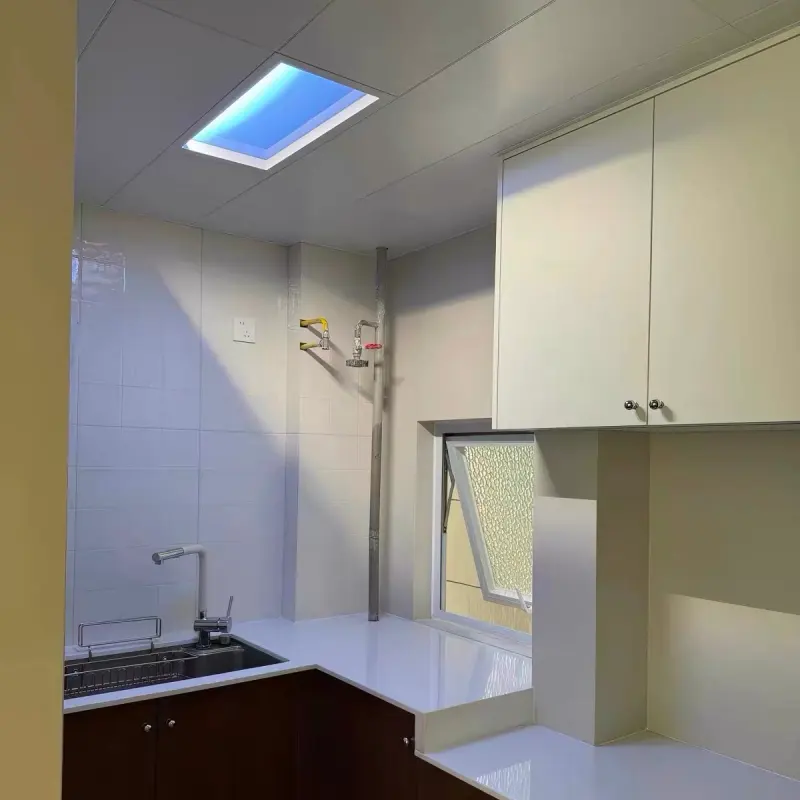
Backlit panel: Also known as fake window light panel, it is also the most commonly used component in artificial skylight products. The light guide plate emits light evenly and is thin and lightweight; it can be embedded in ceilings, balancing simulated windows and basic ambient lighting, and is the preferred choice for home projects.
How to Make a Fake Window Scene Look Real
After many users build a fake window with scenery, the problem of it looking “fake” at first glance appears. To improve realism, you cannot rely only on a good-looking scenery image; you must balance three dimensions: light, proportion, and detail.
First, match the brightness logic of a real window. Real windows are not overly glaring. The core of fake window with natural light is that the light source brightness cannot be much higher than the indoor environment, avoiding a glowing billboard feel.
Second, control size and spatial proportion. Do not choose an oversized fake window scene for a small room; disproportionate scale will ruin the spatial feeling. For the simulated window frame, it is recommended to choose the same style as the real windows in the home to reduce incongruity.
Third, handle auxiliary environmental details. You can pair it with a light, thin simulated sheer curtain to mimic the curtain structure of a real window; try to avoid direct strong light hitting the surface of the simulated fake window, to prevent reflections from ruining the image.
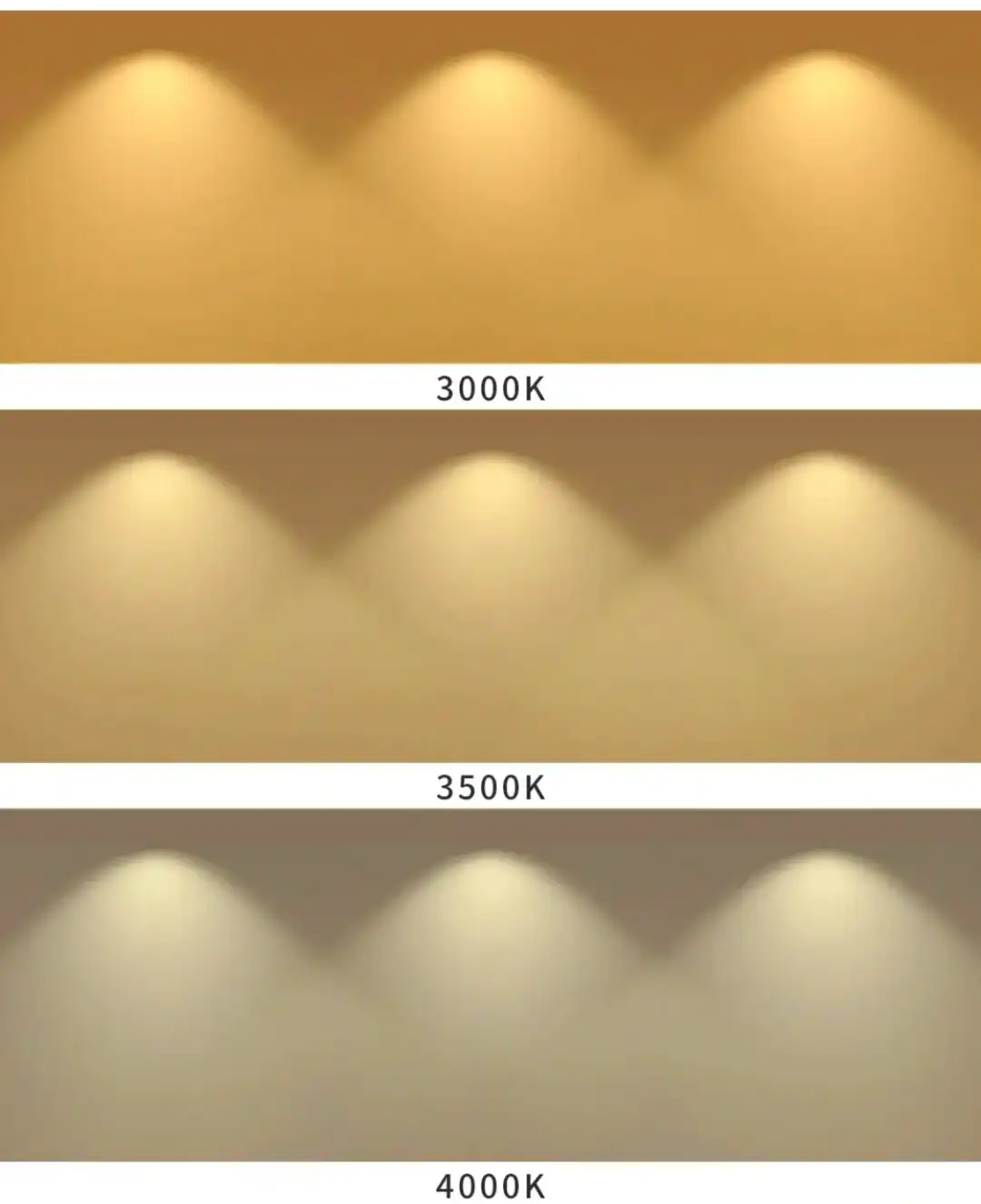
Fourth, match color temperature to the image. Forest and beach clear-sky images are suitable for 5000-6000K cool white light; for sunset scenes, lower the color temperature to the warm light range, and the image atmosphere will be more unified.
Placement and Lighting Tips
Even the best fake windows with scenery can have the overall experience weakened if the placement and ambient lighting pairing are wrong.
For a wall-mounted fake scenery window, give priority to positions where a physical window would appear, such as the side wall next to a sofa or the side of a bedroom headboard; do not place it directly behind furniture where it is completely blocked.
Ceiling-mounted artificial skylight-type fake window scenery is suitable for basements and windowless corridors. Be careful to reserve heat dissipation space; do not place it tightly against insulation boards.
In ambient lighting, do not let the main light brightness overpower fake window scenes. The simulated fake window plays the role of “simulating natural light outside the window,” while the indoor main light serves as a supplement. If the primary-secondary relationship is reversed, the illusion of an open window will be lost.
If space allows, you can pair it with a small floor lamp for ambient fill light, replicating the effect of natural light diffusely reflecting into the corners of the room.
FAQ
Q: What is the difference between fake window with scenery and ordinary artificial skylight?
A: Standard artificial skylight focuses on simulating sky lighting, and the image is mostly pure blue sky and clouds; while fake window scene focuses on outputting complete outdoor scenery, such as beaches and forests. Many products can be two-in-one, able to display pure sky and also switch to scenery images.
Q: Can faux window led panel be installed in a humid bathroom environment?
A: It depends on the product’s IP protection rating. Ordinary indoor panels are not suitable for high-humidity bathrooms; bathroom use requires choosing an IP44 or higher waterproof version.
Q: Can the image of fake window light panel be replaced by the user later?
A: Canvas and light box styles mostly support image replacement; integrated backlit panel and screen models may not support it on some models, so product specifications need to be confirmed before purchase.
Q: Will fake window with natural light generate high electricity bills?
A: Mainstream LED solutions have low power consumption. For daily home use with long-term operation, energy consumption is close to that of an ordinary flat ceiling light, so there is no need to worry about high electricity costs.
Q: Can renters install fake windows with scenery?
A: Give priority to no-drill wall-hanging styles; ceiling-embedded styles require modifications to the house and are more suitable for owner-occupied homes.