I. Why Do Windowless Rooms Need Fake Windows?
Basements, rental apartments, dark living rooms, hallways and offices often lack natural daylight. Staying in such spaces for long periods can leave people feeling depressed, fatigued, and even unable to tell day from night.
For this reason, more and more people are exploring fake window ideas, hoping to create a “window” on the wall with a lightweight solution.
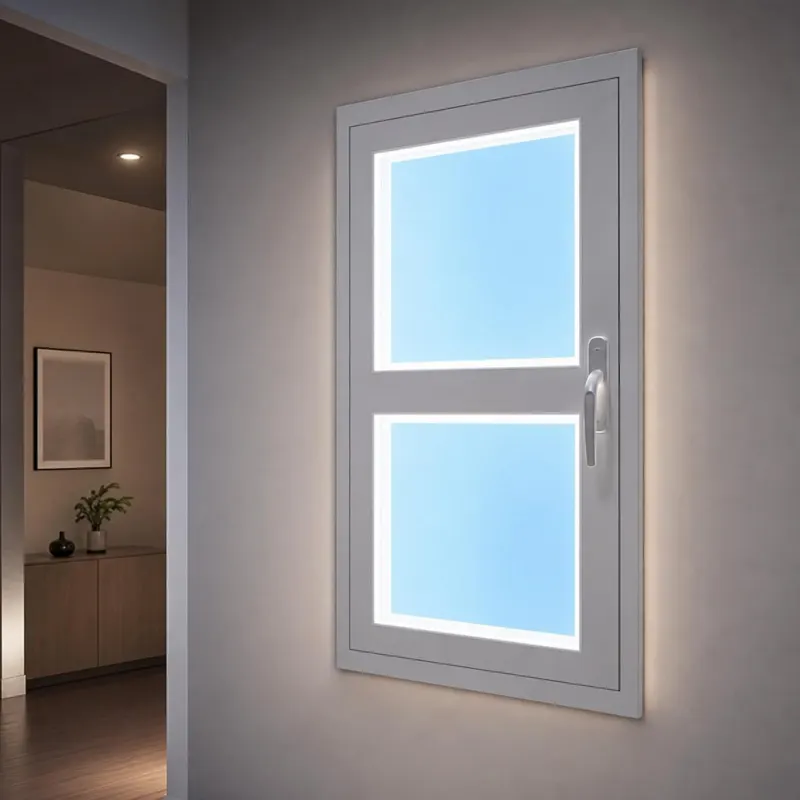
This type of design is often called pseudo windows. It does not involve cutting through walls. Instead, it simulates the visual and psychological experience of a real window using lighting, imagery, window frames and curtains. Compared with ordinary decorative paintings, it adds luminous quality and delivers a stronger sense of presence similar to a real window.
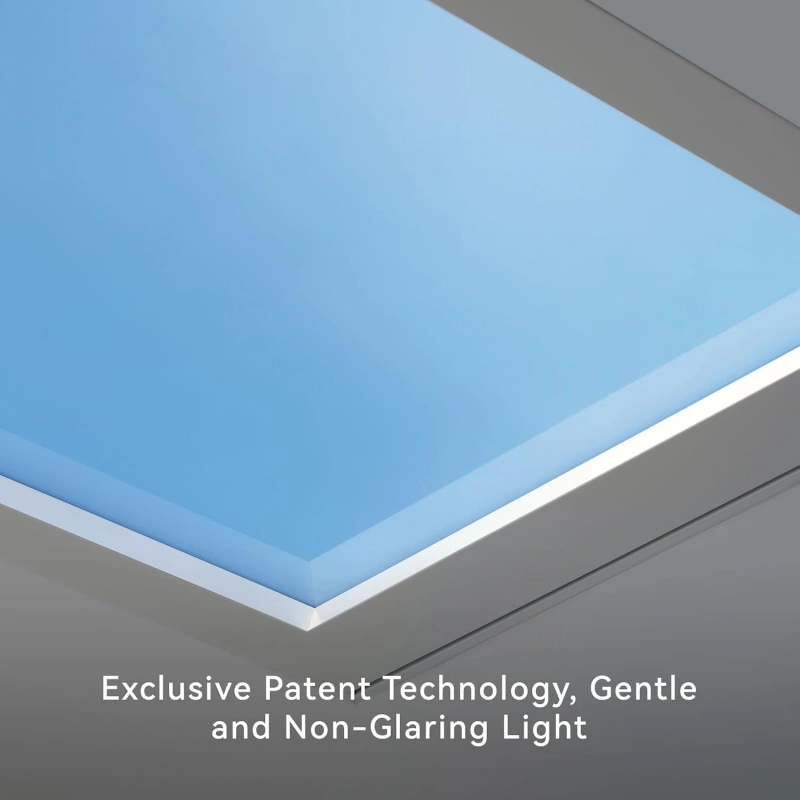
Among all available solutions, artificial skylight fake windows have gained growing attention in recent years. They can be understood as illuminated fake windows: featuring a window outline and sky-like brightness, turning windowless spaces away from sealed boxes.
II. How Are Artificial Skylight Fake Windows Different from Ordinary Fake Windows?
Traditional false window ideas mostly rely on window-scene paintings, mirrors, soft membrane light boxes, projected images, or simple landscape prints of seascapes and forests. While they work as wall decorations, they can hardly replicate the feeling of “natural daylight”. They look acceptable in daytime but tend to appear flat at night or on cloudy days.
The core of artificial skylight fake windows lies in a special optical structure that simulates blue sky, sunlight and cloud textures. It is not merely bright; the light appears as if streaming in from outside a window. Paired with window frames, blinds or sheer curtains, the realism improves significantly.
This is why the fake window trend is gaining traction: people no longer settle for “a painting of a window on the wall”. Instead, they want spaces with an atmosphere close to natural daylight. Especially in environments where wall demolition or new windows are not permitted, artificial skylight fake windows offer a practical compromise.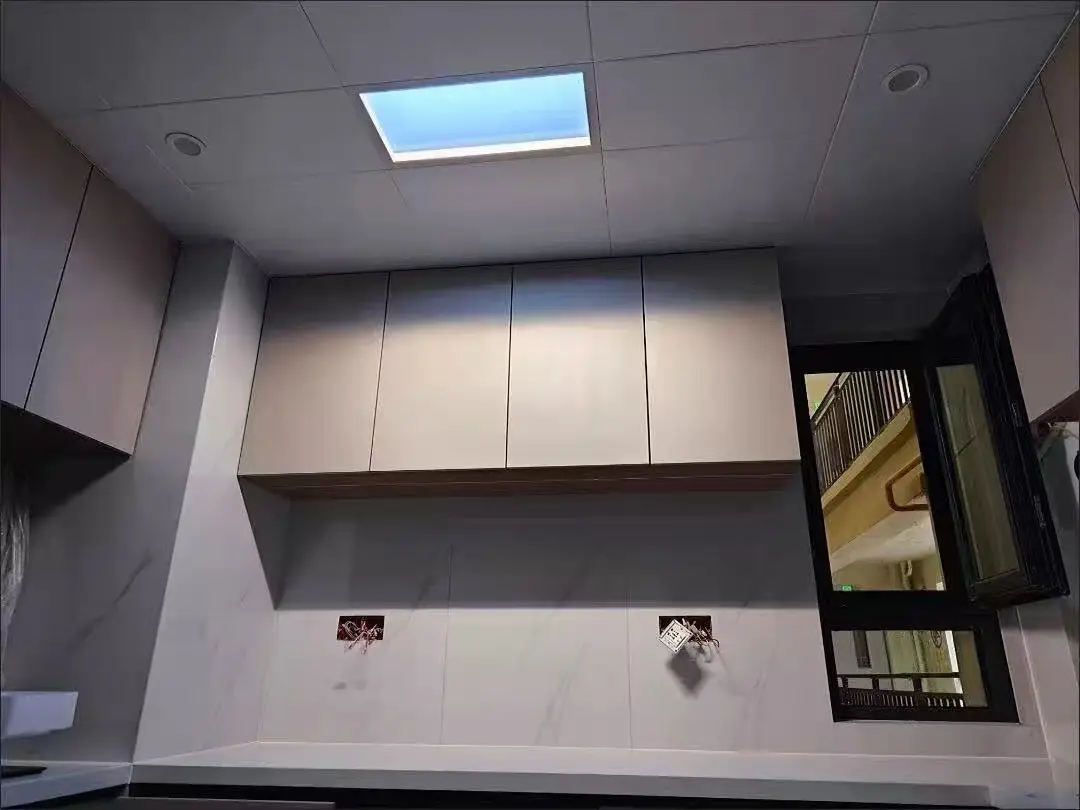
III. Best Spaces for Artificial Skylight Fake Windows
If you are looking for a solution for your space, start with usage scenarios. For faux windows for windowless rooms, bigger is not always better. Position, proportion and light effect are what matter.
- Focal wall in living rooms In dark living rooms or apartments, large artificial skylight fake windows can serve as the visual center. Minimalist window frames, white sheer curtains and light-colored walls make spaces feel more open.
- Bedroom headboard or side wall Bedrooms suit simulated early morning blue sky. The light can be linked to alarm clocks and brighten gradually, gentler than abrupt ringtones. Avoid installing directly facing the bed head to prevent glare.
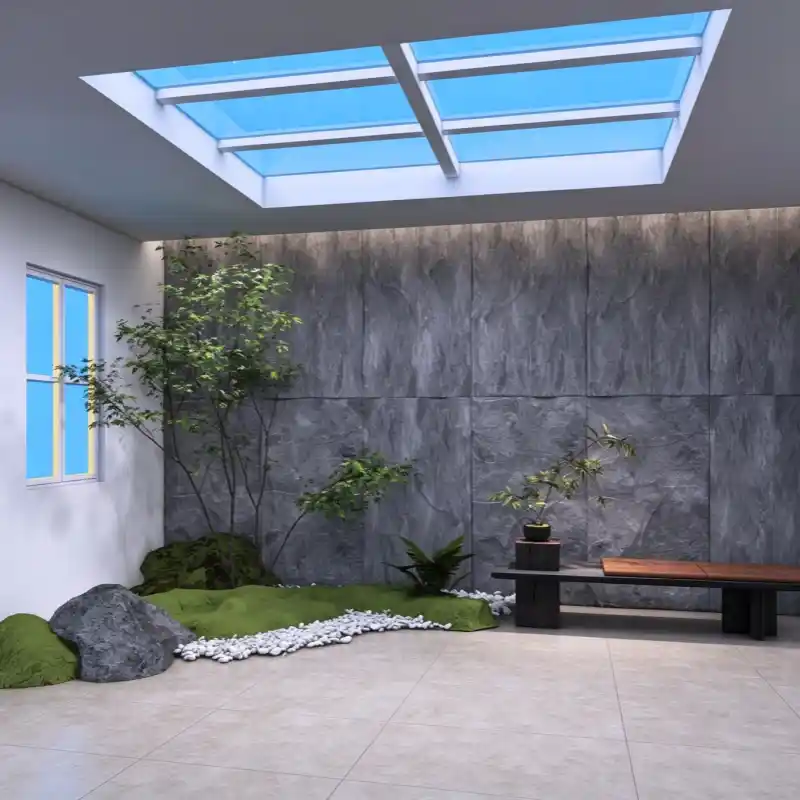
- Basements and home theaters Basements suffer most from a confined feeling. Adopt the artificial skylight concept and install a patch of “sky” on ceilings or high walls to ease the low, oppressive sensation. Pair it with warm indirect lighting for a more natural effect.
- Hallways, entryways and stairwells These areas usually do not require oversized fake windows. Compact pseudo windows guide circulation paths and supplement lighting, brightening these transitional spaces.
- Home offices A fake window makes video conference backgrounds look more natural. The virtual window concept, virtual window for office, is widely used to relieve fatigue from long indoor work hours.
- Kids’ rooms Kids’ rooms support cloud, starry sky, sunrise and other modes, which are safe and adjustable. Children love this changing “sky”, and parents can easily manage brightness.
- No-drill solutions for rental housing For spaces where wall modification is forbidden, choose prefabricated artificial skylight fake windows, surface-mounted light boxes or portable options. Installation is simple, and they can be fully removed when moving out.
- Commercial spaces Cafés, clinics, gyms and hotel corridors can use fake windows to build memorable features. It is not just lighting, but also an integral part of spatial design.
IV. Design Tips: How to Make Fake Windows Look Authentic
To achieve the effect of fake window with natural light, the key is not intense blue color, but natural, even and non-glaring lighting.
- Position at a height close to real window sills; too high resembles skylights, while too low looks unnatural.
- Match dimension proportion with the wall. Over-sized ones feel oppressive, and undersized ones look obviously fake.
- Window frames and mullions define the style: minimalist, French, grid and industrial styles are all available, and should align with interior decoration.
- Light quality is critical. High-quality artificial skylights hide visible lamp beads, with smooth blue sky gradients, anti-glare properties and high color rendering index.
- Adjustable color temperature is recommended to avoid overly cold or harsh blue tones.
- Curtains are essential for boosting realism: sheer curtains, blinds and roller curtains add depth.
- Smart controls support simulation of sunrise, sunset, clear sky and dusk.
- Heat dissipation and service life must be considered for long-hour operation.
V. Installation Methods & Budget Guidelines
Artificial skylight fake windows have several common installation types:
- Recessed installation: Most similar to real windows, requiring suspended ceiling or wall modification.
- Surface-mounted light box: Simple construction, ideal for renovation projects.
- Soft membrane artificial skylight: Suitable for large and irregular spaces.
- Prefabricated artificial skylight fake window: Fast installation, perfect for rental housing or projects without major construction.
Budget ranking from low to high: decorative painting < light box < prefabricated artificial skylight < recessed smart fake window. Before purchase, confirm electrician requirements, no-drill feasibility, removability and maintenance convenience.
VI. Common Misconceptions & Pitfalls to Avoid
First-time fake window projects often run into these issues:
- Mistaking fake windows for ventilated functional windows that can replace real windows. They mainly improve lighting atmosphere and psychological comfort instead of ventilation.
- Pursuing intense blue only and ignoring natural sky layers, resulting in a glowing flat blue panel.
- Excessive brightness that causes glare.
- Distorted size and proportion, looking fake at first glance.
- Neglecting wall reflection and material matching.
- Overlooking heat dissipation, service life and after-sales support.
With these details well handled, artificial skylight fake windows can evolve from mere decorations into integrated spatial design elements.
VII. Mix & Match with Other false window ideas
Artificial skylight fake windows do not have to stand alone. They can be paired with mirrors to expand perceived space, combined with window-scene paintings or projection to enrich outdoor scenery, and matched with greenery to create an indoor garden. Blinds and sheer curtains further lift realism. Adding white noise or aromatherapy creates a multi-sensory relaxation nook.
Conclusion: The Core of Fake Windows Is Not “Fakeness”, But Letting Spaces Breathe Again
The value of fake window ideas goes beyond wall decoration. It brings light, rhythm and emotional experience back to windowless spaces. As a modern solution for pseudo windows, artificial skylight fake windows have become a practical option within the fake window trend.
Whether you plan to renovate basements, bedrooms, rental apartments or offices, you can find suitable solutions among false window ideas. Start by measuring walls, then select dimensions, installation methods and light effects, and finish with curtains and smart controls. With proper design, a fake window can also make a room breathe again.