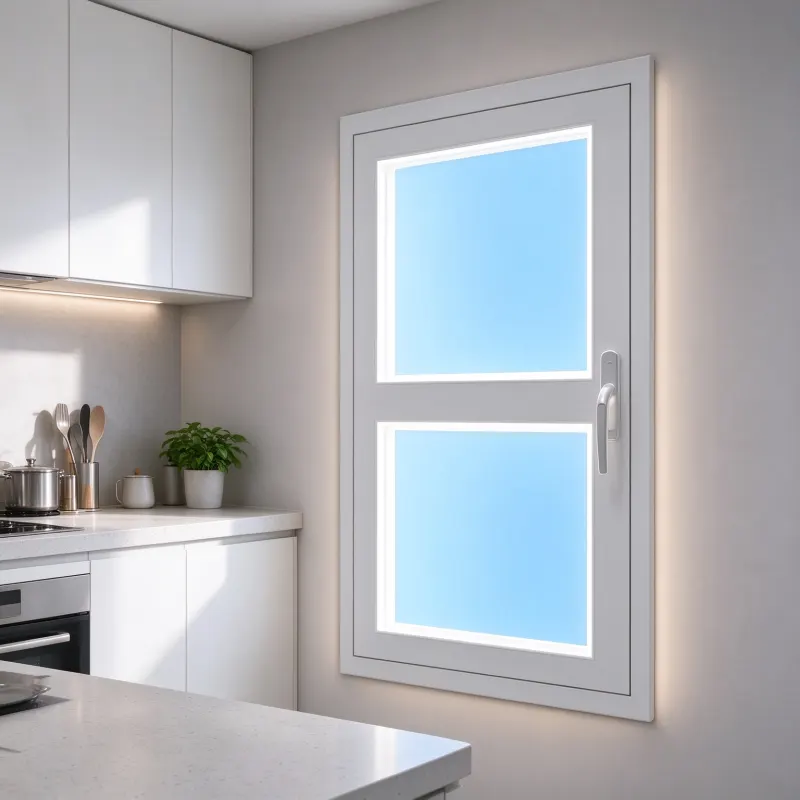
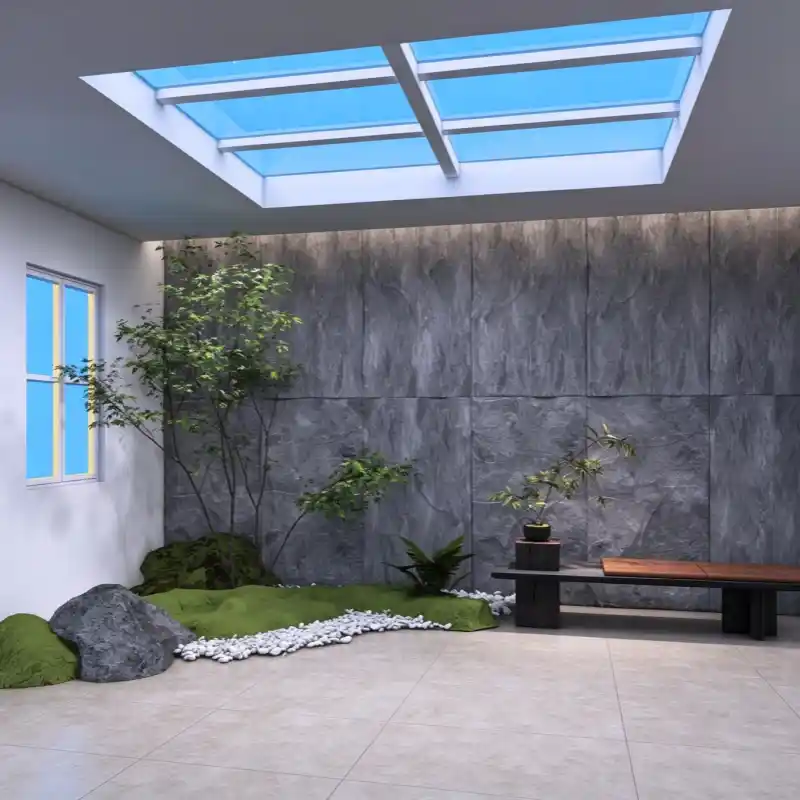
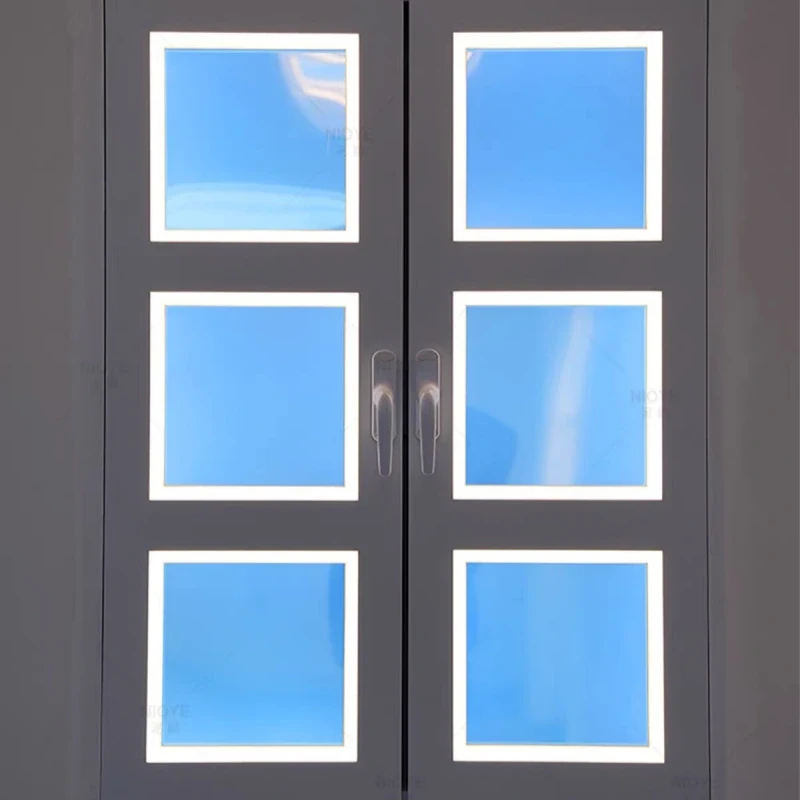
If you are looking for a light that feels like the sky yet functions more as a cloud art installation for windowless rooms, basements, living rooms or office spaces, led cloud lighting is a direction worth serious consideration.
It is not a primary light source in the traditional sense. Instead, it combines the optical logic of Rayleigh scattering artificial skylights with the visual decorative experience of cloud ambient lights.
When developing such products, EASY artificial skylight does not focus merely on brightness. It prioritizes the depth of the sky, the soft texture of clouds, and how light lands on walls, floors and furniture.
A well-made cloud roof lights will make people feel the space is “opened up” at first glance, rather than seeing a glowing panel.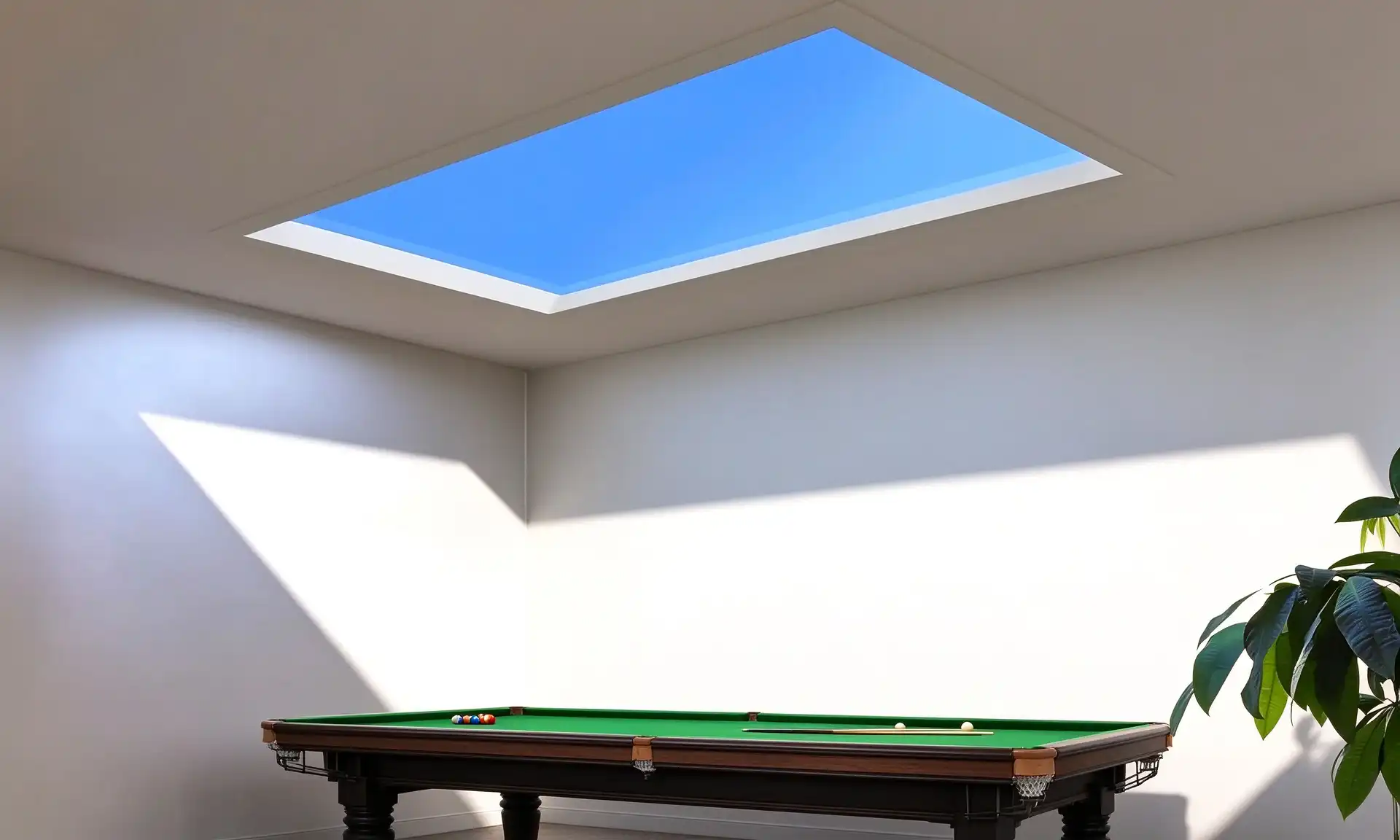
I. User Experience of Cloud Ambient Lights: Shifting Focus from “Brightness” to “Sky Authenticity”
The core value of cloud ambient lights lies in visual decoration. It does not rush to fully illuminate the whole room; it reshapes the temperament of the space first.
In daytime, it resembles sky filtered by cloud cover, making the ceiling look higher and more expansive. At night, it serves as a soft ambient backdrop to reduce the cramped feeling of a space.
In terms of user experience, a high-quality led cloud lighting generally delivers three layers of perception: at first sight, the space visually expands upward; on second look, the clouds show natural light variation and thickness; upon longer observation, the light is glare-free and comfortable for extended stays. For basements, corridors, dark living rooms and windowless offices, this “visual substitution” works better than simply adding a ceiling lamp.
II. The Underlying Logic of “Sky Effect” from artificial skylight led panel
Rayleigh scattering is one of the core principles of artificial skylights. Tiny molecules such as oxygen and nitrogen in the atmosphere scatter short-wavelength blue light, giving the sky its blue color. Water droplets and ice crystals within clouds create soft white scattering instead. led cloud lighting is not just a printed image of blue sky and white clouds. It simulates spatial depth through optical layers, diffusion layers, light guide structures and color temperature control.
A mature artificial skylight led panel must handle the blue sky cavity, cloud layering, edge transition and glare suppression simultaneously. If only blue tone is emphasized, the effect will look fake; if only brightness is pursued, cloud details will turn blurry.
A premium cloud ambient light retains cloud gradients and atmospheric quality when viewed from different angles. Color rendering index, flicker-free drivers and photobiological safety design also determine whether it can be used comfortably over long periods.
III. Matching for cloud skylight: How faux skylight led Integrates with Materials and Colors
The key to matching cloud skylight is not to replicate an outdoor window view as closely as possible, but to create harmony with interior materials. Minimalist spaces suit cool-toned sky with thin clouds; spaces finished with wood veneer, micro-cement or in wabi-sabi style go well with warm soft white light and low-contrast cloud patterns.
A faux skylight led with harsh color temperature and sharp cloud edges tends to look cheap. By contrast, smooth transitions make it a standout focal point on the ceiling.
It is recommended to pair it with matte walls, light-colored furniture, low-saturation textiles and a small amount of green plants. Metals, glass and polished stone can be retained, yet avoid reflections that overpower cloud layers. If the room has a low ceiling, select a proportionally restrained cloud skylight, letting light “borrow height” instead of pressing down on occupants.
IV. User Experience of skylight cloud: fake skylight ceiling light Is More Than Decoration
Many people first perceive skylight cloud purely as decorative lighting. After actual use, they find its impact on spatial mood is more prominent.
In living rooms, it can act as the visual backdrop behind sofa areas; in offices, it relieves the enclosed feeling caused by lack of windows; in commercial spaces, it serves as a photo-worthy feature and brand memory marker.
As a fake skylight ceiling light, it does not need to run at full brightness all day. It is recommended to separate “sky mode” and “cloud mode”: boost definition of blue-and-white sky when concentration is needed; lower brightness and soften cloud visuals for relaxation. This preserves decorative effects while preventing over-illumination.
V. Selection Guide for led fake skylight: Size, Color Temperature and Dimming
When selecting led fake skylight, start with spatial proportion. Small rooms are not suitable for oversized luminous surfaces, otherwise the ceiling will look as if it has been cut open. Larger spaces require adequate dimensions and even light distribution to achieve the sensation of a “sky window”. Next is color temperature: sky areas are usually cool while cloud sections can be slightly warm, yet the overall tone must be consistent without obvious color patches.
Dimming capability also matters. Products supporting stepless dimming, zone control or scene memory fit daily use better. For bedrooms, check whether the minimum brightness is gentle enough. For office or commercial projects, verify long-running stability and driver heat dissipation.
Do not be drawn merely by promotional photos of blue sky and white clouds. Optical uniformity, natural cloud texture and on-site visual effect after installation decide the real experience.
VI. Installation & Maintenance: Engineering Details of led ceiling panel artificial skylight
Installing led ceiling panel artificial skylight is more than fitting the lamp into a suspended ceiling. Reserved heat dissipation space, access panels and power supply positions are required, with neat finishing between panels and ceiling. For bathrooms, shower rooms or high-humidity zones, moisture resistance, anti-fog performance and cleaning methods must be considered.
Installation angle and surrounding reflective surfaces also affect the final lighting effect. An on-site light evaluation before construction is recommended.
For maintenance, cloud ambient lights generally do not require frequent care. Wipe the surface gently with a soft dry cloth or low-static dust removal tool; avoid corrosive cleaning agents. Products with modular replacement design simplify later maintenance.
Residential users are advised to prioritize products with clear optical parameters, heat dissipation solutions and after-sales support. Project buyers need to pay attention to batch consistency, control protocols and installation schedules.
Conclusion
The charm of led cloud lighting does not lie in “faking a window”. It applies the optical principle of Rayleigh scattering artificial skylights and turns cloud ambient lighting into the core visual decoration of a space.
It brings a sense of sky to windowless rooms and adds a relaxed ceiling aesthetic to ordinary living rooms.
As long as color temperature, brightness, materials and proportions are well controlled in cloud roof lights, cloud skylight and skylight cloud matching, it is more than a lamp — it becomes part of the spatial mood.