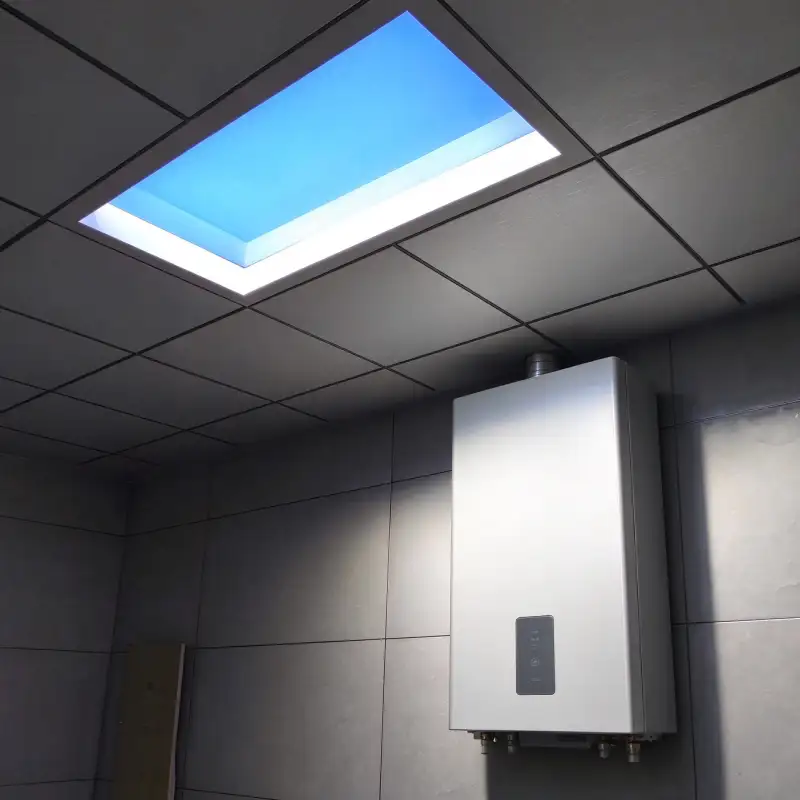
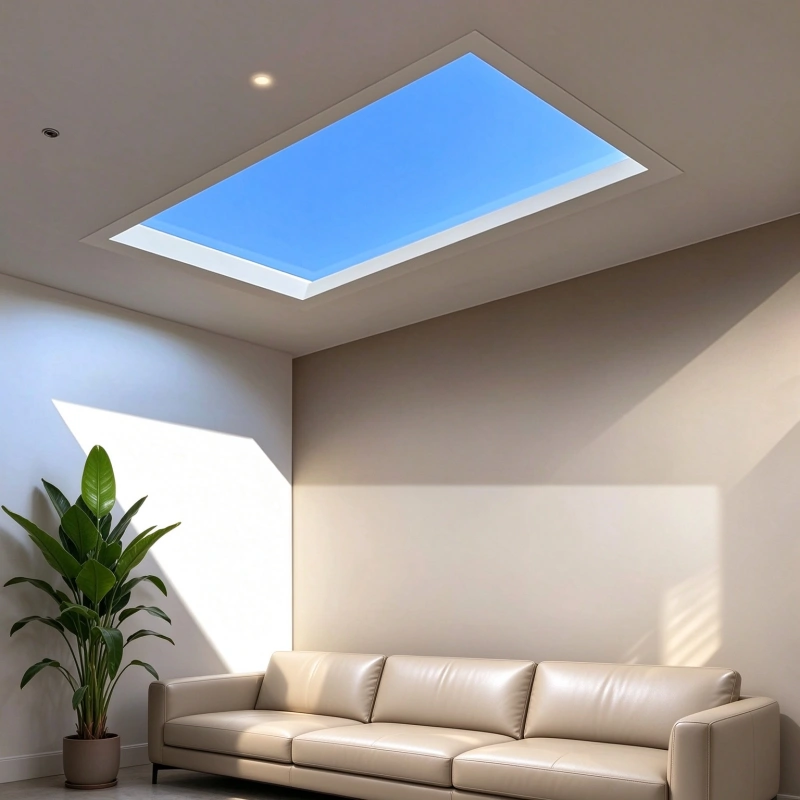
In lighting design, color temperature ranks among the core parameters that define spatial ambience and human sensory experience. Especially when Artificial Skylight is introduced to simulate natural daylight in windowless basements, the selection and tuning of color temperature directly determine the final visual experience and physiological benefits.
This article focuses on CCT knowledge, with emphasis on its practical relevance to virtual window applications in basements.
What Are Color Temperature and Correlated Color Temperature (CCT)?
The concept of color temperature originates from the principle of black body radiation. When an ideal black body is heated starting from absolute zero, the color of its radiated light gradually shifts through dark red, orange red, yellow, yellow white, white, and bluish white.
When the light color of a light source closely matches that of a black body at a specific temperature, the temperature of that black body (measured in Kelvin, K) is defined as the color temperature of the light source.
For real world lighting products, the spectral distribution of most light sources does not perfectly align with a black body. For this reason, Correlated Color Temperature (CCT) is more widely adopted.
CCT refers to the temperature value at which the chromaticity of a non black body radiation source shows the closest match to that of a perfect radiator. Its determination follows the principle of minimal chromaticity coordinate deviation from the black body locus on the CIE chromaticity diagram.
Values such as 2700K, 4000K and 6500K commonly listed in luminaire specifications all fall under CCT.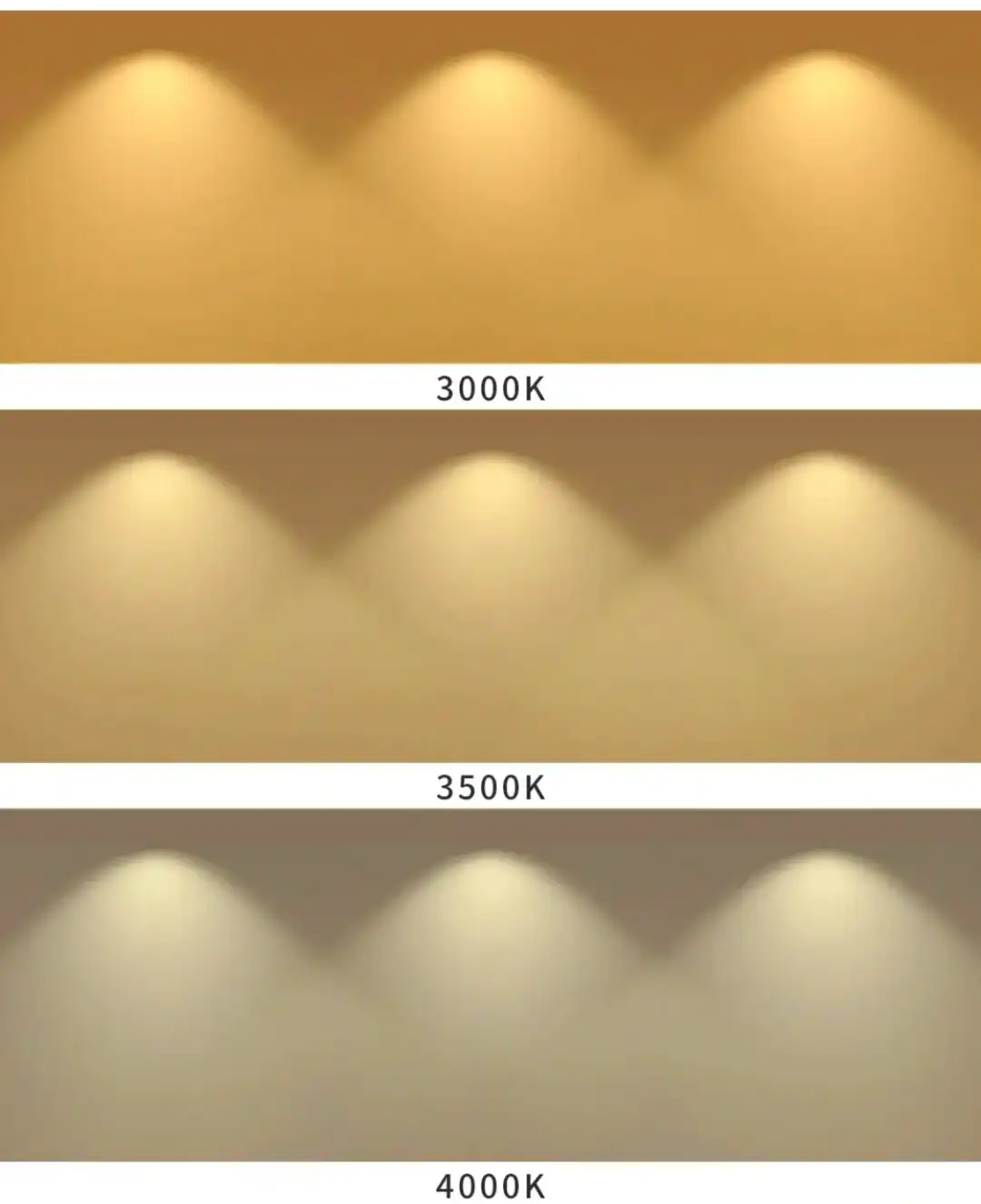
Color Temperature Perception and Common Classification
A widespread misconception holds that “higher color temperature delivers warmer light”. The opposite is true: higher CCT produces cooler light tones, while lower CCT yields warmer light tones. Standard industry color temperature categories are as follows:
- Low color temperature (2700K 3000K): Yellow tinged, orange red light reminiscent of candlelight or warm incandescent lamps, generating a cozy, relaxing atmosphere.
- Medium color temperature (3500K 4500K): Neutral white light with excellent general compatibility, the most frequently used range for residential and commercial office environments.
- High color temperature (5000K 6500K and above): Whitish, bluish light comparable to overcast or mid day natural daylight. Crisp and invigorating, it suits spaces requiring concentration and high brightness.
Tunable CCT: The Core Capability of virtual window for Natural Light Simulation
Natural sky color temperature is not static. Throughout a single day, sky CCT reads approximately 2500K at sunrise and sunset, casting warm orange red hues; clear mid day sky can exceed 10 000K with cool bluish white light. This diurnal shift in color temperature constitutes a vital environmental zeitgeber for the human circadian rhythm.
To authentically recreate natural daylight experience inside basements, a sky window with fixed color temperature is far from sufficient.
A sky window system featuring dynamic CCT adjustment varies its light output across the day: transitioning from cool toned blue leaning light in early morning, through neutral white light at daytime, to warm amber light in the evening. It reconstructs the natural daylight color temperature rhythm within windowless interiors.
Mainstream commercial sky window products typically offer a tunable CCT range of 2200K to 7800K or broader, capable of simulating the full color temperature progression from sunrise to sunset.
Key CCT Application Guidelines for faux windows Installed in Basements
Basements inherently lack daylight time cues and demand more refined color temperature strategies compared with conventional rooms. Below are critical CCT related considerations for faux windows deployment:
1. Adopt dynamic CCT variation instead of fixed color temperature
Basements receive no natural color temperature shifts as temporal references. Static lighting with unchanged CCT creates dull, monotonous surroundings and deprives the human circadian rhythm of effective external timing signals.
Select Artificial Skylight units supporting dynamic CCT adjustment for automatic or manual diurnal variation. Deploy lower CCT paired with dim brightness in early morning for a gentle room “wake up”; switch to higher CCT during daytime to deliver vivid daylight like appearance; revert to warm CCT in the evening to prevent the human body from staying in “midday mode” after dark.
2. Understand the link between CCT and physiological rhythm
Studies demonstrate that higher CCT light (blue rich white light) improves focus and work productivity, whereas lower CCT light facilitates bodily relaxation and prepares the body for sleep.
For basements where occupants may stay for extended periods, well planned time based CCT strategies affect not merely visual comfort but residents’ sleep quality and daytime mental state. The tunable CCT function of faux windows delivers the technical foundation to achieve this outcome.
3. Balance CCT tuning with color rendering performance
Color temperature adjustment should not come at the cost of color rendering quality. For basement Artificial Skylights, maintain a Color Rendering Index (CRI) above 90 to guarantee faithful colour reproduction of objects under any CCT preset. Poor colour rendering results in unnatural looking spaces even when CCT values are technically correct.
4. Set baseline CCT flexibly according to room function
Basement zones with different purposes call for distinct color temperature requirements. For relaxation oriented areas, set a moderately warm baseline CCT (around 3000K). Work focused or gym zones perform better under neutral to cool CCT (4000K 5000K).
Tunable CCT Artificial Skylights enable flexible mode switching within one room according to time of day and usage needs — an advantage unavailable with fixed CCT luminaires.
Summary
Color Temperature (CCT) is not only a fundamental lighting design parameter but also a key technical enabler for Artificial Skylights to act as daylight substitutes inside windowless spaces such as basements.
Thanks to tunable CCT technology, Artificial Skylights dynamically reproduce natural daylight’s colour temperature cycles, restoring temporal awareness and circadian biological light cues for basement environments.
During product selection and installation, prioritize the tunable CCT range, adjustment precision and matching colour rendering performance, so basement lighting can genuinely approximate the quality of natural daylight.