Complete Guide to virtual window: How virtual window Changes Windowless Spaces
The biggest problem with windowless spaces is not just “not being able to see outside”; light, sense of space, and mood are all compressed. Basements, corridors, rental apartments, and internal offices often feel dull because they lack natural light.
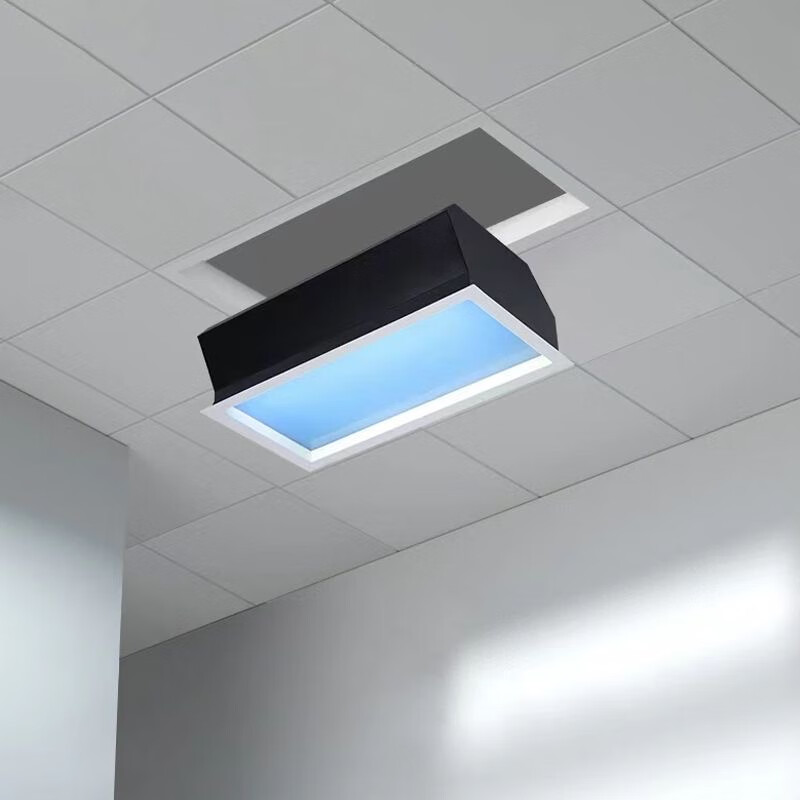
The virtual window made by EASY Clear Sky Lamp is not simply pasting a landscape image; it uses Rayleigh scattering technology to simulate the feeling of sky light, allowing interiors to regain a “window-like” transparent experience.
What Is virtual window?
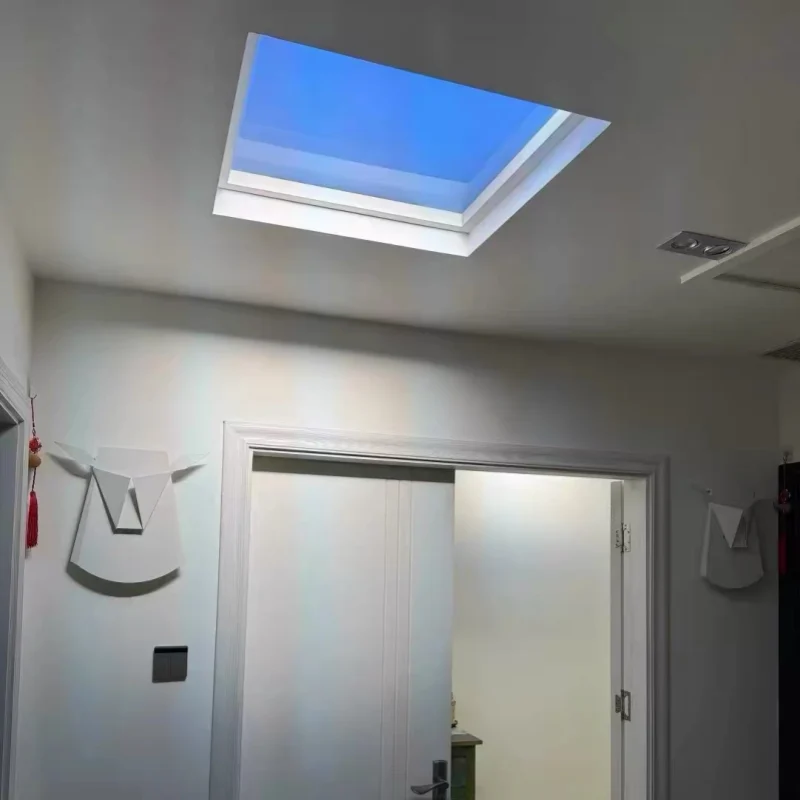
virtual window can be understood as a kind of “virtual window” system. It is usually installed at the top of the ceiling, and can also be made in the form of a window and installed on the wall, used to simulate natural sky, daylight, and outdoor scenery.
In Clear Sky Lamp products, the core is not the screen, but the optical design: through the idea of led artificial skylight, blue light is visually diffused more evenly, forming a soft light feeling close to the real sky.
Differences Between Virtual Windows and Real Windows
Real windows depend on building openings and are affected by orientation, floor level, weather, and season. North-facing rooms may be dark for long periods, and basements may even have no natural light at all.
virtual window does not depend on exterior wall openings, so it can be placed in more locations. It cannot replace ventilation, escape, or real architectural daylighting, but it can significantly improve the light environment and the psychological feeling of space.
How It Simulates Natural Light and Outdoor Scenery: Starting from fake window with artificial sunlight
To simulate natural light, the key is to be “as bright as the sky,” not “as harsh as a lamp.”
The difficulty of fake window with artificial sunlight lies in: the light must be even, the color temperature must be natural, the blue sky must have layers, and at the same time there must be no obvious glare.
EASY Clear Sky Lamp uses the Rayleigh scattering effect to let short-wavelength blue light diffuse more naturally, and then combines it with high-color-rendering light sources, making the interior look closer to real daytime.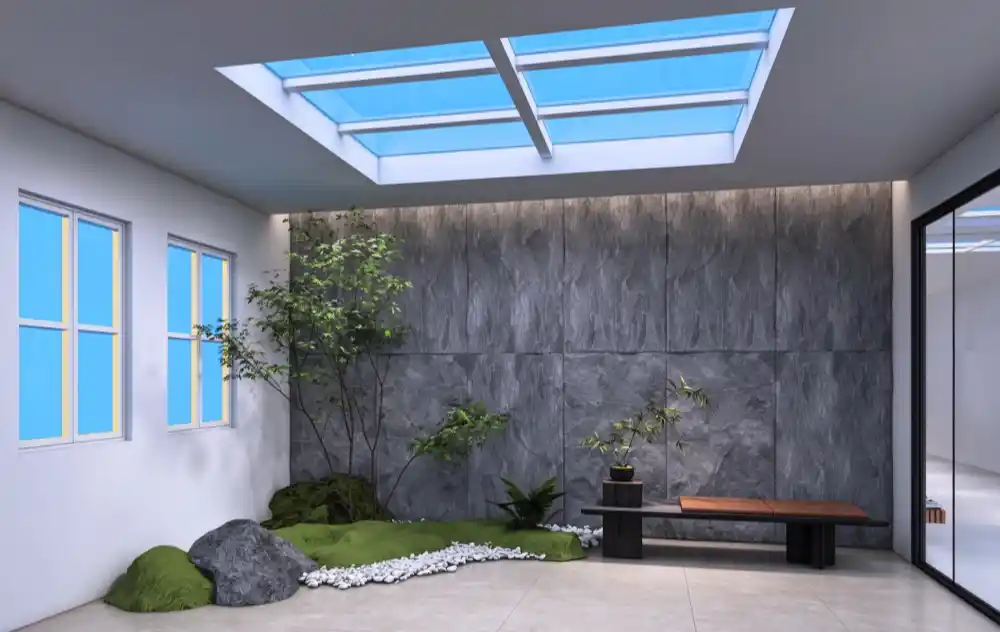
The Relationship Between virtual window and digital window
Many people confuse virtual window with digital window. In fact, the two overlap, but their emphases are different.
digital window emphasizes digital display capabilities more, such as LCD, OLED, or projected images; virtual window emphasizes the overall “window” experience more, including light, depth of field, frame, and sky feeling.
Is digital window More of a Digital Display or a Decorative Window?
This depends on product positioning.
If the focus is playing videos, sea views, forests, or city scenes, it is more like digital window.
If the focus is simulating natural light, blue sky, and a sense of spatial openness, it is closer to Clear Sky Lamp-type virtual window.
For windowless spaces, light is usually more important than images, because the human eye first perceives brightness, color temperature, and evenness.
When Buying, Should You Search for virtual window or digital window?
If you want “window-like natural light,” it is recommended to search for virtual window first.
If you want a “digital window that can change images,” you can search for digital window.
If you want both sky light and dynamic scenery, you can look at Clear Sky Lamp products that have both capabilities.
virtual window for wall: Wall Installation Solutions
Not all spaces are suitable for ceiling installation. For living rooms, bedrooms, basements, and corridors, virtual window for wall is a more intuitive solution.
It combines a luminous window frame, sky panel, and wall to make a “real-window-like” light source appear on the wall.
Wall Installation Locations for Living Rooms, Bedrooms, and Basements
For the living room, it is recommended to place it on the side wall of the sofa or opposite the TV wall, avoiding competing with the main screen for visual focus.
For the bedroom, it can be placed on the side wall of the bed head or next to the wardrobe, but it should not shine directly into the eyes.
For basements, it is suitable to place it at the stair entrance, the end of a corridor, or above an activity area, to break the sense of enclosure.
Size, Proportion, and Visual Depth of Field
Window proportions affect realism. Common practices reference 4:3, 3:2, or 16:9, but bigger should not be pursued blindly.
The depth of the frame and the distance between the luminous surface and the wall determine visual depth of field. Too thin looks like a lightbox, too thick looks like a decorative cabinet.
A good virtual window for wall should make people feel at first glance that “there should have always been a window here.”
Home Applications of virtual windows for homes and virtual window for home
In home scenarios, the value of virtual windows for homes is very clear: supplementing light, expanding space, and improving mood.
virtual window for home emphasizes more personalized installation, such as basements, attics, rental apartments, and internal offices.
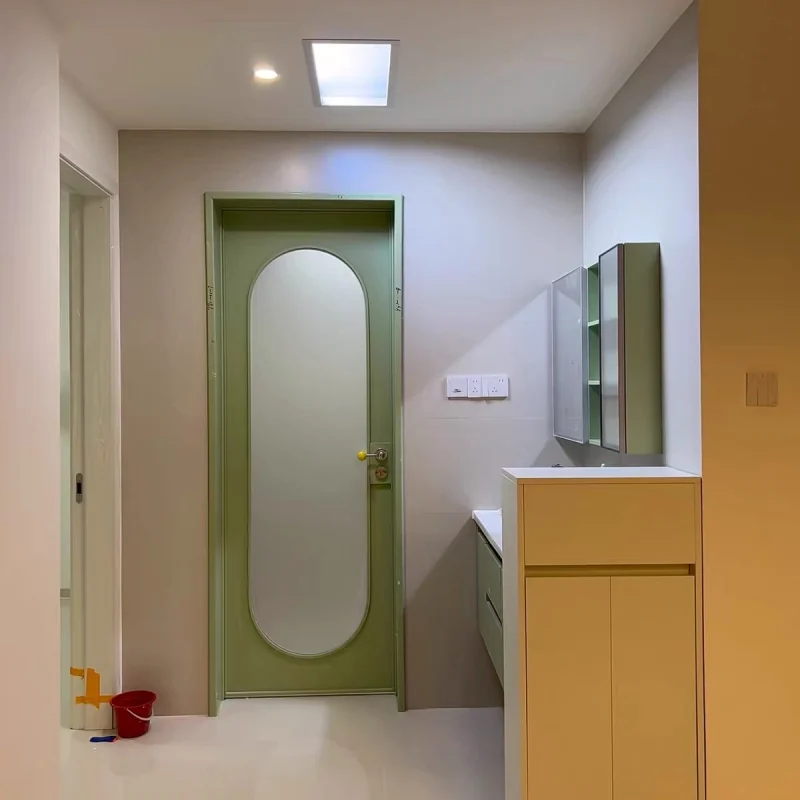
Windowless Rooms, Corridors, Offices, Rental Apartments
For faux windows for windowless rooms, the most important thing is a “natural feeling,” not “the brighter the better.”
In offices, virtual window for office can also relieve the oppressive feeling of enclosed spaces, making meeting areas, focus areas, or rest areas feel more breathable.
Rental apartments are not suitable for major renovations; modular solutions that do not damage the wall can be chosen.
How to Avoid the Cheap Feeling of a “Fake Window”
A cheap feeling usually comes from three problems: uneven light, color temperature deviation, and rough frames.
First, the luminous surface should be soft, with no obvious light beads visible.
Second, the blue sky should be natural, not like a blue plastic panel.
Third, the frame and wall finish should be clean, preferably unified with the interior materials.
If these three points are done well, virtual window will not look like a “fake window,” but like real architectural daylighting design.
Light Design of simulated window
The core of simulated window is light design. It is not just lighting, but simulating the sky changes throughout a day.
From early morning to noon, and then to evening, the color temperature, brightness, and sense of direction of light should all change.
Color Temperature, Brightness, and Blue Sky Effect: Dimming Ideas for daylight simulation lamp
daylight simulation lamp usually sets noon light at a higher color temperature, such as 5000K to 6500K, and maintains high color rendering.
The blue sky effect is not about being as blue as possible; rather, blue light should be evenly diffused to avoid local oversaturation.
For brightness, it is necessary to combine room area, wall material, and purpose to avoid glare caused by being too bright.
Day and Night Modes
Day mode emphasizes high brightness, a cool white feeling, and sky transparency.
Night mode should reduce brightness, shift to warm colors, and reduce interference with sleep rhythms.
If the product supports timing and gradual brightening/dimming, the experience will be closer to real skylight.
6 Key Indicators When Buying virtual window
-
Spectrum and color rendering: the higher the CRI, the more natural the object colors.
-
Adjustable color temperature range: whether it can cover day, dusk, and night.
-
Brightness and evenness: bright does not equal good; evenness is what looks like sky.
-
Blue sky effect: whether it is natural and layered, rather than a single blue light source.
-
Installation method: ceiling, wall, recessed, or modular.
-
Control method: whether remote control, App, timing, and scene linkage are stable.
Frequently Asked Questions FAQ
Q1: Is virtual window a real window?
No. It does not provide ventilation or escape functions, but it can provide window-like natural light and a visual sense of openness.
Q2: Can virtual window completely replace real windows?
It cannot completely replace them, but in windowless rooms, basements, and internal offices, it can significantly improve the light environment.
Q3: Which is better, digital window or virtual window?
It depends on needs. For images, choose digital window; for sky light, choose virtual window; the two can also be combined.
Q4: Will installing virtual window for wall damage the wall?
It depends on the product structure. Modular solutions are usually more suitable for rental apartments and already decorated spaces.
Q5: Which spaces are suitable?
Basements, corridors, offices, bedrooms, living rooms, rental apartments, and windowless rooms are all very suitable.
What EASY Clear Sky Lamp hopes to do is not just “light up a room,” but let windowless spaces regain a sense of sky.
When virtual window is correctly designed and installed, it becomes part of the space, rather than an abrupt luminous decoration.