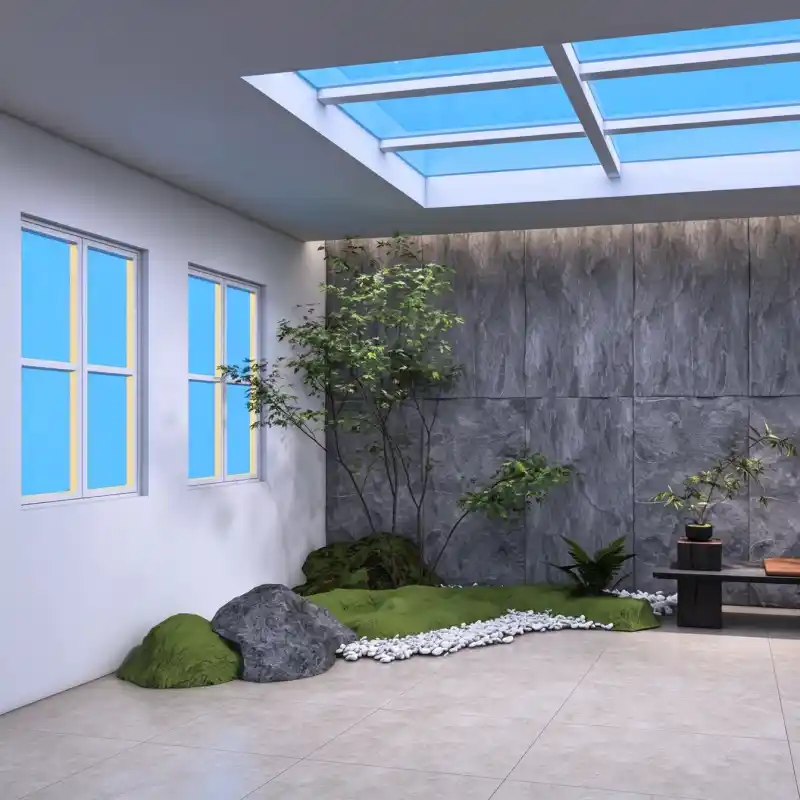
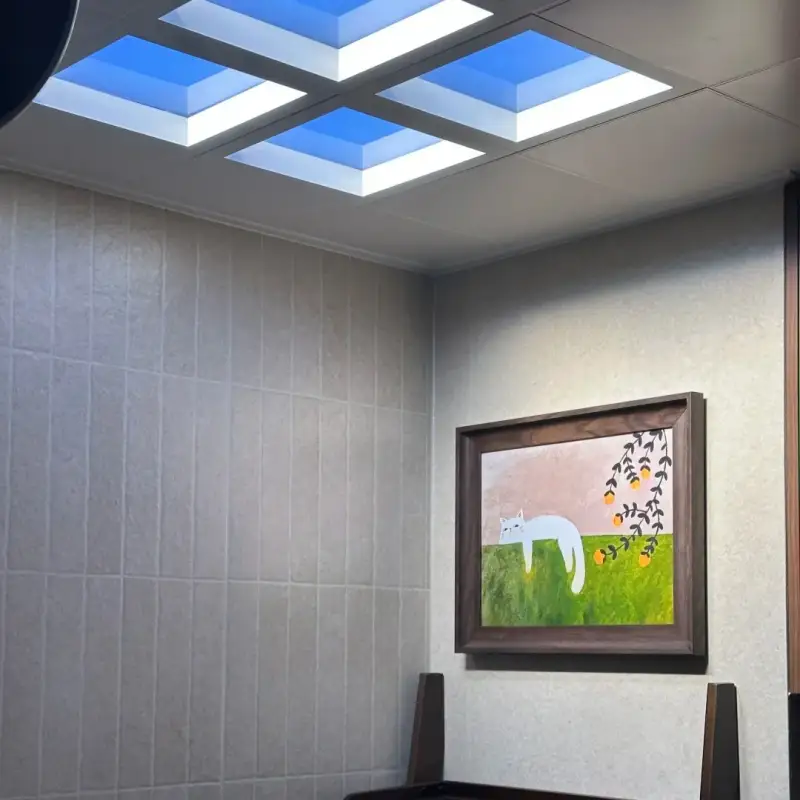
How to Light a Basement Without Windows
Many basements receive no natural daylight. The walls are solid, ceiling height is limited, and ventilation is generally poor. Even during daytime, these spaces feel like nighttime.
The traditional solution is to cut real windows, but this involves exterior walls, foundation, waterproofing and approval procedures, often at a high cost. A more viable option today is the fake window light solution, especially Rayleigh scattering artificial skylights, which simulate natural daylight without structural modifications.
Why real window retrofits are expensive and difficult
Real window renovation must address exterior wall structure, load-bearing capacity, waterproof layers, drainage slopes, backfill, and indoor moisture prevention. If the basement sits in an area with a high groundwater table, adding windows may introduce water seepage risks. Construction dust, noise, approval requirements and restoration costs also lead many homeowners and commercial space operators to abandon this approach.
For this reason, many people first search for faux basement windows or faux basement window. While they can improve appearance, decorative-only windows cannot truly solve lighting issues. An effective solution requires the window surface itself to emit light with visual characteristics close to natural skylight.
Types of fake window light solutions
There are generally four common types:
- Standard LED light boxes: Low cost, even brightness, but tend to look flat like a glowing panel.
- LCD or projection fake windows: Can display sky, ocean scenery or tree shadows with rich visual content, yet vary greatly in brightness, service life and realism.
- LED panel fake windows: Simple to install, suitable for partial supplementary lighting, but often produce unnatural blue tint and direct glare.
- Rayleigh scattering artificial skylights: Use optical structures to simulate Rayleigh scattering of blue light by the atmosphere, creating a deep, sunlit sky effect.
When comparing fake windows for basement, do not only evaluate how closely they resemble a window. Check whether they deliver natural light quality, moisture resistance and reliable long-term operation.
Entry-level fake basement windows are usually light boxes or panels. They can make the space brighter but may not replicate natural daylight. A complete fake basement window solution should handle brightness, color temperature, glare, heat dissipation and mounting position at the same time.
How to choose between led fake window panel and artificial skylight for basement
led fake window panel is suitable for budget-limited spaces requiring uniform illumination, such as storage rooms, corridors or small work areas.
artificial skylight for basement works better for spaces wanting a skylight effect in basements. Normally mounted on ceilings, it simulates natural light entering from above and makes the room feel taller and more open.
For authentic blue sky and sunlight effects, Rayleigh scattering artificial skylights deliver more realistic sky depth than ordinary panels. It does not simply tint the light blue; it creates visual depth just like a real sky.
Mounting positions: wall surface, ceiling, stairwell
- Wall surface: For simulating side windows. faux windows for basement can be made into framed luminous windows, installed on sofa accent walls, corridor end features or beside work zones.
- Ceiling: For simulating skylights. Ceiling installation is the easiest way to achieve natural daylight effect for basements without exterior wall access.
- Stairwell: Stairs act as a visual exit for basements. Install artificial skylights above staircases or corners to guide circulation and reduce the enclosed feeling.
Lighting logic for basement faux window lighting
The core of basement faux window lighting is not maximum brightness, but simulating the directional quality of real windows. Side windows require angled light, while skylights cast light downwards. Window frames, light baffles and wall materials also affect realism. Light-colored matte walls diffuse light better and reduce harsh reflections.
Moisture resistance, waterproofing and heat dissipation notes
Basements are prone to dampness. Before installing artificial skylights or fake window light boxes, inspect walls and ceilings for water seepage, condensation or rising damp. Select light fixtures with suitable ingress protection ratings for humid environments. Drivers and power supplies should not be placed in positions prone to water accumulation. Leave clearance behind light boxes for heat dissipation to avoid light decay caused by prolonged high temperatures.
For installations near bathrooms, laundry areas or semi-underground exterior walls, stricter waterproof and anti-condensation measures are required. fake window light for basement is not a standard indoor lamp; long-term operational stability matters greatly.
Brightness reference by area
| Basement Area | Recommended Ambient Illuminance | Artificial Skylight / Fake Window Recommendation |
|---|---|---|
| 5–8㎡ | 150–250 lux | 1 compact artificial skylight or luminous window |
| 8–15㎡ | 250–400 lux | 1–2 units, focus lighting on active zones |
| 15–25㎡ | 300–500 lux | 2–3 units, zone-based lighting |
| Over 25㎡ | Zoned control | 3+ units, combined with general lighting |
Actual brightness is affected by ceiling height, wall color, furniture obstruction and window size. For Rayleigh scattering artificial skylights, balance window surface luminance and ambient illuminance instead of judging performance solely by wattage.
Brightness reference for fake window light for basement
fake window light for basement can serve as primary or accent daylighting. Work and reading zones may be brighter, while passageways and rest areas can be dimmer. For low-ceiling spaces, avoid overly bright lamp surfaces to prevent glare. Dimming function is recommended to adjust brightness for daytime, dusk and night scenes.
Frequently Asked Questions
Will faux windows for windowless rooms look fake?
It depends on light source quality. Ordinary blue LEDs tend to look artificial. Rayleigh scattering artificial skylights simulate atmospheric scattering for more natural visuals. Window frame design, mounting angle and surrounding wall finishes also impact realism.
Does it require cutting into exterior walls?
No. Most fake window light solutions are indoor-mounted with no foundation or exterior wall demolition.
Can it replace real window ventilation?
No. It improves daylighting and visual openness only. Ventilation still relies on fresh air systems, exhaust fans or air conditioning.
Is it power-consuming?
LED and Rayleigh scattering artificial skylights are generally more energy-efficient than traditional lighting. Actual power consumption depends on space size, brightness setting and operating hours.
Can it be installed in rental properties?
Yes. Many options use ceiling or wall mounting without major renovations, and are easier to restore upon moving out.
Can it be used to grow plants?
Some full-spectrum models can supplement plant growth, but basement plant lighting requires evaluation of PPFD and irradiation distance. Standard artificial skylights are designed for human living illumination and are not professional grow lights.
Basement Solution Consultation
If you are planning basement daylighting, please provide space area, ceiling height, intended use, wall material, dampness condition and power supply location. EASY artificial skylight can match Rayleigh scattering artificial skylights, fake window light boxes or ceiling skylight solutions according to site conditions.
No excavation required to bring authentic sky-like natural light into your basement.