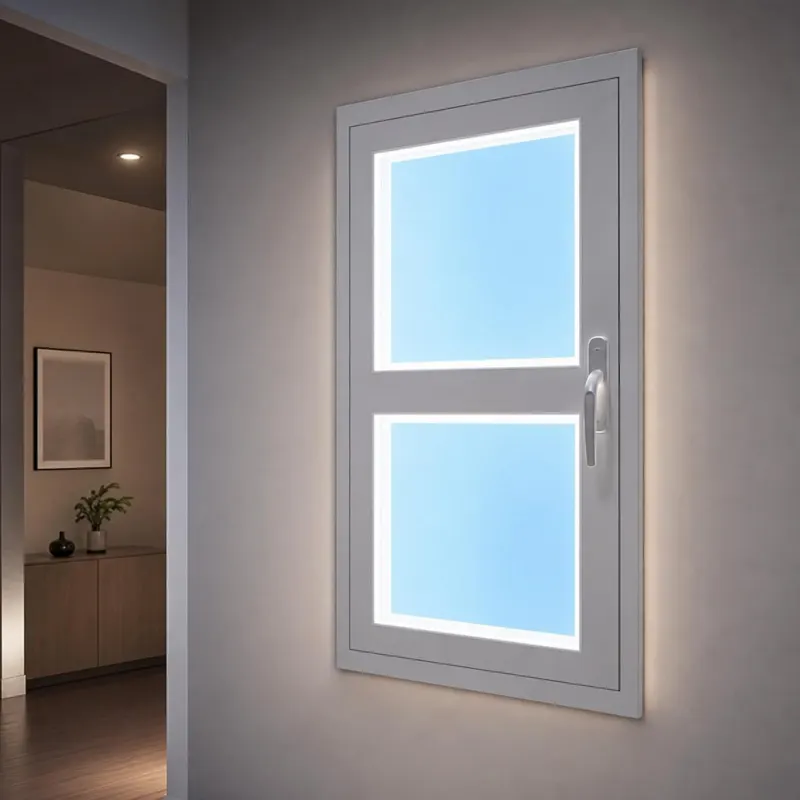
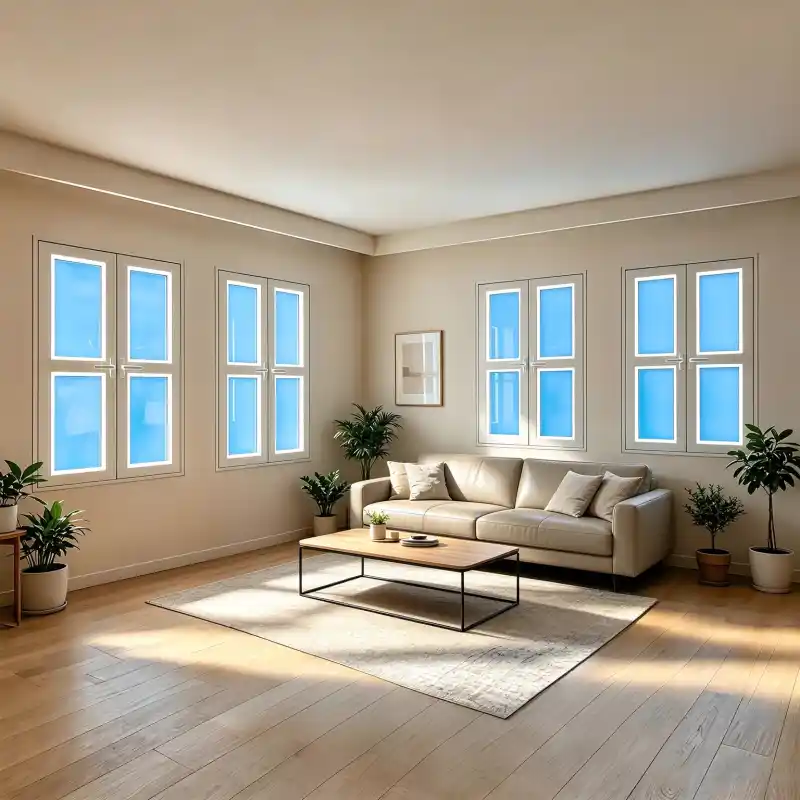
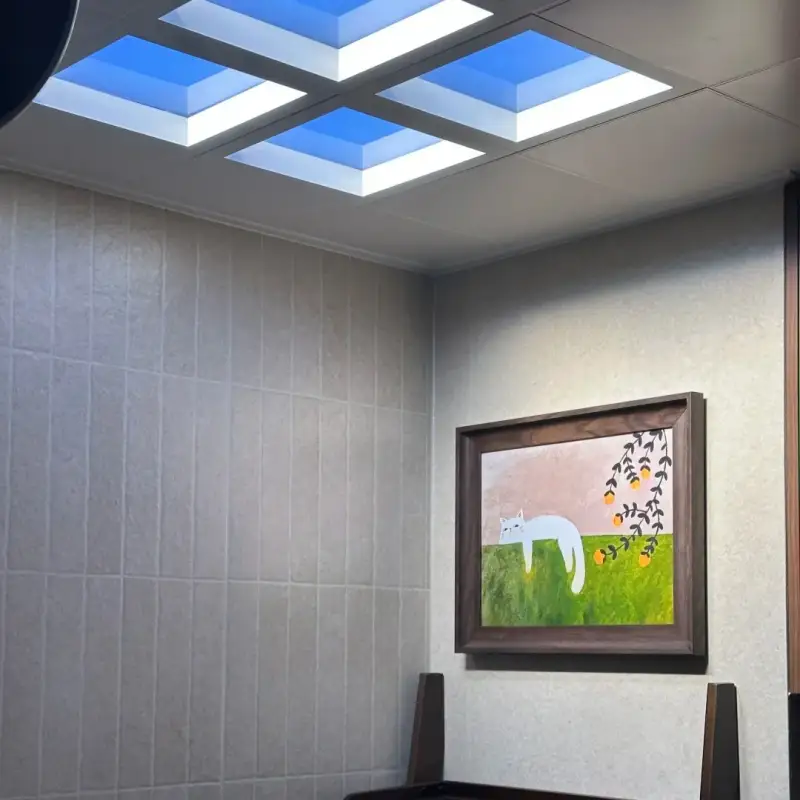
Dark rooms, basements and windowless offices often lack not just “brightness”, but the directional quality, sky view and time perception of natural light. In this article, fake sunlight window refers to the window-style Rayleigh scattering sky light within the EASY sky light product line, not ordinary fake window decals or simple backlit light boxes. It adopts the Rayleigh scattering principle to simulate blue sky, direct sunlight and sky diffuse light, making the interior look as if there is a window facing outdoors.
A sky ceiling light is closer to a ceiling-mounted sky light, simulating a skylight or overhead sky. Both can improve dark rooms, yet they suit different scenarios. Many people search for faux window sunlight or fake window sunlight, essentially looking for a “natural-light-like solution without cutting a real window”.
Below is a comparison from the perspectives of real skylights, ceiling-mounted sky lights, light tubes, full-spectrum lamps, cost, health and target users to help you decide which one to buy.
Comparison with Real Skylights: Price, Structural Modification and Maintenance
The biggest advantage of real skylights is genuine daylight intake, yet they are far more than simply installing lamps. Installation usually involves roof opening, waterproofing, structural assessment and drainage design; approval may be required in some cases. They come with high costs and long construction cycles. In the later stage, you also need to watch out for leakage, condensation and aging of seals.
Fake sunlight window and ceiling-mounted sky light require no roof structural damage. They belong to indoor lighting systems, with installation focusing on power supply, wall or ceiling conditions. For renovated basements, dark living rooms and windowless rooms, such solutions are more practical.
Real skylights are worth considering if your roof condition is good, budget is sufficient, and you pursue authentic sky views plus ventilation. If what you need is stable, controllable and low-maintenance natural light sensation, sky light products are usually a better fit.
Comparison with Sky Lights: Light Direction, Mounting Position and Spatial Perception (best fake window light)
The window-style fake sunlight window delivers light entering the room from the side. It can be mounted on walls, within window openings or custom frames, creating the illusion of “sunlight outside the window”. Lateral light widens spatial perception and relieves the closed-in feeling of basements or dark living rooms.
The ceiling-mounted sky ceiling light casts light from overhead, much like a skylight. It suits spaces with decent ceili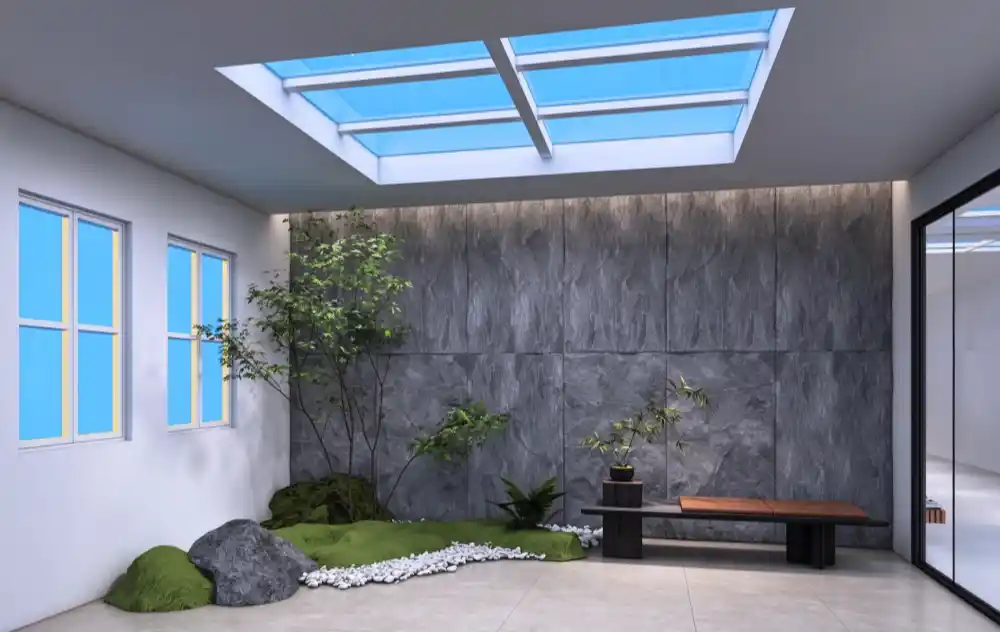 ng height or rooms where brighter central illumination is desired. Top light enhances upward spatial openness, yet may feel oppressive in low-ceiling spaces.
If you are looking for the best fake window light, ask yourself first: do you want a “window” or a “skylight”? Choose the window-style fake sunlight window for side light, window scenery and a wall focal point. Choose the sky ceiling light for overhead light, open feeling and central lighting.
Comparison with Light Tubes / Ordinary Full-Spectrum Lamps (lamp that mimics natural sunlight)
Light tubes rely on external sunlight on the roof and channel light indoors through pipes. They work well in daytime, but performance drops on cloudy days, at night and in winter. Besides, a passage from roof to ceiling is required, which imposes structural requirements.
Ordinary full-spectrum lamps can improve color rendering and illuminance, but they mainly solve the “brightness problem” rather than whether the light “feels like natural sunlight”. A lamp that mimics natural sunlight may still lack visual sky view, light direction and spatial hierarchy if only its color temperature is close to daylight.
The advantage of Rayleigh scattering sky lights lies in handling three elements at the same time: light quality, direction and visual sky effect. More than just lighting, they reconstruct human perception of natural light.
Cost and Installation Difficulty (faux window light for basement)
Real skylights are generally the most costly option due to structural, waterproofing and construction expenses. Light tubes rank second, depending on roof conditions and pipe routing. Ordinary full-spectrum lamps have low upfront costs, yet deliver only functional lighting effects.
The faux window light for basement features flexible installation. Window-style sky lights can be wall-mounted, recessed or built into window frames; ceiling-mounted sky lights can replace some ceiling lamp positions. In most cases, you only need to reserve power supply and verify load-bearing capacity of the mounting surface.
For basements, moisture resistance, ceiling height, power location and ceiling conditions are critical. For already finished spaces, wall-mounted or surface-mounted solutions are preferred. For spaces under renovation, recessed installation and light troughs can be planned in advance.
Health and Circadian Lighting Perspective (natural light fake windows for windowless rooms)
Natural light affects human circadian rhythm, mood and alertness. Higher illuminance and cooler white light are needed during daytime; brightness and cool light stimulation should be reduced at night.
The value of natural light fake windows for windowless rooms is not merely brightening the room, but providing visual cues similar to the outdoor environment. It simulates clear sky in the morning, raises illuminance at noon and lowers color temperature in the evening. Such dynamic lighting is more comfortable than fixed white light.
It should be noted that sky lights cannot replace all functions of real sunlight, especially they cannot simply support vitamin D synthesis. Their core value is visual comfort, spatial sense and circadian cues. When purchasing, pay attention to color rendering index, flicker, glare control and dimming capability.
Suitable Users: Basements, Windowless Rooms, Dark Living Rooms, Offices (fake window for windowless office)
Basements fit the window-style fake sunlight window, as side light eases the enclosed feeling. Ceiling-mounted sky lights can also be used if ceiling height permits.
Windowless rooms and dark living rooms can adopt window-style products to create visual focal points and enrich plain walls. Offices are suitable for fake window for windowless office, especially meeting rooms, focused workstations and video background areas. Stable, low-glare natural light sensation reduces the sense of depression.
Pick fake sunlight window if you want an effect “just like a real window”. Pick sky ceiling light if you want overhead light like a skylight. Consider real skylights only when roof modification is feasible and budget is ample. Full-spectrum lamps can also be used if you only need supplementary illuminance, yet the natural spatial sensation will be weaker.
Conclusion: Which One to Choose for Dark Rooms?
For most dark rooms, fake sunlight window and ceiling-mounted sky light are easier to implement than real skylights. The window-style fake sunlight window works better for those who want side light, window scenery and extended spatial perception. The sky ceiling light is ideal for users preferring overhead light, open atmosphere and central lighting.
Real skylights remain irreplaceable if you pursue genuine daylight intake and ventilation. If you want low-maintenance, controllable and flexibly installed natural light experience, EASY sky light is worthy of priority consideration. The final choice depends on space structure, ceiling height, power supply, budget and the “directional natural light effect” you want to achieve.