I. What Is Beam Angle?
Before selecting any luminaire, understanding beam angle is the first step.
Beam Angle is a core technical parameter that describes the light distribution range of a luminaire. Simply put, it measures the angular spread of light emitted by a lamp. There are two major mainstream international definition standards: the Commission Internationale de l’Éclairage (CIE) defines beam angle as the included angle formed on both sides where luminous intensity drops to 50 % of its maximum value, while the Illuminating Engineering Society of North America (IES) uses 10 % of maximum luminous intensity as the reference benchmark. For the same lamp, the value measured under the IES standard is roughly twice that under the CIE standard.
For ordinary consumers and most household lighting scenarios, the CIE standard (50 % luminous intensity) is more widely adopted.
The magnitude of the beam angle directly determines light concentration and illumination effect:
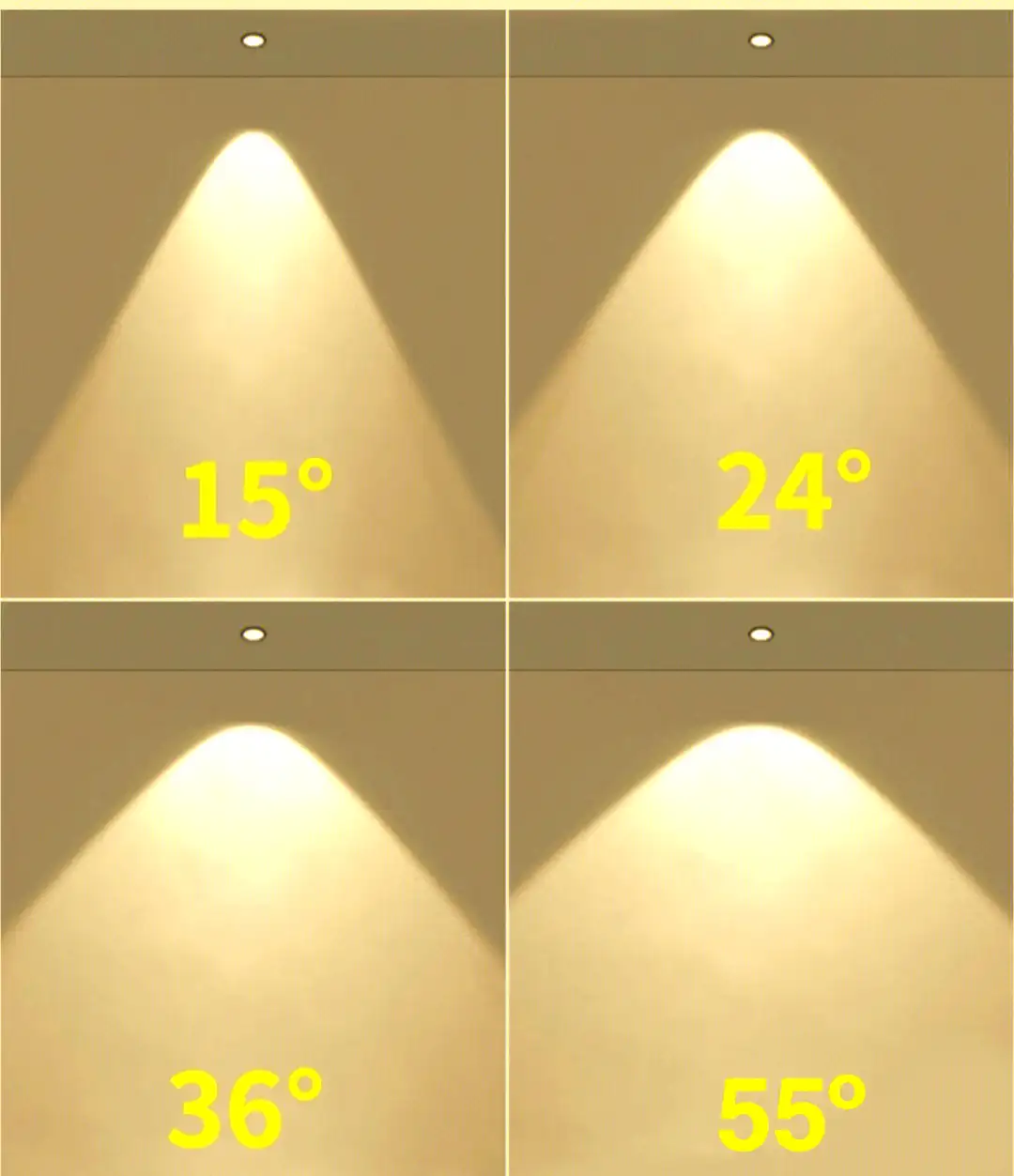
- The smaller the beam angle, the more concentrated the light, the smaller the light spot formed, and the higher the central brightness.
- The larger the beam angle, the more diffused the light, the larger the light spot formed, and the relatively lower the central brightness.
II. Three Major Classifications of Beam Angle
Per general industry standards, beam angles are divided into the following three categories:
- Narrow beam (< 20°): Highly concentrated light, suitable for accent lighting and long distance projection, for instance to highlight exhibits or artworks. Light spots in space feature sharp boundaries and strong contrast between light and shadow.
- Medium beam (20° – 40°): Balances focusing and light spread. It applies to wall washing lighting and partial atmosphere creation, and represents the most widely used beam angle range in residential lighting.
- Wide beam (> 40°): Highly diffused and even light with large coverage area. Ideal for large area general illumination in spaces such as living rooms, hallways and kitchens that require overall lighting.
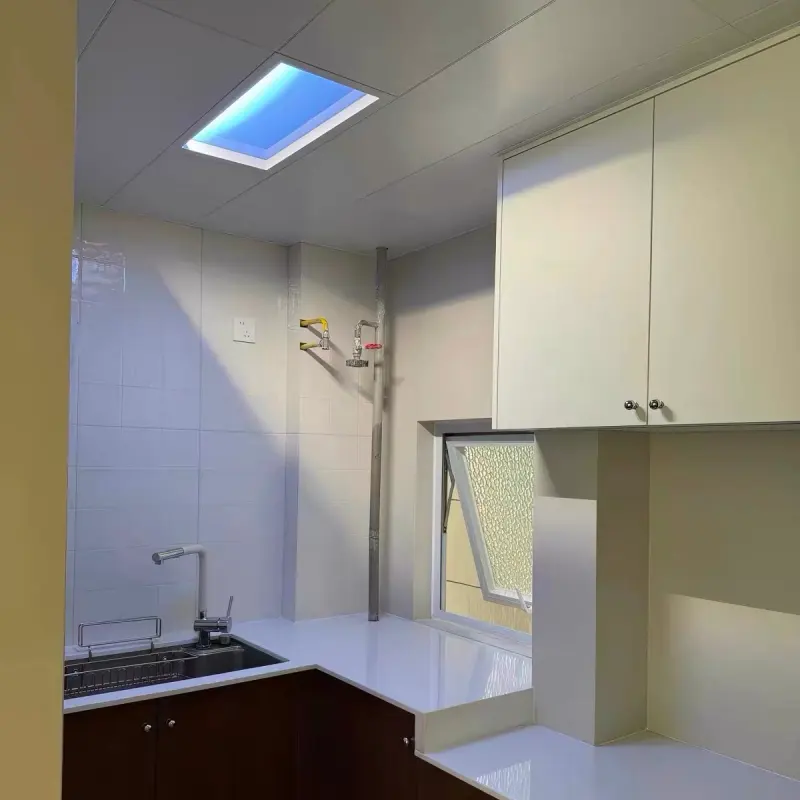
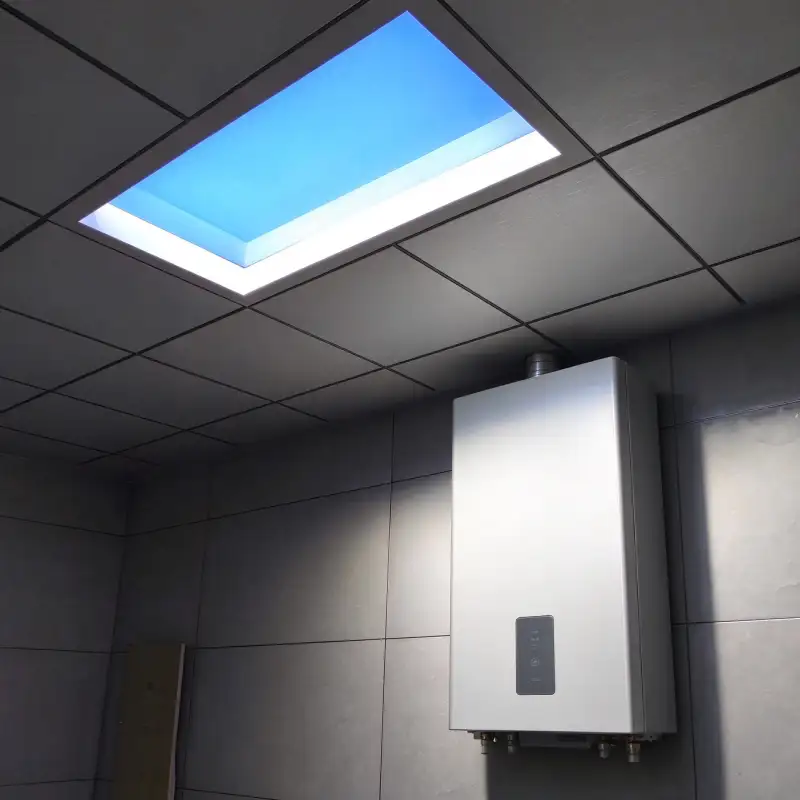
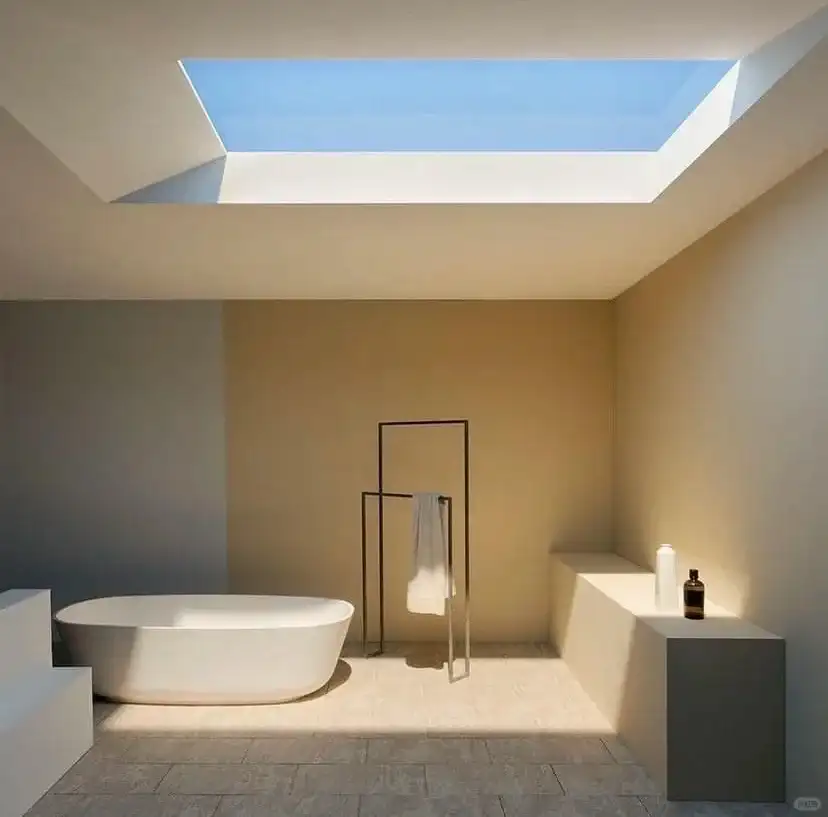
Beyond the above classifications, one special type deserves attention: the asymmetric beam angle. Luminaires of this type deliver non centrally symmetric light output and project light toward specific directions. They are commonly found in wall washers and Artificial Skylights products.
III. What Makes the Beam Angle of Artificial Skylights Special?
Artificial Skylights differ fundamentally from conventional downlights and spotlights in optical design. Ordinary lamps aim to “illuminate a space”, whereas Artificial Skylights are designed to “make people feel there is a real skylight overhead”. This means they do not merely provide illumination; they simulate the spatial depth and directionality of natural daylight.
For this reason, beam angle selection for Artificial Skylights concerns far more than brightness distribution; it directly determines how authentic the skylight simulation appears.
Beam angle dictates the authenticity of spatial depth. Light from real skylights, scattered by the atmosphere, falls from above at a specific angle with clear directionality. For a skylight hallway, adopting purely downward facing beams such as an ultra wide 120° beam angle yields visual effects closer to an ordinary ceiling lamp: light spreads evenly straight down from overhead, lacking the layered quality of “light arriving from afar”.
Consequently, skylight hallway products commonly adopt a medium narrow beam angle of 30° 45°, projecting light at an inclined angle onto walls or deep into space to replicate the directional quality of sunlight slanting indoors through a skylight.
Among mainstream ceiling skylight products, the 30° 45° beam angle range is the most popular option. Multiple models take 30° as their primary output angle and deploy Rayleigh scattering technology to reproduce the blue tone of the sky and the warm texture of sunlight.
The EASY product line offers a 45° setting to mimic sunlight incidence angles in Mediterranean and tropical regions, delivering the desired ambience for users.
Apart from medium narrow beam angles for simulating “direct sunlight”, some units integrate a 120° wide angle auxiliary light source to supply baseline ambient illumination for the space. This creates a dual layer optical structure: “main beam simulating sunlight + wide beam simulating scattered skylight”.
IV. Beam Angle Selection Guide for Different Basement Zones
Basements serve diverse purposes, and functional zones have vastly different lighting effect requirements. Below are beam angle recommendations for typical basement scenarios:
- Lounge / Home Theater (Recommended beam angle: 30° 40°)Lounges usually have moderate ceiling heights, and occupants are seated or reclined with upward directed lines of sight. A medium narrow 30° 40° beam angle casts light obliquely from the ceiling onto walls or floors, generating the impression of sunlight streaming indoors. Install the ceiling skylight 600 1000 mm away from walls, giving the beam sufficient room to develop into natural skylight style light patterns.
- Basement Office / Study (Recommended beam angle: 40° 60°)Office use scenarios demand both uniform desktop illuminance and spatial comfort. Excessively narrow beams create harsh hot spots on work surfaces, while overly wide beams eliminate depth and dimension. A medium wide 40° 60° beam angle preserves directional qualities while delivering relatively even ambient light. Paired with fake roof windows featuring high color rendering (CRI > 90), it effectively alleviates the claustrophobic sensation and visual fatigue frequently encountered in underground spaces.
- Hallway / Passageway (Recommended beam angle: 60° 120°)Basement hallways are typically long and narrow and severely deprived of natural light. The core lighting priority for these areas is eliminating dark zones and ensuring safe passage. Choose 60° 120° wide beam configurations for broad, homogeneous coverage and avoid alternating bright and dark bands caused by spaced apart light spots.
- Multi Purpose Open Space / Basement Hall (Recommended: 40° 45° plus 120° combination)For large basement areas, a single beam angle seldom balances atmospheric performance and practicality. A combined solution is advised: deploy fake roof windows at 40° 45° as visual focal points to build depth and deliver the skylight illusion; supplement with 120° wide beam luminaires (or the built in wide beam mode of Artificial Skylights units) for background light filling and eliminate lighting dead zones throughout the space.
- Low Ceiling Basement (Recommended beam angle: 30° 45°, verify installation clearance first)Basement ceiling heights are generally lower than those of above ground floors. Before fitting ceiling skylights, confirm adequate clearance inside the ceiling cavity. For recessed installation, certain products require ceiling plenum depth of 16 cm or more; slim surface mount variants impose lower spatial requirements.
In height constrained conditions, the 30° 45° beam angle range works best. Beams form effective light spots within short projection distances, preventing undersized spots or insufficient illuminance stemming from limited throw distance.
V. Three Practical Tips for Beam Angle Selection When Installing Artificial Skylights
- Determine wall mount offset before finalizing beam angleThe signature visual effect of ceiling skylights is casting light onto walls to create the illusion of real windows. Maintain a 600 1000 mm gap between the luminaire and target walls. Derive beam angle specifications from this distance: select 30° 40° for shorter separations (~600 mm); opt for 40° 45° for longer separations (800 1000 mm). This ensures appropriately sized wall projected spots with natural, soft edges.
- Distinguish between the “skylight panel” and the “sunlight beam”Numerous ceiling skylight products contain two optical assemblies: one wide angle luminous panel rendering the blue sky visual effect, and a second unit producing the simulated sunlight beam (normally 30° 45°). During layout planning, address the angular requirements of each component separately. Position the sky simulating panel above the main viewing area and orient the sunlight beam toward walls where atmosphere or targeted illumination is wanted.
- Account for temporal variations in usage patternsHigh performance fake window light supports dynamic tuning of color temperature and brightness to replicate light transitions from early morning to dusk. Where one basement space fulfills multiple roles across the day (e.g. office work by day, relaxation in the evening), select units offering tunable beam angles or switchable operating modes for flexible adaptation to changing needs.
Conclusion
Beam angle is an easily overlooked yet decisive parameter for fake roof windows selection. In basements severely lacking natural daylight, correct beam angle choices affect not only lighting quality but also spatial perception. A well calibrated 30° 45° beam can transform a basement wall into a window opening onto the sky. By contrast, an ill chosen beam angle may turn expensive Artificial Skylights into nothing more than ordinary blue glowing flat panels.
It is hoped that the beam angle knowledge shared in this article supports precise decision making for your basement ceiling skylight installation.