Backlit Fake Window: Why Some Glow Looks Real and Others Don’t
The visual effect of a backlit fake window
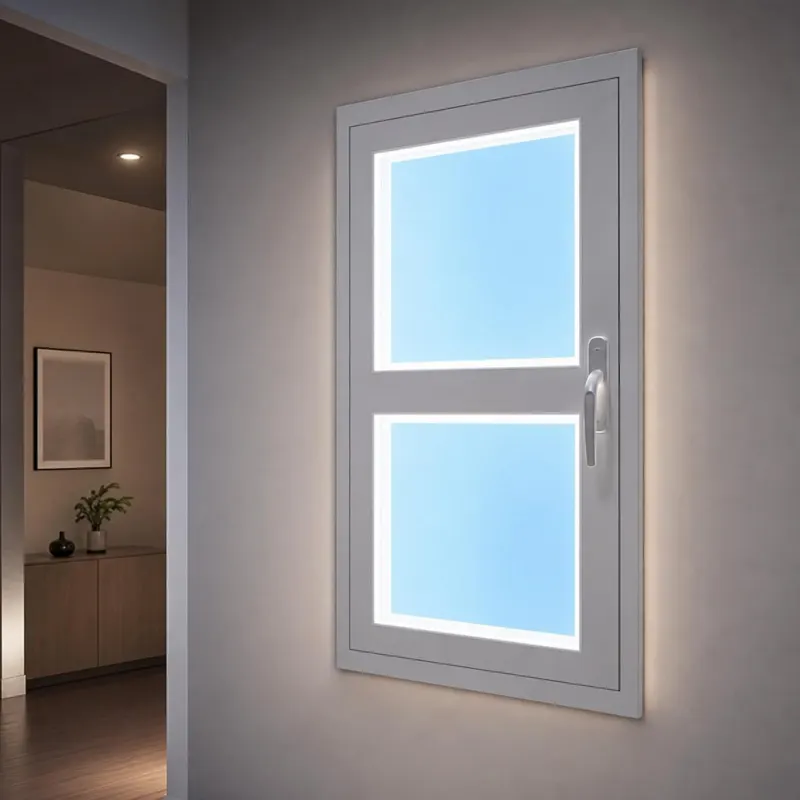
Whether a backlit fake window looks realistic is not simply a matter of “how bright it is”. The human eye perceives brightness distribution, color temperature, edges, shadows, reflections, and even the direction of the main ambient light in the room.
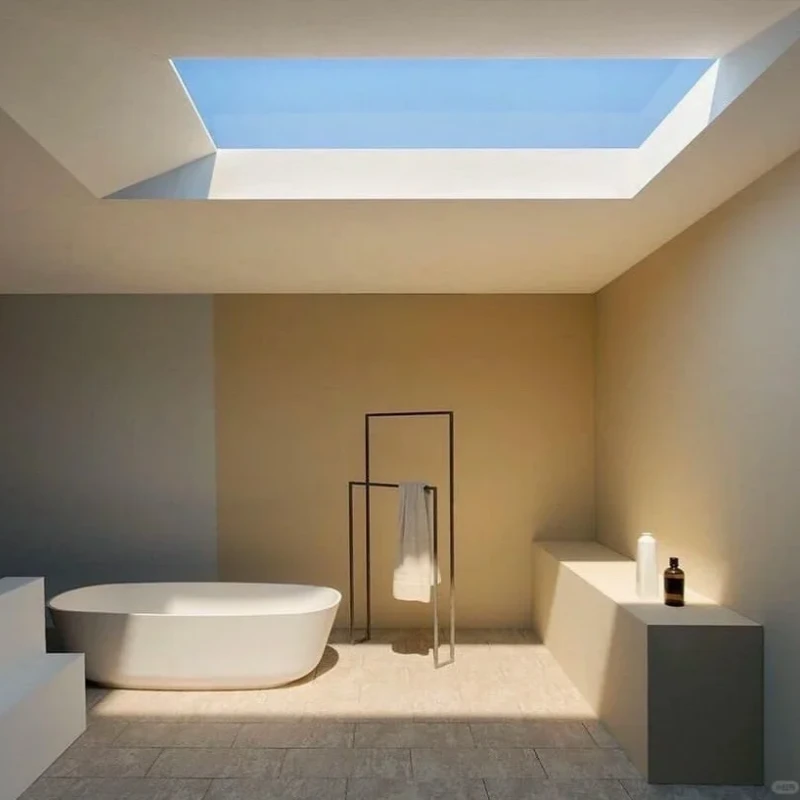
A standard lightbox appears as a flat glowing panel; a high-quality fake backlit window behaves like outdoor light passing through a window frame into the room. It needs direction, gradation, and a sense of sky. During testing of the EASY artificial skylight, with identical brightness levels, the backlight performance often determines realism. Backlight performance does not mean a uniform flat white glow, but “gradation within uniformity”.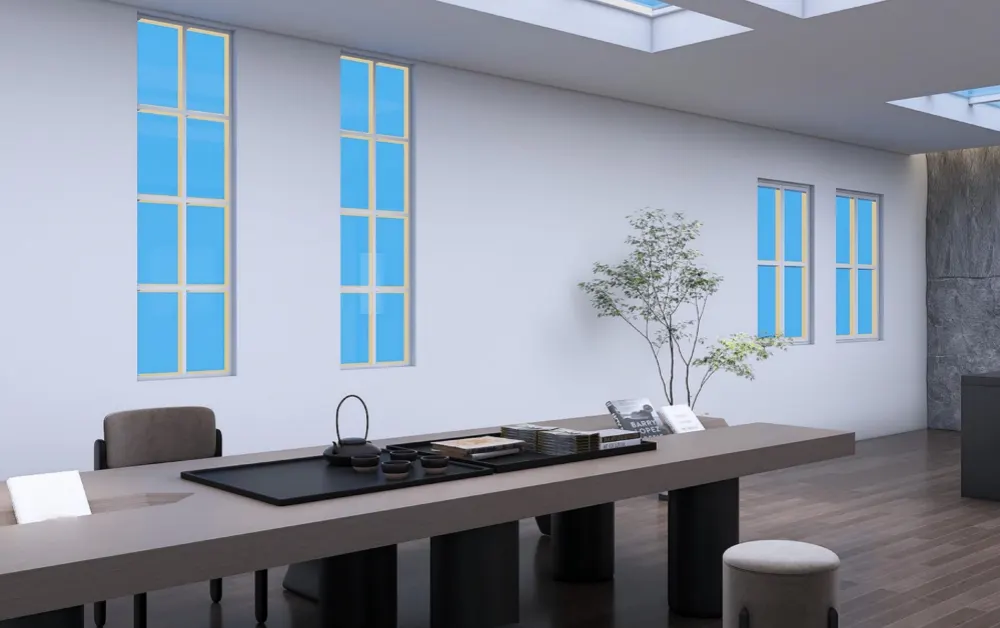
Why Backlight Uniformity Matters: Starting with the fake window led panel
Backlight uniformity is the first threshold for realism. Hotspots, vignetting, visible LED dot patterns and stripes will immediately signal to the human eye that “this is a lamp”.
For a qualified fake window led panel, the brightness difference between the center and four corners should be minimized. Edge-lit design, light guide plates, multi-layer diffusion and light-blocking bezels are commonly adopted solutions. However, uniformity does not mean a completely flat light field. A real window surface is usually slightly brighter in the upper section, softer towards the bottom, with gentle attenuation along edges.
If individual LEDs can be seen after the fake window backlit is powered on, or if the center is over-bright while the periphery is dim, realism drops sharply. Uniformity solves the problem of “not looking like a lightbox”, rather than simply pursuing high luminosity.
Color Temperature and Sky Gradient: Optical Logic of fake window with led lights from Horizon to Zenith
A natural sky never has a single color temperature. On sunny days, the upper sky is cooler while the horizon is warmer; warm tones become more prominent at dawn and dusk. Human eyes are highly sensitive to this gradient from horizon to zenith.
Conventional fake window with led lights often use a fixed 6000K or 6500K cool white light. The result tends to resemble a cool white lightbox — bright yet harsh. More advanced implementations use multi-channel LED for color mixing: cooler at the top, warmer at the bottom, with soft transitions through scattering panels.
The core principle of Rayleigh scattering is that short-wavelength blue light is scattered more easily by tiny particles, while long-wavelength red light travels more directly. This explains why the sky appears blue and the area near the sun looks warm. The artificial skylight simulates exactly this effect: “the blue sky is not painted on, but generated by scattering”.
Material Differences: Standard Diffuser vs Nano Scattering Panel — The Key Dividing Line for led light panel fake window
Common diffuser plates are mostly made of opalescent PC, PMMA or PS. They can hide LED chips, relying mainly on haze for light diffusion. Their advantages are low cost and easy fabrication; drawbacks include high light loss, greyish blue tone, insufficient depth perception, and an appearance of a soft light sheet after prolonged viewing.
Nano scattering panels work differently. Nano particles or microstructures within the panel enhance blue light scattering while allowing more long-wavelength light to transmit, producing a blue tone closer to real sky. They also control the light emission angle, reduce hotspots, and give the led light panel fake window a sense of depth instead of light emitting only on the surface.
Material is not the sole factor, yet it acts as a critical dividing line. Standard diffusers achieve “brightness”, while nano scattering panels achieve “sky-like appearance”. For a faux window led light panel, materials, light source layout and color mixing distance must be designed together.
Impact of Installation Position: faux window led light panel Is Not Better When Brighter
Installation position determines light direction, shadows and reflections. The same faux window led light panel delivers completely different effects when mounted on ceilings, walls, window openings or curtain boxes.
First, avoid direct glare to the eyes. The window surface can be bright, yet the light source must not be directly visible. Window frame depth, light-blocking rims and mounting angles help reduce glare.
Second, align with the main indoor light direction. If the primary room light comes from the right while the fake window backlit emits strong light from the left, the human brain will perceive this inconsistency. The effect of fake window backlit must conform to spatial logic.
Third, manage brightness ratio. Empirically, a brightness ratio of 2–4:1 between the window surface and adjacent walls appears most natural; ratios exceeding 5:1 tend to look like a lightbox. For fake led windows for windowless rooms, environmental ambient light must be considered instead of turning up brightness blindly.
Distinction and Connection with Artificial Skylights: From fake led windows for windowless rooms to Rayleigh Scattering
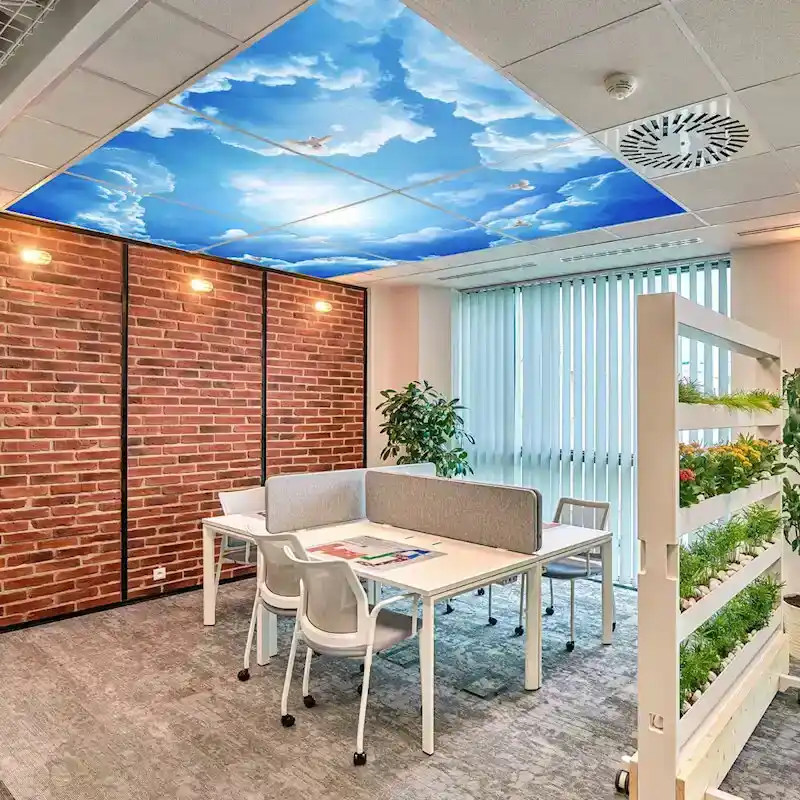
Conventional fake led windows are built around “backlighting”. They create the impression of a window in windowless spaces, improving perceived daylight and decorative value. They can be lightboxes, LED panels or projected window scenes, focusing on “glowing like a window”.
Artificial skylights go a step further. They are not merely backlit panels; they actively simulate a Rayleigh-scattered sky. They prioritize sky gradient, sun position, light depth and natural visual quality. They share foundations with backlit fake windows: backlighting, diffusion, color temperature and uniformity. The difference lies in the tighter control over spectrum and scattering performance for artificial skylights.
The EASY artificial skylight integrates nano scattering, multi-channel color mixing and structural installation. Its goal is not to produce a brighter panel, but to create a convincing piece of sky indoors. For fake led windows for windowless rooms, standard backlit faux windows serve as the entry-level solution, while artificial skylights deliver higher realism.
FAQ
Will it cause glare?
Not necessarily. Glare usually comes from exposed LEDs, specular reflection, excessively high color temperature or incorrect mounting angle. Well-designed backlighting should behave like natural skylight: bright, yet with no visible light source. Dimmable drivers, light-blocking rims, deep window frames and suitable color temperature all improve visual comfort.
Will hotspots appear?
Hotspots can occur with insufficient diffusion, poor LED arrangement or inadequate color mixing distance. Hotspots are easy to spot at close range on ordinary diffuser plates; nano scattering panels, edge-lit architecture and homogenizing layers can greatly mitigate this issue. A simple inspection method: photograph the window panel with low exposure on a mobile phone, and hotspots will show clearly.
Conclusion
The realism of a backlit fake window does not rely on “higher brightness”, but on uniformity, color temperature gradient, material scattering and installation logic. A fake backlit window that only chases brightness will easily turn into a lightbox; only when light scatters like natural sky can people believe in it.
When selecting a fake window led panel, evaluate backlight performance first, then materials and structure. For windowless spaces, a quality fake window backlit does more than supplement illumination — it complements spatial perception.