Rayleigh Scattering Sky Lights for Home: Bring Realistic Sky to Windowless Spaces
In residential lighting, windowless rooms, dark rooms and basements are often the most challenging spaces. Ordinary ceiling lights can only solve the problem of brightness, yet they struggle to replicate the feeling of natural daylight. This is why a growing number of homeowners are turning to sky lights for home.
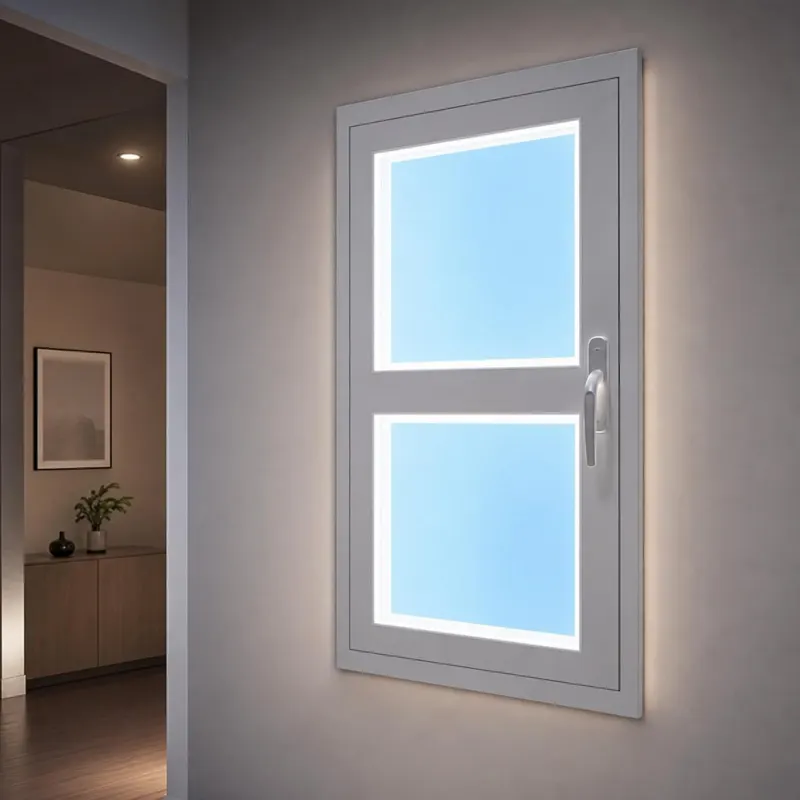
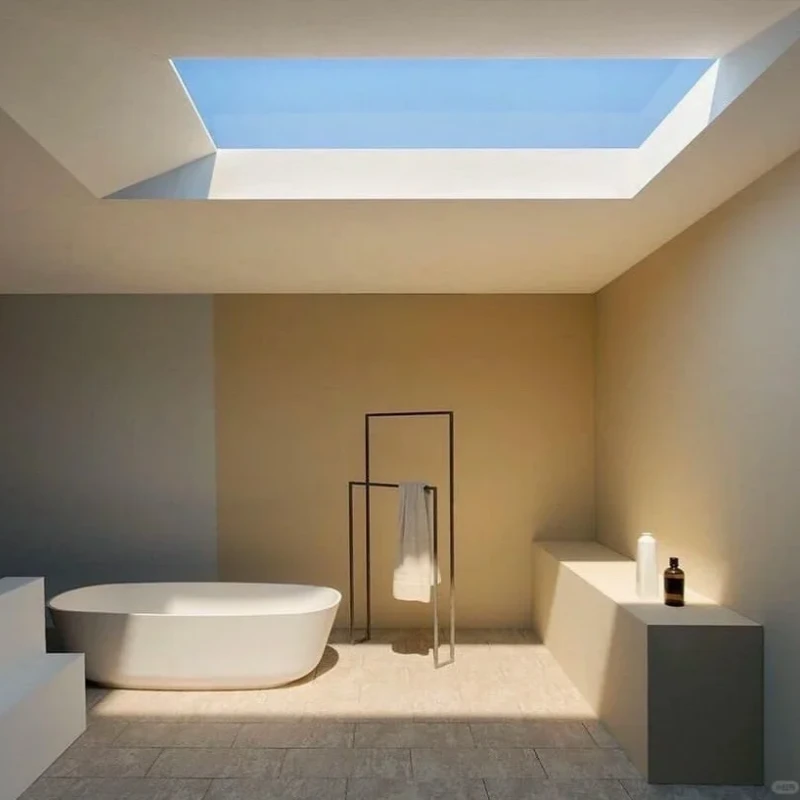
We are not referring to traditional roof skylights here, but sky light products built on the Rayleigh scattering principle. Through an optical scattering layer, they simulate the blue sky, sun position and spatial depth, allowing windowless rooms to achieve a sky experience close to the outdoors.
Why Windowless / Dark Rooms Need sky lights for home
Windowless spaces commonly include basements, windowless bathrooms, hallways, walk-in closets, home theaters, storage rooms and some offices.
Their pain points are not merely insufficient illumination, but also loss of spatial orientation, blurred perception of time and a sense of oppression. Staying in such enclosed spaces for long periods can make people feel that the room is low and confined, and may even affect mood and circadian rhythm.
Conventional solutions rely on high-brightness LED panels, daylight-simulating bulbs or fake window light boxes. However, most of these products only emit uniform white or blue light, lacking the layered texture of natural sky. The core of genuine sky lights for home is not simply creating a flat blue glowing panel. Instead, it delivers a window sky with depth, gradual tone transition and directional light when you look up. It transforms a dark room from a closed box into a space with a visual opening to the outside world.
faux windows for windowless rooms: From decorative fake windows to authentic daylight experience
Many users search for faux windows for windowless rooms, hoping to use simulated windows to solve lighting issues in windowless spaces. Common fake window options on the market include backlit images, LED light boxes, projected window scenes and luminous curtains. While these work for decoration, poor optical design tends to cause three drawbacks: overly uniform blue tone, flat light effect and unrealistic sun simulation.
The key differentiator of Rayleigh scattering sky lights lies in light scattering. The natural sky appears blue because sunlight passes through the atmosphere, and short-wavelength blue light is scattered widely by air molecules and fine particles to form the window blue sky we see.
EASY sky lights replicate this physical process. Blue light diffuses gently inside the panel while maintaining a bright area mimicking the sun’s direction. The result is not a solid blue board, but a sky with a visible horizon, zenith and smooth light transition. For residential windowless spaces, this visual authenticity matters more than simply boosting brightness.
artificial skylight for basement: Case Study of a Basement Lounge in Minnesota
In Minnesota, USA, we completed a residential basement lounge project. The region has long winters with limited daylight hours, and most basements have no windows. The homeowner planned to convert the approximately 30 ㎡ basement into a family recreation area, without the stereotyped look of an underground KTV or enclosed media room.
For this project, we installed sky lights for home Rayleigh scattering sky lights on the ceiling to mimic top-mounted skylights, supplemented by partial simulated window lighting on walls.
During daytime, the system runs at a cooler sky color temperature and higher brightness to present a clear window sky. At dusk, it switches to warm tones with reduced brightness to avoid a cold atmosphere at night. The homeowner reported that the lounge no longer feels like a basement when watching movies, playing games or working out in winter. This case proves that sky lights are more than decor; they are a lighting system that genuinely improves the experience of windowless residential spaces.
daylight simulation lamp vs Rayleigh Scattering Sky Lights
Many users first come across daylight simulation lamp. These products are suitable for reading, plant supplementary lighting and local illumination. Yet they are typically point sources or ordinary surface light sources, optimized for illuminance and color temperature rather than visual sky simulation. They can brighten a room, but cannot create the sight of natural sky overhead.
Rayleigh scattering sky lights, by contrast, simulate architectural daylighting experience. Design must comprehensively consider luminous surface size, mounting height, uniformity of scattering layer, color temperature, color rendering and dimming control.
For homeowners, if your goal is to relieve the claustrophobic feeling of windowless rooms rather than just adding another lamp, sky lights for home are the preferred solution.
It delivers not only light, but also spatial orientation, time cues and visual extension.
fake window with artificial sunlight: Residential Selection & Installation Guidelines
fake window with artificial sunlight is a common residential requirement, but buyers need to distinguish decorative fake windows from sky light systems.
If you only want a glowing window scene on the wall, simple light boxes will suffice. If you want long-term use and authentic natural light sensation, focus on the following factors:
- Installation position: Basement lounges, windowless bathrooms, hallway ends, top surfaces of walk-in closets or walls are all suitable. Ceiling installation creates a skylight effect, while wall installation delivers a window view effect.
- Size ratio: Larger luminous surfaces produce stronger sky depth. Compact models work for partial brightening; large-size units serve as the core visual focal point of the space.
- Color temperature and dimming: Systems with adjustable brightness and color temperature are recommended. Cooler tones for daytime and warmer tones for evening match residential daily routines.
- Glare and flicker control: Windowless spaces usually have low ceiling heights. Direct glare and visible flicker should be avoided, especially for households with the elderly and children.
- Smart control: Timing, gradual brightening and scene linkage enhance user experience. For example, slow brightening in the morning and automatic dimming at night bring a natural daily rhythm to dark rooms.
- Professional assessment: Verify power supply, ceiling structure, heat dissipation and maintenance methods before installation. Sky lights are not ordinary lamps. Thoughtful design is more critical than product purchase alone.
Daily Experience of window blue sky in Dark Rooms
Having windowless rooms does not mean you have to accept a confined environment. For basements, windowless bathrooms, hallways and dark rooms, sky lights for home based on Rayleigh scattering offer a solution that closely mimics natural sky.
By simulating Rayleigh scattering, window sky and window blue sky are no longer limited to outdoor environments, but can be built inside homes.
If you aim to make windowless spaces more comfortable and open, and expect lighting to do more than simply brighten the room while improving spatial perception, sky lights deserve a place in your residential lighting plan.
EASY sky lights specializes in Rayleigh scattering sky light products. We support homeowners through product selection, design consultation and installation guidance, bringing natural sky light to more dark rooms.