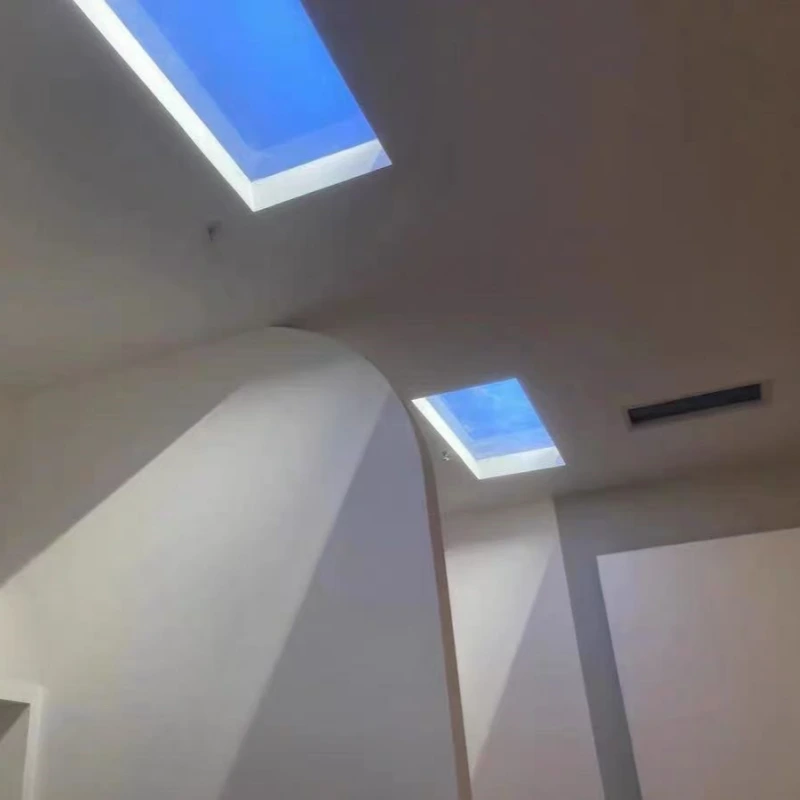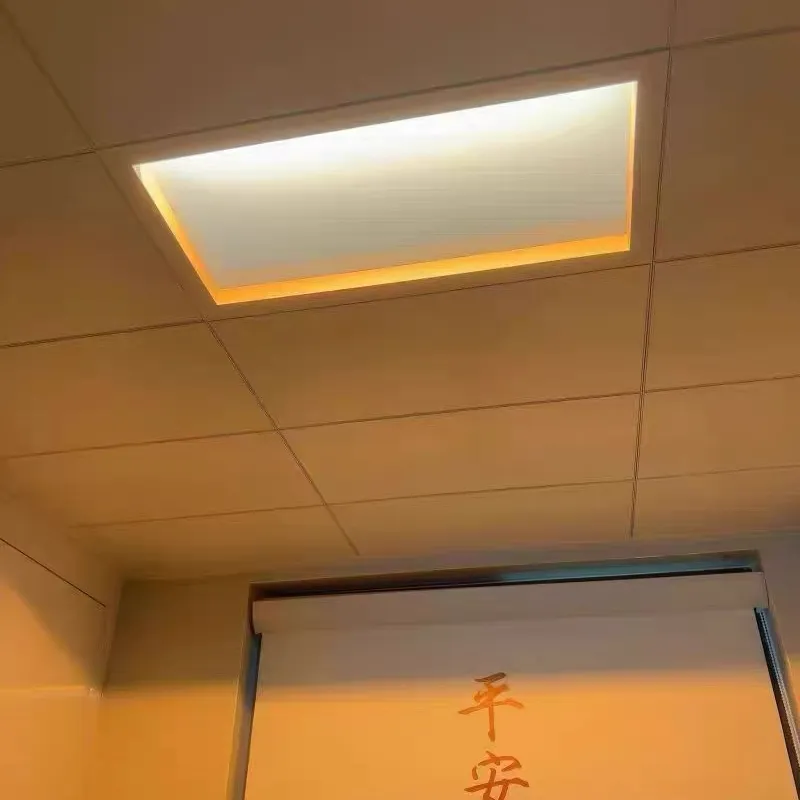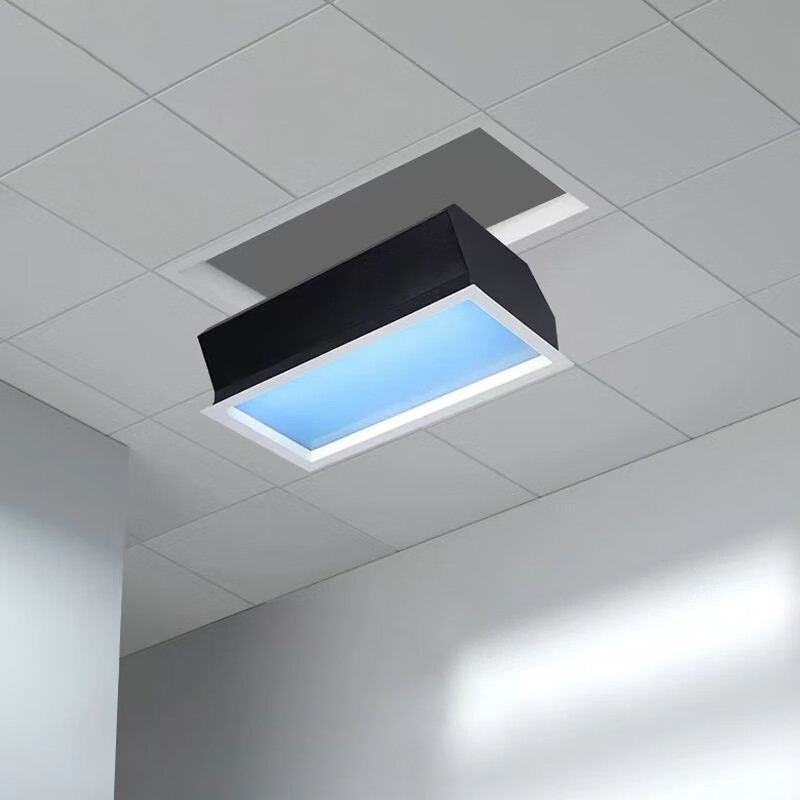

Sky Panel Lighting is a simulated clear-sky lighting solution mounted on ceilings or walls. It uses optical scattering and LED backlighting to bring a sense of blue sky indoors, instead of simply placing a blue light panel on the ceiling.
For basements, windowless offices, bathrooms and renovation projects, such products offer a more flexible visual alternative to daylight.
EASY artificial skylight focuses on enabling sky panels to deliver a more natural, even sky effect without damaging the building structure.
What is sky panel lighting?
Sky panel lighting can be understood as an “artificial clear-sky panel”. It generally consists of LED backlight, light guide structure, optical diffusion layer and surface decorative layer. Once installed, it presents a blue or daylight-like appearance similar to the sky.
Its difference from traditional roof skylights is clear: traditional skylights require openings in the roof to bring in real sunlight; clear-sky panels are mounted on indoor suspended ceilings or walls and simulate the visual effect of the sky through electricity and optical design. They are not equivalent to real daylight windows and cannot replace ventilation functions.
artificial skylight ceiling: How is it different from a traditional roof skylight?
The core of an artificial skylight ceiling is “indoor simulation” rather than “roof penetration”. For this reason, it is more suitable for projects where roof construction is not possible or where the integrity of the building facade needs to be maintained. It is easier to control for spaces requiring stable visual brightness that is unaffected by weather.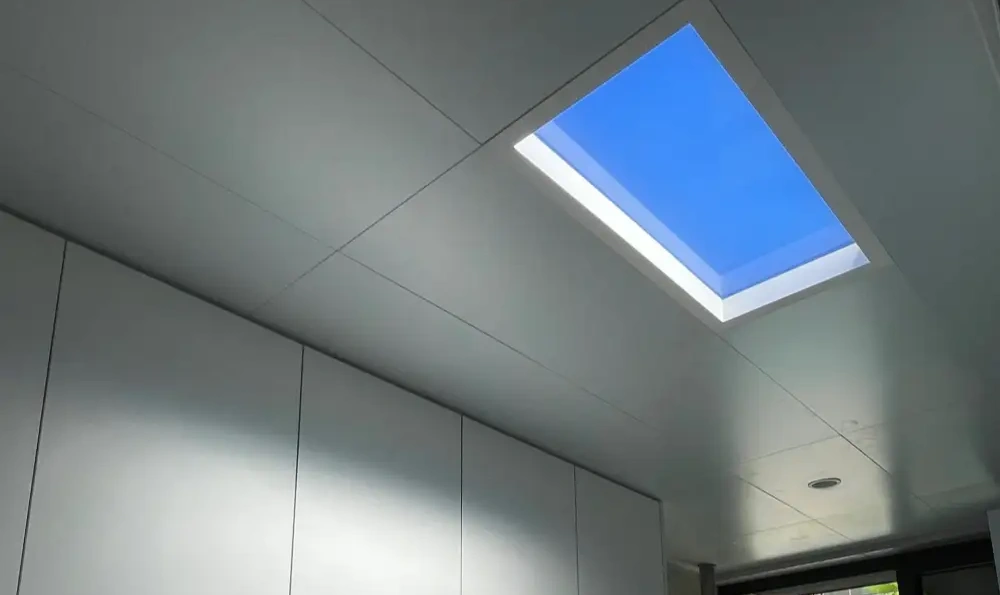
How do sky panels work?
The core principle of sky panels is not printing an image of the sky onto the panel, but adopting the optical concept of Rayleigh scattering. Short-wavelength blue light is scattered more easily by tiny particles, while long-wavelength light passes through more readily, creating a blue appearance closer to natural sky.
Meanwhile, the LED backlight provides a stable light source. The light guide and diffusion structures disperse and spread light evenly to eliminate local bright spots. With dimming and colour temperature control, sky panel lights can be finely adjusted between cool white, natural white and blue sky tones.
Rayleigh scattering vs daylight simulation lamp
Ordinary daylight simulation lamps mostly deliver daylight-like lighting for desktops, local areas or small spaces. Sky Panel Lighting, by contrast, prioritises large-area sky visuals and spatial perception.
The two are not substitutes for one another; they suit different scenarios. The former is for local lighting, while the latter shapes overall ambience and brightness on ceilings or walls.
Key features of sky panel lights
High-quality sky panel lights usually have several key features:
- Slim panel construction: easy to embed in suspended ceilings, plasterboard or wall profiles, with minimal impact on floor height.
- Adjustable colour temperature and brightness: adaptable to light environment requirements for living rooms, offices, bathrooms and other spaces.
- Simulated blue sky effect: scattering and light guidance deliver uniform blue colour instead of a harsh blue light source.
- Low glare and high uniformity: reduces direct light exposure for visuals closer to soft natural sky.
- Modular installation: combinable according to space dimensions, suitable for new builds and renovation projects.
What to check when purchasing fake skylight ceiling panels
When selecting fake skylight ceiling panels, you should not only judge by “how blue it looks”. More important factors include brightness uniformity, colour temperature adjustment range, panel thickness, driver power supply quality and service accessibility. For ceiling installation, you also need to confirm keel framing, suspended ceiling load-bearing and reserved power supply positions.
Where to install sky light panels at home
Sky light panels fit a wider range of domestic spaces than many people expect. They can be used as ceiling clear-sky lights or made into wall-mounted faux windows to ease the visual claustrophobia of enclosed spaces.
- Living room: partial suspended ceiling or corridor ceiling to enhance the sense of spaciousness.
- Basement: wall-mounted faux windows or overhead clear-sky panels to improve ambience where natural windows are absent.
- Windowless offices: suitable for meeting rooms, private offices and work cubicles; uniform sky lighting relieves the enclosed feeling.
- Bathroom: small clear-sky panels can boost brightness where waterproofing and electrical codes permit.
faux windows for windowless rooms: Priority positions for windowless spaces
For faux windows for windowless rooms, priority should be given to walls within regular sightlines, such as side walls beside desks, corridor ends or above dry bathroom zones. If installed on the ceiling, avoid direct line-of-sight exposure and match brightness with the main indoor lighting.
led fake window panel: Installation methods for wall-mounted faux windows
led fake window panels are often fitted on walls in the form of faux windows, and can be paired with frames, blinds or shading trims. Power supply and access openings must be reserved before installation, with reasonable layout for panel heat dissipation and driver power supplies.
Wall-mounted faux windows focus more on window scenery, so frame proportions, mounting height and light direction need to be designed in advance.
Sky panels vs real glass skylights
Sky panels and real glass skylights are different products. Real skylights bring in natural sunlight and may introduce issues with ventilation, heat gain and roof waterproofing. Clear-sky panels rely on LEDs and optical structures to deliver stable sky visuals and illumination.
| Comparison item | Sky panels | Real glass skylights |
|---|---|---|
| Roof opening required | No | Usually required |
| Leakage risk | No risks linked to roof penetration | Depends on waterproofing workmanship |
| Lighting property | Simulated sky visuals and illumination | Real natural daylight |
| Ventilation function | Generally not available | Openable versions support ventilation |
| Weather influence | Relatively stable | Affected by cloudy/rainy weather and day-night cycles |
| Mounting locations | Suspended ceilings, walls | Roofs, pitched roofs |
It should be noted that led sky panels are mainly designed to create “visual sky perception” and stable lighting. They cannot replace the ventilation and natural daylight functions of real daylight windows.
If your project goal is architectural daylighting and ventilation, real skylights should still be prioritised. If the aim is to relieve the oppressive feeling in windowless spaces, clear-sky panels offer more advantages.
Is led sky panels suitable for renovation projects?
Yes, and this is one of the key application scenarios for led sky panels. Renovation projects are often constrained by roof structures, waterproof layers, building facades and construction schedules, making new skylight openings impractical. Sky panels usually only require reserved power supply and installation space in suspended ceilings or walls, with little impact on the building facade.
For renovation projects, check ceiling height, keel structure, power supply layout and maintenance access first. Damp spaces such as bathrooms need moisture-proof solutions complying with local electrical standards and installation by qualified electricians. Slim sky panels integrate better in low-ceiling spaces without noticeably compressing the room height.
Conclusion
The value of Sky Panel Lighting is not to pretend there is a real window, but to add a “sense of sky” to windowless or poorly lit spaces in a controllable way.
When sky panels are properly fitted on ceilings or walls, they can act as a visual bridge connecting indoor spaces with the outside world.
When choosing sky panel lights, focus on optical uniformity, installation conditions and actual lighting requirements. When selecting sky light panels, also distinguish between simulated sky effects and real daylighting.
For renovation and windowless space projects, led sky panels provide a structure-friendly, flexibly designed clear-sky lighting solution.